
 E-Paper



Snacking on bugs: Students at Yokohama, Japan, show how
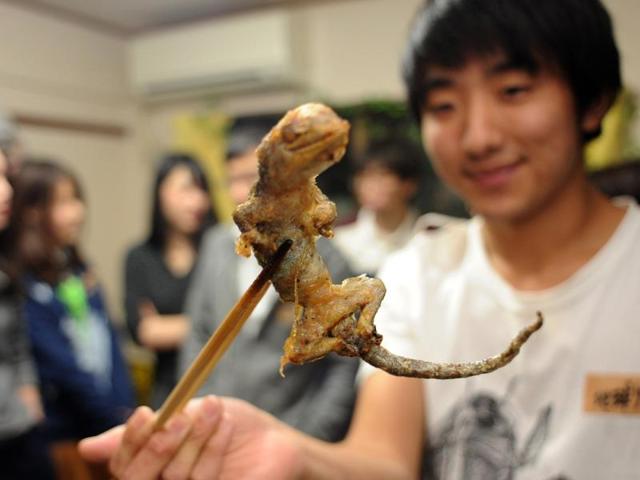
Yuta Shinohara (R) from Keio University cooks a lizard at a get-together in Tokyo on December 21, 2015. People gather a few times each month through word of mouth and social media sites to sample various insects and other creatures. Bugs are a staple in Japanese cuisine given their abundance in the region. (AFP)
Updated on: Feb 25, 2016 7:03 PM IST


Share via


Copy link

1/8
 View Photos in a new improved layout
Updated on Feb 25, 2016 7:03 PM
Yuta Shinohara (R) from Keio University cooks a lizard at a get-together in Tokyo on December 21, 2015. People gather a few times each month through word of mouth and social media sites to sample various insects and other creatures. Bugs are a staple in Japanese cuisine given their abundance in the region. (AFP)
2/8
 View Photos in a new improved layout
Updated on Feb 25, 2016 7:03 PM
The range of insects consumed in Japan is vast -- from boiled wasp larvae, silk moth pupae, aquatic insect larvae to grasshopper. (AFP)
3/8
 View Photos in a new improved layout
Updated on Feb 25, 2016 7:03 PM
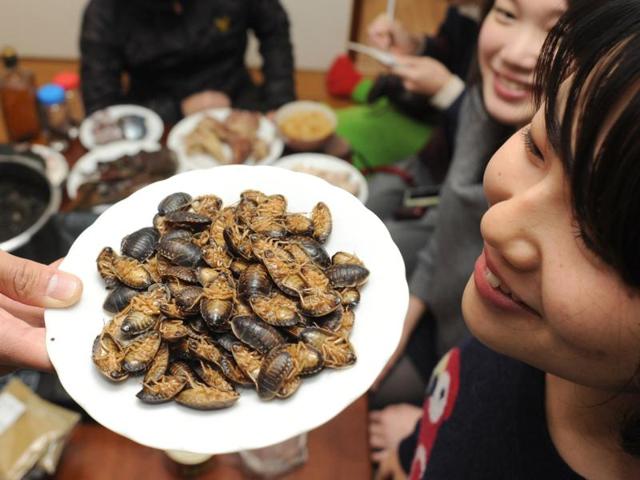
Not just Japan, many countries across the world have insects as one of the specialities in their cuisine. These include countries such as China, Ghana, Mexico and Brazil. A young woman admires a plate of insects at a get-together in Tokyo. (AFP)
4/8
 View Photos in a new improved layout
Updated on Feb 25, 2016 7:03 PM
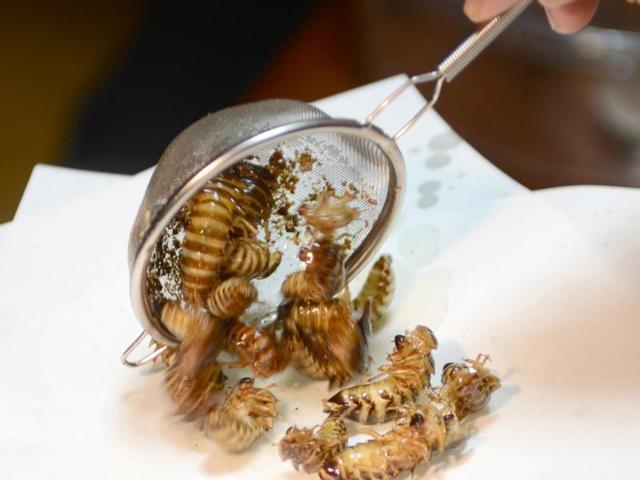
Here are few other insects you wouldn’t believe are edible --Stinkbug (Mexico, Southern Africa), Tarantula (Cambodia and Venezuela) and Dragonfly (Indonesia) to name a few. (AFP)
5/8
 View Photos in a new improved layout
Updated on Feb 25, 2016 7:03 PM
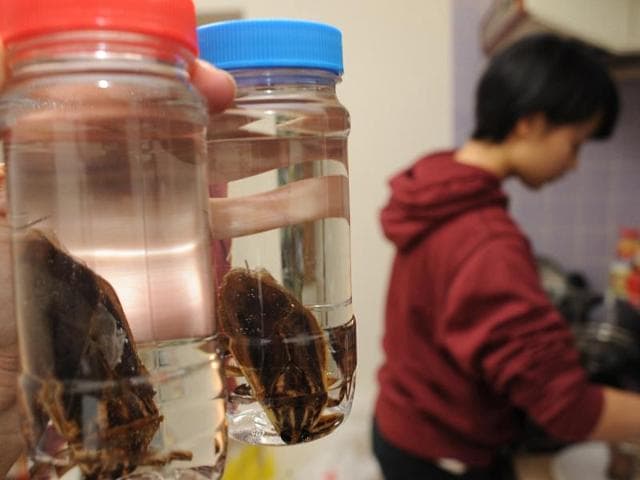
The health benefits of having bugs are immense, say experts. While the protein content is as high as any non vegetarian diet, fat content is dramatically less. (AFP)
6/8
 View Photos in a new improved layout
Updated on Feb 25, 2016 7:03 PM
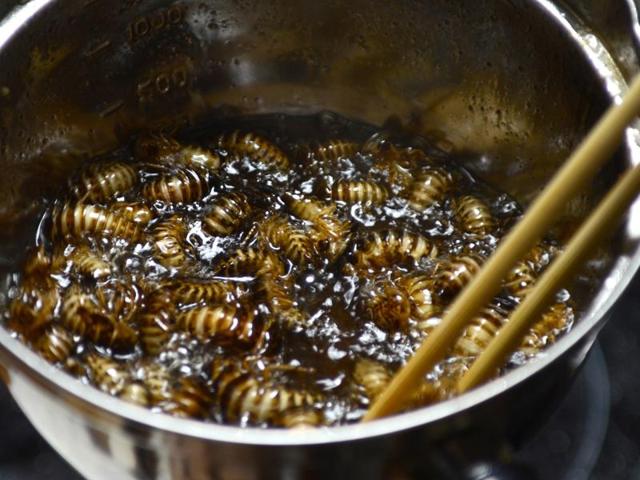
As per USNews web site, 100 grams of top sirloin beef (meat cut from the rear back portion of the animal) contains about 29 grams of protein in addition to a whopping 21 grams of fat, while 100 grams of grasshopper contains 20 grams of protein and a measly six grams of fat. (AFP)
7/8
 View Photos in a new improved layout
Updated on Feb 25, 2016 7:03 PM
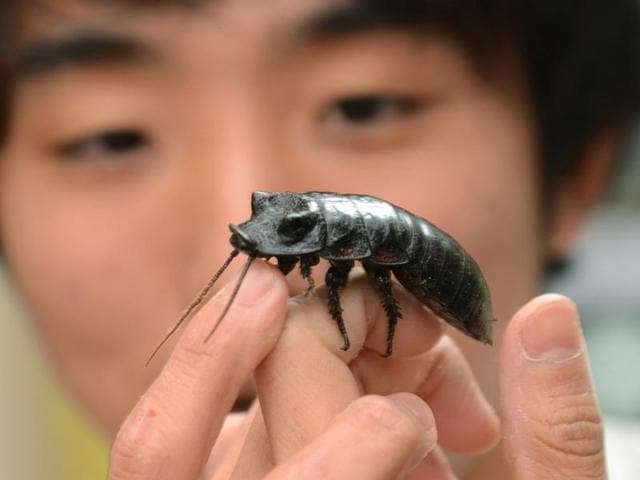
Additionally, farming insects emits 10 times less greenhouse gases as compared to livestock, says Dr Belgian entomologist Arnold van Huis in The Guardian. (AFP)
8/8
 View Photos in a new improved layout
Updated on Feb 25, 2016 7:03 PM


