
 E-Paper



Ecostani | What’s on the mind of Indian voters as we go in for general elections in a week?
According to a pre-poll survey, jobs and price rise are the two biggest issues but the one that needs to talked about is how our trust in the EC is falling

 Prefer HTon Google


The CSDS-Lokniti pre-poll survey shows that unemployment, price rise, development and corruption were the four biggest issues in voters’ minds. The construction of the Ram Temple in Ayodhya, India’s international standing and Hindutva — the core poll plank of the ruling Bharatiya Janata Party (BJP) — also find resonance among the voters.
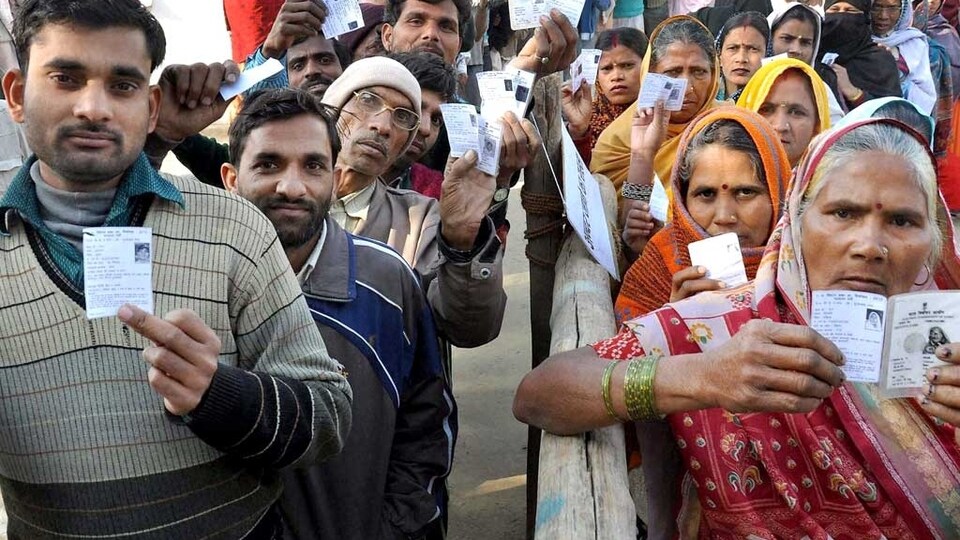
To be sure, the survey was conducted on a small sample size of 10,000 respondents across 19 states and is not comprehensive enough to reflect ground realities. However, it can be said to offer insight into the minds of voters. The survey, conducted through questionnaire-based in-person interviews, happened before the Congress announced its poll manifesto which promised to fill all vacant posts in the Central government, tamping down on the price rise and a Right to Apprenticeship Act that would ensure a year-long apprenticeship with a private or a public sector company to all diploma holders or college graduates below 25 years, as well as an annual stipend of 1 lakh to all apprentices.
The BJP, on the other hand, is yet to announce its manifesto.
Unemployment on top of mind
Nearly two-thirds of the respondents (62%), of whom 65% were city-dwellers, said that getting jobs was becoming more difficult, while 12% said that getting a job was easier. The concern was highest among Muslims, followed by Other Backward Classes and Scheduled Castes, the three sections that constitute more than 60% of the country’s population and form a bulk of the marginalised and deprived section of society. The opinions on price rise mirrored that of unemployment with 71% of respondents saying the prices have risen, the survey said.
The findings indicate that voters are worried about the Indian economy and blame both the central and state governments for shrinking job opportunities. The Centre for Monitoring of Indian Economy said the unemployment rate in India had increased to 8% in February 2024 from 6% a month earlier but reduced from 9.4% in October 2023. It, however, pointed out that the 8-9% unemployment rate now appears to be a new normal in India as compared to the 4-6% unemployment rate a decade ago. Experts have for long warned about jobless economic growth, which impacts the lives of youth.
Even though the sample size of the survey is not very large for a country of 1.4 billion people, it shows that the opposition parties harping on unemployment and price rise as the most important issues of this election are not off the mark. The ruling BJP has so far failed to address people’s concerns on these two issues, but whether this would have any electoral ramifications, one cannot say.
The BJP has continued with its pro-Hindutva poll plank and is claiming credit for the construction of Ram Temple with several pro-right groups promoting hatred for minorities. Around 79% of the people surveyed in the CSDS-Lokniti survey said that India belongs to all religions with just 11% saying that India belongs to only Hindus. This was more pronounced in cities (85%) and among the educated (83%).
Only about 8% of the respondents said that Ram Temple was their most important concern and 22% of them mentioned this as the most liked action of the BJP-led government; 48% of the respondents believed that Ram Temple consecration can consolidate Hindu votes for the BJP, which is likely to be a concern for the opposition. The response in the survey shows that the construction and consecration of the temple has the potential of turning many voters in favour of the BJP, and among economically weaker respondents and upper castes, the BJP found support on this matter.
But the issue that remains of concern is the distrust with the Election Commission whose mandate is to conduct free and fair polls. The survey found that 58% of the respondents expressed some or great distrust in the constitutional body. In 2019, more than 50% of the respondents had “great trust” in the EC. “The share of those who have no trust or little trust in EC has doubled in the last five years,” the survey report stated. Nearly 45% believed that electronic voting machines can be manipulated by the ruling party.
Opposition parties in the recent past have accused the Election Commission of bias in favour of the ruling party by not ensuring a level playing field. This would mean that the commission has to check the powers of the government and the ruling party during election season, to prevent undue advantage. However, Central enforcement agencies' raids and arrests of opposition leaders in different corruption cases appear to have disturbed the level playing field in recent times. Despite memorandums from various political parties, the EC has not tried to intervene.
This time around, the EC has also failed to protect its powers. The Haryana women’s commission issued a notice to Congress leader Randeep Singh Surjewala for his comments against BJP MP and actor Hema Malini, even though issuing a notice for alleged derogatory remarks in a campaign was an exclusive domain of the EC. Last week, West Bengal governor C V Ananda Bose asked state chief minister Mamata Banerjee to sack her education minister Bratya Basu for holding an election meeting in a government-run institution, which was a violation of the model code. Again, the EC remained silent on the issue.
About 8% of the respondents said that the one thing they liked about the Narendra Modi-led government was its work on India’s image globally. A large section of the respondents were not aware of the G20 Summit held in New Delhi last year, but those who knew about it thought it was “reflective” of India’s growing global power. The survey said the BJP’s pitch that Narendra Modi has strengthened India’s global image appeared to have limited impact on voters as they did not necessarily understand the implications for them.
Chetan Chauhan, national affairs editor, analyses the most important environment and political story in the country this week


