
 E-Paper



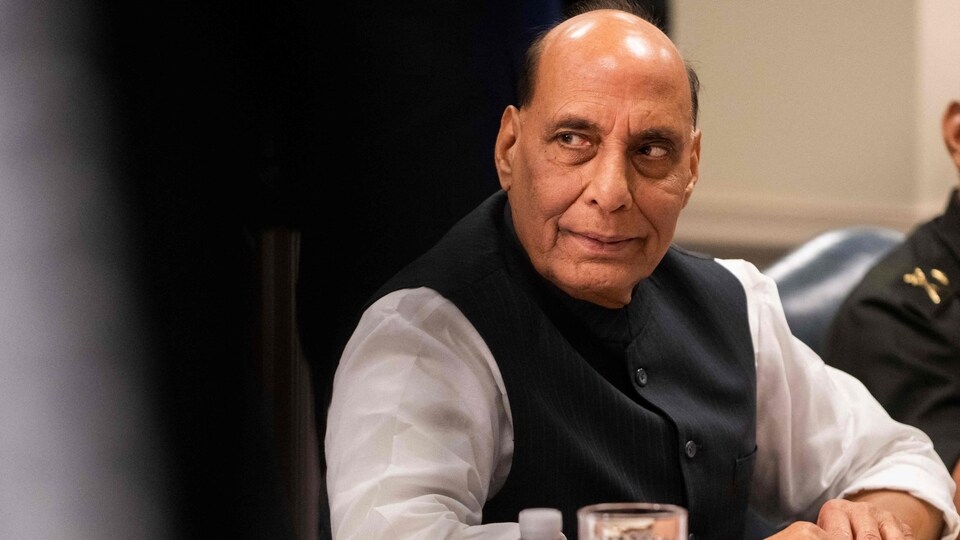
Keeping up with UP | In Rajnath Singh, the BJP has a hands-on politician, a skilled negotiator
Singh could be a key politician to keep track especially if the government comes under threat. His skillsets could be put to use again in the future.

 Prefer HTon Google


In 1997, Uttar Pradesh (UP) was ruled by a Bahujan Samaj Party (BSP)-Bharatiya Janata Party (BJP) coalition government under a six-month rotational arrangement. When the BJP’s time came to take over the government, Mayawati reluctantly passed the baton but withdrew support to the Kalyan Singh- government within 29 days.
It triggered a political crisis in the state as Singh’s government faced a collapse. Governor Romesh Bhandari gave 48 hours to the chief minister to prove a majority on the floor of the state assembly. The BJP had 174 seats in an assembly of 424 seats in then-undivided UP and was short by 39 members.
It was at that juncture that the state BJP president Rajnath Singh displayed his political acumen. He put in the hours, befriended rival legislators, broke parties under the “one MLA, one berth” formula and delivered the state’s first jumbo-size government of over 90 ministers.
Again, later, when the Loktantrik Congress Party (LCP)minister Jagdambika Pal sprung a coup of sorts by dislodging the Kalyan Singh-led government and forming his own government with the support of the Samajwadi Party (SP), BSP and Congress, it was Singh who stepped up for the party: He borrowed two aircraft and chaperoned the full entourage of BJP MLAs to Delhi for a headcount at Rashtrapati Bhavan at midnight. A beaming Kalyan Singh was back in the chief minister’s chair within 48 hours.
Rajnath Singh had then emerged as a master strategist and rose to become Union minister in 1999, which, as it turned out, was not liked by many, including Kalyan Singh himself.
Singh had then earned the sobriquet of “Chanakya” of contemporary politics, though he himself didn’t appreciate the compliment.
Again, as the BJP’s national president at the time of the 2014 general elections, when Singh was actively campaigning to oust the 10-year-old Congress-led government, he had told HT: “Wait and watch, we are winning the election on our own. But we don’t have any paucity of allies too, the numerical deficit would be plugged effortlessly to reach the magic figure in Parliament.”
A day earlier, he had met Telugu Desam Party (TDP) chief N. Chandrababu Naidu. He had then said their focus would be on parties that have grown on the slogan of “anti-Congressism”. The BJP went on to sweep the polls in 2014 and remained in power in New Delhi without needing allies for two terms.
Ten years later, “Chanakya” is back in action as he handles the responsibility of maintaining the coalition dharma.
The return of the coalition era has brought him back to the centre stage of NDA’s politics as he not only inherited the Lok Sabha constituency of former Prime Minister Atal Bihari Vajpayee but also learnt the art of managing coalition politics from him.
Before the 2024 Lok Sabha polls, many speculated about Singh's “bleak” future if Prime Minister Narendra Modi returned with a majority. His resurrection after the 2024 polls has thus surprised many, even his party leaders, as Singh had faced many chastening moments in the last five years.
Singh has always refused to comment on the internal affairs of the party, his own apparent sidelining or unexpected changes in his portfolio. “Whatever I will have to say, I will say in the party forum,” has been his refrain. Significantly, he always avoided making disparaging remarks against any leader in public, which seems to have worked in his favour.
From engaging with the two mercurial allies — Naidu of TDP and Nitish Kumar of JD(U) — to evolving consensus on the Lok Sabha Speaker’s name to holding a meeting of senior BJP-RSS leaders at his residence for the selection of the new national BJP president, Singh has brought his political and negotiating skills to the fore in recent weeks.
“Who else is there now in the BJP to keep the channels of communications open with leaders of all shades? He belongs to the Atal era and has maintained cordial relations with leaders of all political parties. He never engaged in confrontationist politics. It was Rajnath Singh who spoke to the Congress leaders to mobilise their support for Om Birla as Speaker,” a Lucknow-based political expert Brajesh Shukla said.
BJP leader Vijay Pathak said: “The party decides and deploys senior leaders for different tasks according to the circumstances.”
But political expert Mukesh Kumar has a different view of Singh’s current return to the reluctant limelight. Kumar said the BJP high command is making use of Singh’s skills “…in running a coalition government as he enjoys a rapport with both the RSS and opposition leaders. The fact is Singh would have been redundant had BJP won 300+ seats.”
According to a BJP leader, who did not wish to be named, while Modi has left the management of the coalition to the two senior leaders — Singh and Union home minister Amit Shah — it is the former who does most of the consensus building.
Once when asked about his strengths, Singh had said: “My ability to take challenges. I don’t lust for any post.” On his weaknesses, he had said: "I am a highly emotional person, which a ruler should not be. Often, my heart rules over my head when it comes to making harsh decisions. I have never harmed anyone intentionally or knowingly. Two things I must do every day – puja and exercise for physical fitness”.
Given that it is a coalition rule at the centre, Singh could be a key politician to keep track especially if the government comes under threat. His skill set as a negotiator has helped the BJP in the past; it could be put to use again in the future.
Sunita Aron is a consulting editor with the HT based in Lucknow. You can find her on X as @overto. The weekly column, Keeping up with UP tackles everything from politics to social and cultural mores in the country's most populous state. The views expressed are personal.


