
 E-Paper



How Centre moved to quell Manipur violence: Steps taken
Adequate relief materials availability ensured that at every camp, 30,000 MT rice was allotted through FCI during current Manipur violence that began on May 3.

 Prefer HTon Google


Last week, Assam chief minister Himanta Biswa Sarma hit out at the Congress for criticising the Narendra Modi government at the Centre for its policy towards Manipur and alleged that the state had become the blockade capital of the country under the UPA government led by Manmohan Singh.
According to government sources, during the UPA government's tenure, between 2010 and 2017, blockades continued from 30 days to as long as 139 days in a year. The sources said during these blockades, the prices of petrol and LPG soared up to ₹240 and ₹1,900 per litre, respectively, causing a severe humanitarian crisis.
“During the Inner Line Permit movement, a student named Sapam Robinhood lost his life in police action in Imphal East For over three months, there were widespread protests and blockades in the state,” the sources said.
On the contrary, the sources said, adequate relief materials availability ensured that at every camp, 30,000 MT rice was allotted through the Food Corporation of India during the current Manipur violence that began on May 3. An immediate financial package of ₹101.75 crore was provided for the relief and rehabilitation of the people living in shelter camps, the sources added.
Immediate actions taken by the government during the current Manipur ethnic- violence:
1. The central government took prompt action since May 3 itself – engaged with the brass of Manipur and deployed available CAPF companies, the sources said.
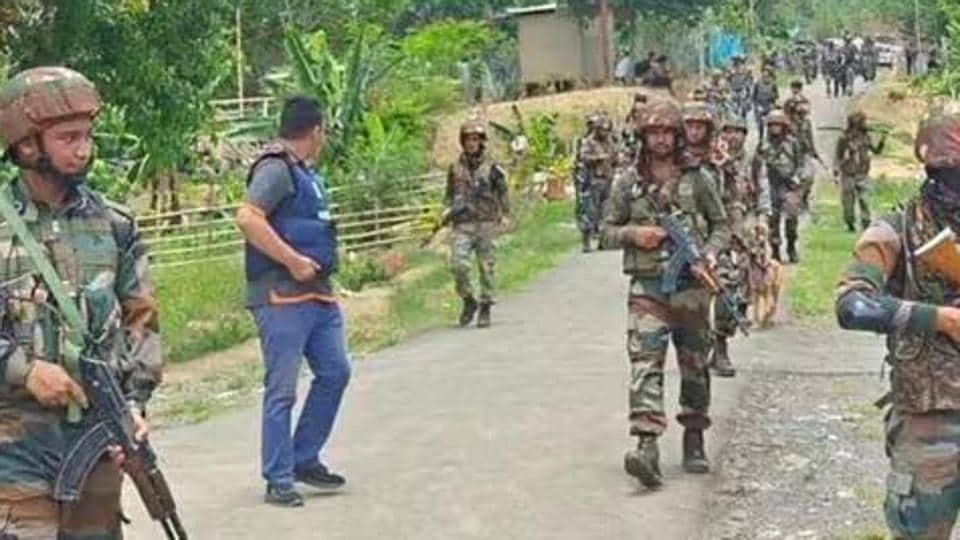
2. Additional security forces deployed-124 companies of CAPF and 184 columns of the Indian Army/Assam Rifles.
3. Helicopters and drones were deployed immediately.
4. Kuldiep Singh, IPS (retd.) was appointed security advisor by the government of Manipur and took charge on May 4, 2023.
5. Senior officer Vineet Joshi, IAS, was recalled from the government of India and appointed as chief secretary on May 7.
6. Adequate supply of essential commodities was ensured.
7. Home minister Amit Shah stayed in Manipur between May 29 and June 1.
8. More than 15 meetings were held with government officials, security forces, political leaders, civil society organisations. Visited violence-hit areas and relief camps and interacted with people from various communities affected by the conflict
9. A judicial inquiry by a commission headed by a retired high court judge.
10. Six cases for investigation by the Special CBI team.
Casualties
Deaths: 150 (May 3 to 5: 59, May 27 to 29 May: 28, June 13 : 9)
Injured: 502
Cases of arson: 5,101 and FIR registered: 6,065
Persons arrested: 252 and arrests as a preventive measure: 12,740
Civil measures (relief and rehabilitation)
History of violence in Manipur
Naga – Kuki clash: Started in April 1993, over 350 Kuki/Naga villages were “uprooted”, leaving around 750 dead.
The active violence lasted till December 1993 and sporadic incidents continued till 1998.
Impact felt for almost a decade
Kuki-Paite clash during 1997-1998, June 1997-September 1998: More than 50 villages were destroyed and 13,000 people were displaced. As many as 352 people died and 136 were injured.


