
 E-Paper



Power Coins: How Gujarati bankers financed the Mughal empire
As political financing in India comes under scrutiny, it is instructive to learn that business elites have always tried to influence political outcomes.

 Prefer HTon Google


October 5, 1726, marked a major turning point for the business house of the Jhaveris. Until then, at least two generations of the family enjoyed privileged access to the Mughal court as royal jewellers and bankers. On that day, however, such favourable relations took a sinister turn. Khushalchand Jhaveri, aged 46, was called to the Bhadra Fort in the old walled city of Ahmedabad. This was the seat of Mughal power in the Gujarat province. Although Khushalchand had visited Bhadra Fort on several occasions, this time would prove catastrophic.
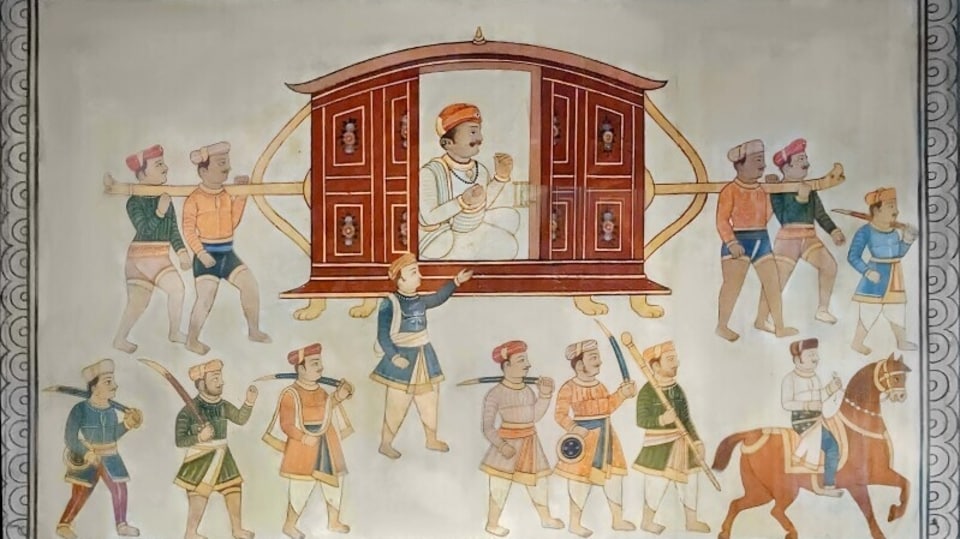
Sarbuland Khan, the powerful governor of the province, needed cash to fight off political rivals. Of late, this morphed into utter desperation as there was no financial help from the reigning Mughal emperor Muhammad Shah, who resided a thousand kilometres away in Delhi. Having entered Bhadra Fort from the Teen Darwaza gate, Khushalchand and his partner passed the fish market on their right and scurried across the central plaza towards the governor’s chamber. Khan’s mounting irritation was audible across the way.
As they entered the echoing hall, the large gathering of government officials and elites of the city came into clear focus. Mughal officials stood erect and silent, and even more fretful looking were the other merchants of the city, several with their backs glued to the wall. Of the moneyed merchants present, two of them had just refused loans to Khan, and the needy politician had them thrown behind bars. Khushalchand, at the time Ahmedabad’s wealthiest businessman, was his last hope.
Yet, there was a major hiccup.
Khushalchand had already provided several loans to Khan’s government in weeks prior. These totalled several hundred thousand rupees, and there was no indication that the state representative would repay the large sum. For Khushalchand, making any further advances was inopportune if not outright foolish.
Sensing hesitation in Khushalchand’s demeanour, the Mughal governor became enraged and suddenly turned violent. Picking up his long leather whip, Khan brutally whipped Khushalchand. The banker cowered in terror as his first beating from a Mughal official transpired in full view. This was the first time that he had been subject to extortion of the most intrepid kind. It was even more humiliating as state officials and elites of the city stood witness. Khan capped the beatdown with an injunction, that Khushalchand immediately hand over any “hidden money and wealth, located either at home or buried elsewhere.”
Under immense duress and without any choice, Khushalchand gestured his company associate to accompany Khan’s men to his large mansion. The home was situated in the heart of Jhaveriwada, or the Jeweller’s Quarters, located on the other end of the walled city. The occupational namesake of the family, the residential manors of the famed Jhaveriwada contained the largest concentration of private wealth in the city.
Eager to recover all that Khushalchand possessed, Mughal officials dug deep and wide around his large home. They found priceless jewels and batches of silver and gold money. They confiscated these personal possessions, along with other valuable items belonging to Khushalchand’s family.
Khushalchand was held prisoner in the fortress without bail. Three days later, and still not satisfied with the wealth brutally extorted from the Jhaveri family, Sarbuland Khan “once again lashed Khushalchand the banker with his own hands and exacted 200,000 silver rupees from him.”
Khushalchand was subject to beatings and merciless extortion for twenty-one additional days. Finally, on October 28, 1726, Khan sentenced Khushalchand to “prison confinement until death.”
This was the first time in recorded history that a member of the Jhaveri family was tortured at the hands of a Mughal official. In earlier times, members of the family were considered close friends of the court. Such favourable relations were transforming into theatrical-level hostility as the Mughal state’s need for money grew rapidly, and as the royal family’s political footing in Gujarat, and really across much of the subcontinent, was being challenged by rivals.
Yet, unpredictable physical torture and erratic imprisonment for confiscatory sums was no way for the city’s top bankers to live. Violence was disruptive. Plus, Ahmedabad’s businessmen could hardly match the physical strength and tenacity of seasoned military officers like Khan, who were willing to risk lives, whether their own or that of others, to remain in power.
How then did Khushalchand Jhaveri overcome the political instability that threatened his personal safety and the fortunes of his family, which were built up over several generations?
The answer lies somewhere in the intrigue involved with moving and manipulating capital. He was intimately familiar with the art and skill of money play. He saw immense opportunity in deploying his own personal finance and that taken from other business elites given the growing impoverishment of Mughal elites.
The changing contours of how financial and political elites interacted with each other during the high and low periods of Mughal rule between the 17th and 18th centuries form the subject of my new book, which centres around the remarkable experiences of the Jhaveri family across four generations. In doing so, it advances two key arguments about money, power, and politics in India.
First, the breakup of the Mughal Empire starting in the 1680s fits global patterns of military-logistics overstretch, that is, pushing ambitions of state growth further and faster than what the Mughals could administer and pay for.
Mughal government relied on commodity-backed silver as its primary currency. Much of this raw silver came to India from South American mines through trade. Unlike modern times, the Mughal state could not simply print more coins to resolve its financial woes.
To overcome this, provincial governors, including Khan, began borrowing heavily from prominent businesspersons, especially members of the Jhaveri family. This started out amicably, then turned violent, and was finally resolved by the 18th century by bankers themselves who found ways to reap profits from financing political tussles. Such financing echoes our own times as democratic elections are won through contributions made by business interests to prominent parties.
Second, Mughal financial troubles both coincided with and furthered political crisis. As central ministers and provincial governors realised that the empire from which they derived power, belonging, and income was going bust without recovery, they sought to extract all that they could from a crumbling Mughal edifice in the locality.
Many even tried to establish their own areas of independent control, often involving surprising alliances with rivals, such as the Marathas, against whom they fought tough battles in years prior. Such scrambles by political elites to preserve older forms of leadership and establish new state machinery provided significant opportunities for financial entrepreneurship that members of the Jhaveri family astutely identified and duly exploited.
The family that withstood it all
At least four generations of the Jhaveri family were central to political life between 1600s–1800s. It was the founding patriarch Shantidas Jhaveri (1584–1659) who achieved fame and fortune as the chief jeweller of Mughal emperors Jahangir and his son Shah Jahan. As expertise and wealth were passed to his sons and then grandson Khushalchand (1680–1748), the family grew the firm into one of the most recognised business houses of the subcontinent.
After annexing India in 1858, the British criminalised aspects of Jhaveri banking, forcing the family to pivot into modern industry. These leaps were made by later descendants, most notably Kasturbhai Lalbhai who earned wealth from cotton trading and textile manufacturing. An associate of Mahatma Gandhi, Kasturbhai was involved in the politics of labour, industry, and municipal governance in Ahmedabad.
The political climate during this period was volatile with growing antagonism against colonial rule. While Kasturbhai was most concerned with maintaining a reliable workforce for his mills, political agitation was disruptive to business.
The Indian National Congress also required finance to organise and coordinate party activities across major cities Bombay, Calcutta, New Delhi, and Ahmedabad. Four prominent industrial houses across these cities became critical to the Congress Party.
This strongly suggests that political upstarts relied on business wealth to grow their footprint. In his Collected Works, Mahatma Gandhi records several letters to Kasturbhai for funds. Kasturbhai also cultivated relationships with colleagues G.D. Birla of Calcutta, Thakurdas of Bombay, and Lala Shri Ram of Delhi.
Businessmen tried to shape political climates to ensure matters related to excise duties and industrial rights tilted in their favour. Political financing was the most efficient and impactful tool.
Taking a step back and viewing the family across several generations, we see how they combined political awareness, money resources, and bouts of courage to boldly connect themselves to a regional centre of power.
As political finance in India comes under increasing scrutiny, it is instructive to know that business elites like the Jhaveris have always tried to influence political outcomes. Yet, our times are unlike the Mughal era, for we are a democracy. The question lingers, how should governments meant to represent the people assume the burden of large sums funnelled into party coffers?
Sudev Sheth is a professor at the Lauder Institute, University of Pennsylvania where he teaches across the School of Arts & Sciences and the Wharton School. He is the author of 'Bankrolling Empire: Family Fortunes and Political Transformation in Mughal India' published by Cambridge University Press. The views expressed are personal.


