
 E-Paper



Remembering the women of the Constituent Assembly | Opinion
History has not been kind to them. Most of the stalwarts of the assembly have faded from the public conscience

 Prefer HTon Google


In 1925, Mahatma Gandhi remarked that “As long as women do not come to public life and purify it, we are not likely to attain ... swaraj. Even if we did, we would have no use for that kind of swaraj to which women have not made their full contribution.” A few years later, he remarked that “the role women played in the freedom struggle should be written in letters of gold”.
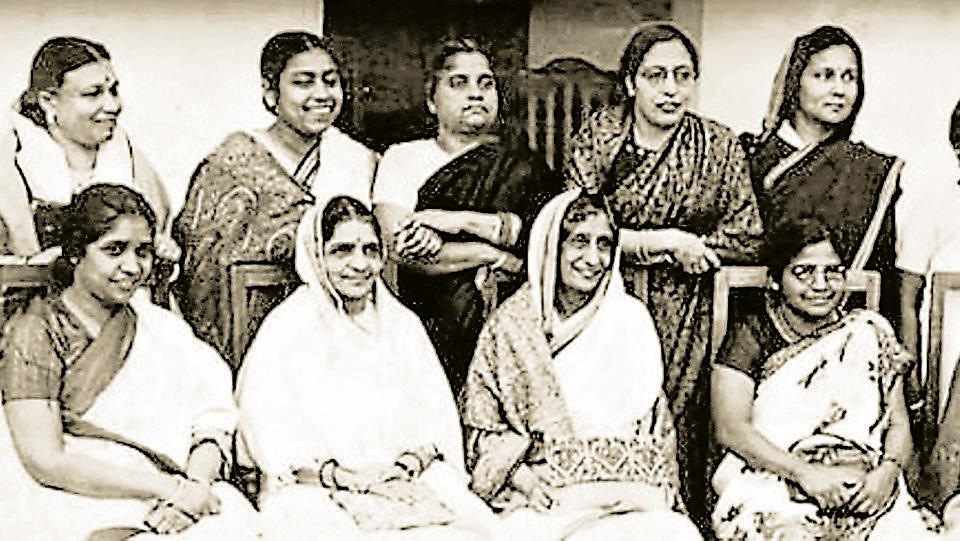
To say that the women of the freedom movement lived up to the Mahatma’s standards would be a gross understatement. Going beyond the actual freedom movement itself, women parliamentarians played a critical role in guiding the Constituent Assembly, thereby, playing a significant role in determining the form and the future of the Indian Constitution. Indian history, however, has not been kind to the women stalwarts as the Mahatma would have wanted, and far from being remembered in “letters of gold”, most women of the Constituent Assembly have gradually faded from the public conscience.
In the 71st year of the Republic, one must recollect the contributions of these women to its creation. From Dakshayani Velayudhan’s transcendence of her status as a Pulaya woman to Rajkumari Amrit Kaur’s founding of the first All India Institute of Medical Sciences as India’s health minister, the women’s movement today owes a debt of gratitude to the stalwarts of the past. The Constituent Assembly debates were, in many ways, shaped by the contributions of Begum Aizaz Rasul, Durgabhai Deshmukh, Renuka Ray, Purnima Banerjee and several others. To this day, defenders of the Indian Constitution rely on their contributions.
However, for all the exceptional contributions of the women of the Constituent Assembly, we have struggled to actualise and institutionalise the role of women in the politics of the present day. From a representation of 5% in the first Lok Sabha election, the percentage of women representatives in the house has gone up to a mere 14%. Since 1962, of the 543 constituencies in India, nearly half (48.4%) have not voted in a single woman MP, which is one of the gravest representative injustices in the country’s history.
In the past, the indicators measuring the empowerment of women in India has improved steadily. In the health sector, the country has seen rapid improvement in maternal mortality rates. The education sector has seen a jump in school enrolment rates. While women in India continue to improve their capability and enhance their economic contributions to society, the Indian electorate still deems them unfit for representative duty.
The 2019 election, however, shows that change is at hand. Apart from sending the highest number of women to the Parliament, the present government has tasked women to lead critical ministries. From the deft handling of the external affairs ministry by the late Sushma Swaraj in the last term to Nirmala Sitharaman’s remarkable resolve in her term as the defence minister and now finance minister, women in India have shown that they are more than capable of leading when given the opportunity.
Beyond ministerial allocations, however, the numerical representation in the Cabinet remains woefully low, and from the high of six women cabinet ministers in 2014, we have fallen to three. Even more worrying is the decline of women’s representation in the higher levels of governance. The Economic Survey of 2017-18 observed that women constituted 44.2% of elected representatives in panchayati raj institutions. At the state-level, however, especially in the Hindi heartland, women’s representation effectively collapses. The current Uttar Pradesh cabinet features only one woman; Madhya Pradesh has two; Bihar has only one; and Rajasthan has none.
The message sent to the young women of India is not particularly subtle. While women continue to cast their votes in greater numbers, the real chances of senior leadership at the state and national levels are few and far between. Resolving this divide is key to living up to the hopes and dreams embodied by the women who shaped our Constitution.
Let us learn from our greats, and try to achieve a representation level which is both substantive and inclusive. Let us strive towards the intersectional emancipation of women from all backgrounds, regardless of religion, caste, or creed. In her 1949 speech to the Constituent Assembly, Ammu Swaminathan responded to claims of historical gender injustice by saying that “the Indian people themselves framed their Constitution and have given rights to women equal with every other citizen of the country.” In 2020, it is high time we transcend a de jure understanding of these rights, and move towards their substantive actualisation.
The views expressed are personal


