
 E-Paper



View: India-Canada ties could worsen before they get better
Justin Trudeau’s unsubstantiated allegation against India over Nijjar’s killing has created a mess of bilateral relations. The ball is now in Canada’s court.

 Prefer HTon Google


With the US virtually asking India and Canada to bilaterally sort out the diplomatic row while seriously investigating the allegations over terrorist Nijjar’s killing, the ball is now squarely in Ottawa’s court. Either Prime Minister Justin Trudeau has to legally substantiate the “credible allegations” made against India a fortnight ago in Parliament or take back his accusation that India ordered a hit on Sikh terrorist Hardeep Singh Nijjar on June 18 in British Columbia. Nijjar was the operational chief of Khalistan Tiger Force with terror training in Pakistan in 2012.
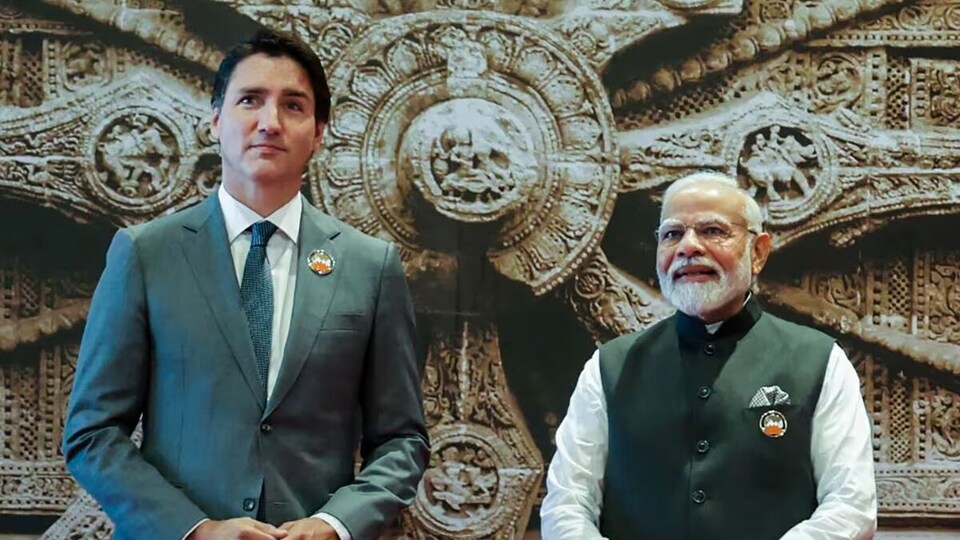
While the Narendra Modi government is maintaining radio silence on diplomatic channels with Canadian propaganda media stating that the allegation was based on surveillance (interception) of phones of Indian diplomats, New Delhi is waiting to act on the legal proof of Indian involvement in the Surrey killing if and when provided by Ottawa.
Fact is even before the so-called allegation was made to stand legal scrutiny, Canadian Foreign Minister Melanie Joly had already publicly indicted India and asked Pawan Kumar Rai, a RA&W officer under official cover, to pack his bags and head home. Canada also deliberately dragged its closest ally US into the diplomatic row by stating that the intelligence on Nijjar’s killing was given by one of the countries in the Five Eyes Anglo-Saxon alliance.
While External Affairs Minister S. Jaishankar discussed the Canadian affair with his US counterparts this week in Washington, the Indian response to Canada was the expulsion of Olivier Sylvestre, an official representative of Canadian Intelligence in India, suspension of visa services for Canadian nationals and seeking diplomatic parity in respective embassies as per Vienna Convention.
Clearly, the Indian strong action took Canada by surprise with Prime Minister Justin Trudeau stating that he did not want escalation with India and his Foreign Minister now saying that Ottawa wants a stronger diplomatic footprint in India. Fact is that foreign embassies in India maintain large embassies and staff and use the democratic polity to monitor the entire sub-continent and China.
Given the umbilical relationship between the US and Canada, the Modi government will have to put its best diplomatic foot forward to navigate through the mess that has been caused by allegations made by Trudeau with a radical Sikh vote bank in mind. All thanks to miniscule radical Sikh extremists and gangsters taking shelter in Canada, the other Indian diaspora including the large student community will be made to suffer with suspension of visa services and withdrawal of diplomatic staff. Trudeau’s move has also tried to cast a shadow on India-US relations and the QUAD grouping at large even though EAM Jaishankar has discussed the matter in detail with his counterpart Anthony Blinken and NSA Jake Sullivan. Clearly, matters will get worse between India and Canada before they recover from the blow struck by Trudeau on bilateral ties.


