
 E-Paper



Why the demand for MSP law is central to the farm movement
The MSP law needs to make farmers active participants in the agriculture reform story. Having gone through pain and anguish for a year, farmers may not return home without an MSP guarantee law

 Prefer HTon Google


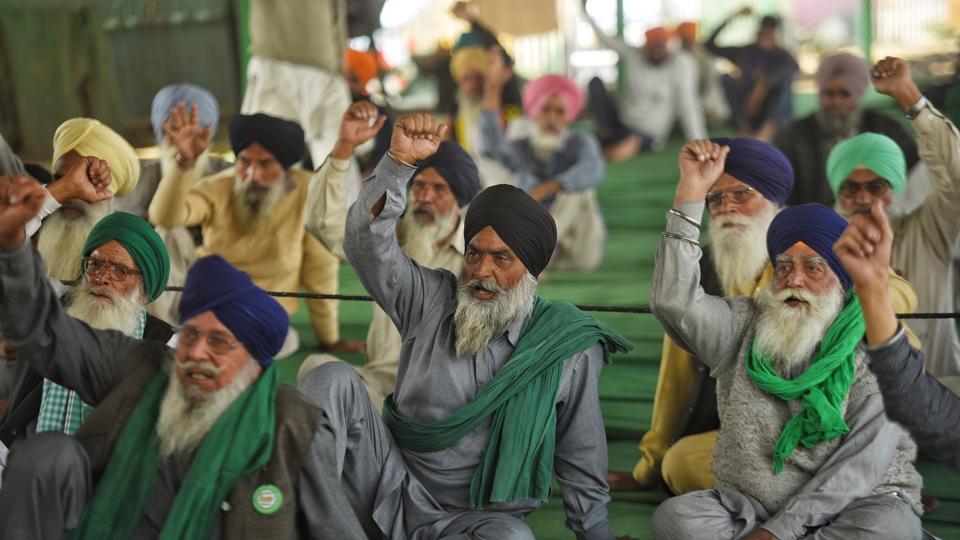
Prime Minister Narendra Modi, on Friday, announced that the Centre will withdraw the three farm laws, against which farmers had been protesting at Delhi’s borders for close to a year. He said that the government was not able to convince the farmers about the benefits of the “agri-reform” laws. On Saturday, the 30-odd farmer unions welcomed the decision but refused to vacate Singhu and Tikri borders. They said they would not return without a law guaranteeing minimum support price (MSP) for agriculture crops.
Seeking a law for MSP has been a long pending demand of farmers from across the country and even noted agriculture scientist, MS Swaminathan, had advocated a “realistic” MSP to farmers to assure minimum profit for months of hard labour. Demand for an MSP law has been gaining traction among all farmer bodies, including the Rashtriya Swayamsewak Sangh’s Bharatiya Kisan Sangh, which, earlier this year wrote to Prime Minister seeking a law guaranteeing MSP.
Research studies, including the Situation Assessment of Agriculture Households report released in September 2021, showed that a farmer earns less than ₹30 per day from cultivation and there has been almost negligible growth in their income in the past decade or so. My colleague in Hindustan Times, Roshan Kishore, on September 14 published an analysis on farmer income, which showed that an Indian farmer earned on average 27 daily from cultivation in 2018-19, less than what a Mahatma Gandhi National Rural Employment Guarantee Scheme (MGNREGS) worker gets, indicating at a viability crisis in the agriculture sector.
Around 70% of India’s population is directly or indirectly dependent on agriculture for livelihood, even though migration to cities for work adds to agriculture income and help families sustain themselves. For most, livelihood just on agriculture income would be impossible as farm gate prices have remained almost stagnant whereas inputs costs, especially fertiliser, chemicals and labour, has increased manifold. With these being the harsh ground realities, farmers have little option but to fight for an MSP guarantee law.
One may recall that farmers got MSP in the 1970s after a prolonged agitation in Punjab, Haryana and western Uttar Pradesh. More than 50 years later, farmers are seeking a way forward through a legal guarantee to MSP as there have been instances of farm produce in various parts of the country, except in Punjab and Haryana, being bought at prices lower than the MSP by private players. There has been a feeling among farmers that unless the government provides an MSP guarantee through a law, agriculture will become economically unsustainable for future generations.
The farmer bodies have been demanding that the new MSP guarantee law should cover all agriculture produce and not just 23 food commodities, for which the Commission for Agriculture Costs and Prices declares MSP before the onset of agriculture season every year. The argument for MSP for all crops is derived from how vegetables suffer from no assured pricing system, where farmers are at the mercy of open market fluctuations. This year, farmers in Madhya Pradesh, Uttar Pradesh and Bihar, dumped their tomato produce on roads as prices plummeted to less than ₹five a kilogram, barely enough to meet the transportation cost, whereas consumers in cities continued to get the vegetable at more than ₹30 per kilogram. There has been a similar story in the case of onion in the past. This will continue to happen if farmers are not assured a price before the onset of agriculture season.
The argument being made against MSP is that government has no business to regulate prices in an open market economy. That is not true. In the case of electricity, the government assures prices through Power Purchase Agreements (PPAs), even though the sale of power is through an open exchange. It means the miners know at what price they can sell coal to thermal power plants and renewable energy companies get assured profit on their investment. The power purchase agreements get legal backing through the electricity regulatory commissions, which ensure tariff as per the PPAs, a reason for the yearly increase in power tariffs in most states. The power sector does not suffer from vagaries of weather such as the farm sector. A similar price assurance through a legal framework needs to be given to farmers.
An MSP law could well be an overarching framework to protect farmer rights and has to ensure that even the private players are not able to buy agricultural produce less than the notified MSP, which is the minimum sale price, not the maximum. And, this is possible, considering the kind of profits one see private players make by buying the produce at a low price and selling at a high price in the markets. No food company has shown a loss in their annual reports in the recent past, unlike farmers, whose debt has been on the rise.
The new MSP law has to push the farmer to reduce their dependence on the use of fertilisers and pesticides and integrate the farm economy with food production companies. Tax rebates to farm companies, which buy directly from farmers at MSP or higher price, and set up state of art food processing companies in rural areas, needs to be given. MSP for all crops would ensure incentive for crop diversification, especially for less water-intensive crops in Punjab and Haryana as there will be price assurance mechanism. A new MSP law, implemented through a farm regulatory authority in every state having representatives of farm bodies, can bring transparency in the agriculture sector.
The MSP law needs to make farmers active participants in the agriculture reform story. PM Modi made it clear on Friday that the Centre will hold talks with all stakeholders on reforming the farm sector. Having gone through pain and anguish for a year, farmers may not return home without an MSP guarantee law; they have decided to hold MSP Mahapanchayats across the country. The government needs to start talking to farmers on the MSP law if they want them to leave Delhi’s borders soon.
The views expressed are personal


