
 E-Paper



Remembering India's WW1 dead

 Prefer HTon Google



In a quiet village, amid the former battlefields of France, Dominique Faivre, a major collector of Indian memorabilia from the Great War is staging an exhibition. Faivre is the biggest private collector of personal objects belonging to Indian soldiers who fought in WW1.
Standing on what used to be the Indian trench line cutting through a small French village on the Western Front is an Indian looking building surrounded with weeping willows. A white pillar flanked by two lions emerges from this memorial of Neuve Chapelle, looking over what were once battlefields where Indian soldiers fought.
Designed by Sir Herbert Baker, the famous architect of Parliament House in Delhi, this monument bears the names of more than 4,700 Indian soldiers and labourers who lost their lives in France and Belgium during World War 1, and have no known graves.

Excited Parisians surround Indian sepoys after the Bastille Day Parade of 1916, keen to be part of a historical moment.Photo courtesy Mapin Publishing / The Print Collection / Getty Images and Indian Troops in Europe by Santanu Das
Not far from the memorial is the village where Dominique Faivre has put together an exhibition on the Indian contribution to the war. Faivre is the biggest private collector of personal objects belonging to Indian soldiers who fought in WW1. He has been meticulously collecting these items over decades.
Also read: Life goes on as if nothing happened, but we must never forget, says Dominique Faivre
"I found the history that these objects tell more moving than what I have read in books and records," he says. "There remains a bit of those men's stories in these objects that they touched and used, and I have found many of these objects right here, on the very soil where they lived, fought and died."
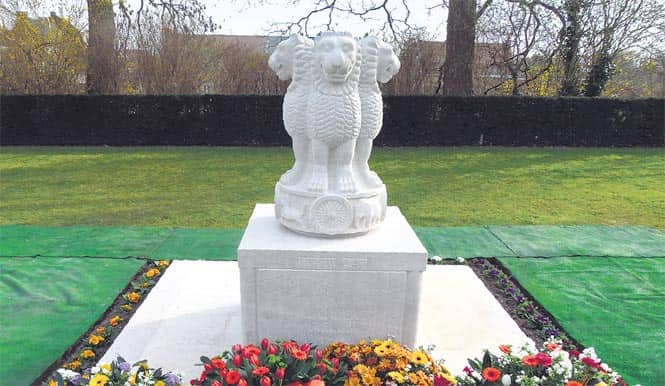
The Indian memorial at Menin Gate in Ypres, Belgium
Faivre says he unearthed many items, including lotas (tumblers), thalis (large ridged dining plates) and insignia, from farms in the region. He has also been combing flea markets and local websites for objects found by others and put up for sale. In all, Dominique now owns more than 50 objects, including 20-odd insignia (see below).
"In these quiet towns and villages, the dark brown earth of the plush countryside hasn't forgotten the horrors of the war," says Faivre. "Farmers here still unearth shrapnel and bullets as they till their fields."
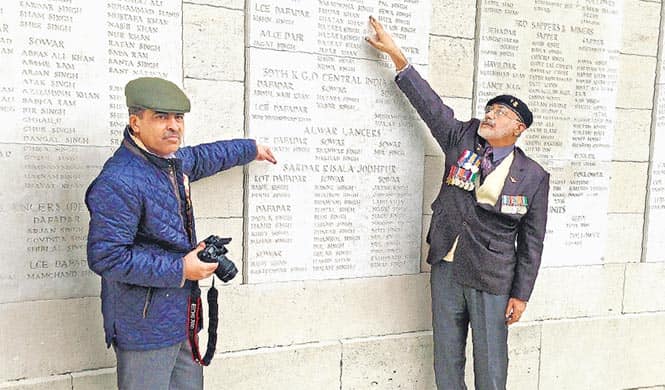
Like most locals, Faivre grew up hearing stories of the war. His grandmother encountered many Indians at the local evacuation centre and hospital where she worked. Faivre remembers her saying that she felt sad for them because they were so far from home.
The Indians were not allowed to mix freely with the local population, but they were often approached by curious children in the areas where they were stationed. Stories that those children later told Faivre drew him to study the history of these Indian soldiers.
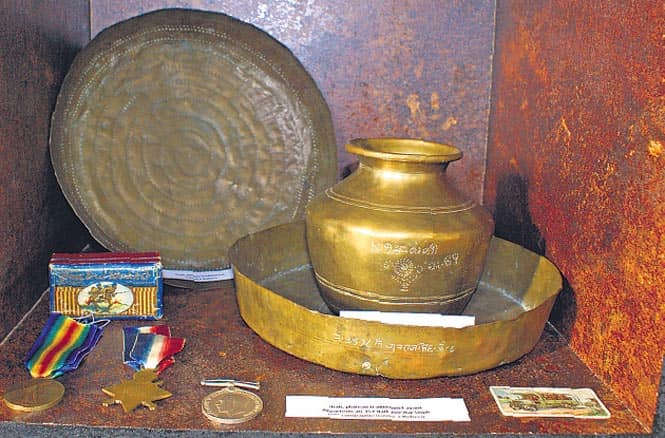
"People in the region spent four years getting to know foreign troops from various countries in the Commonwealth and beyond. But it's the Indians who left a lasting memory," he says.
Faivre works with an organisation that cares for developmentally challenged people, and does his world war research in his spare time. He has done a great deal of research on the story of the Indian corps and was the first to publish a book in French about their history in the region. His dream is to see a historical centre set up where the Indians lived for a year and where the labour corps continued even after the troops had left.
While some of the war stories are finally being claimed with pride, Faivre regrets that others are still taboo. He speaks of 'illegitimate' children born from relationships between Indian soldiers and French women.
"Although time has passed, it is still a difficult subject to discuss," he says. "Their grandchildren do not want to talk about it."
 An Indian insignia (Left); Indian infantry in the trenches, prepared against a gas attack. Photo courtesy India Corps on the Western Front by Simon Doherty and Tom Donovan (middle); A khaki tunic worn by an Indian solider. Most Indian soldiers came dressed in this kind of uniform (Right) | Photos courtesy Dominique Faivre |
IN NUMBERS READING LIST SPECIAL EVENTS |


