
 E-Paper



See Madhusudhanan’s interpretation of the Wagon Tragedy of 1921

 Prefer HTon Google


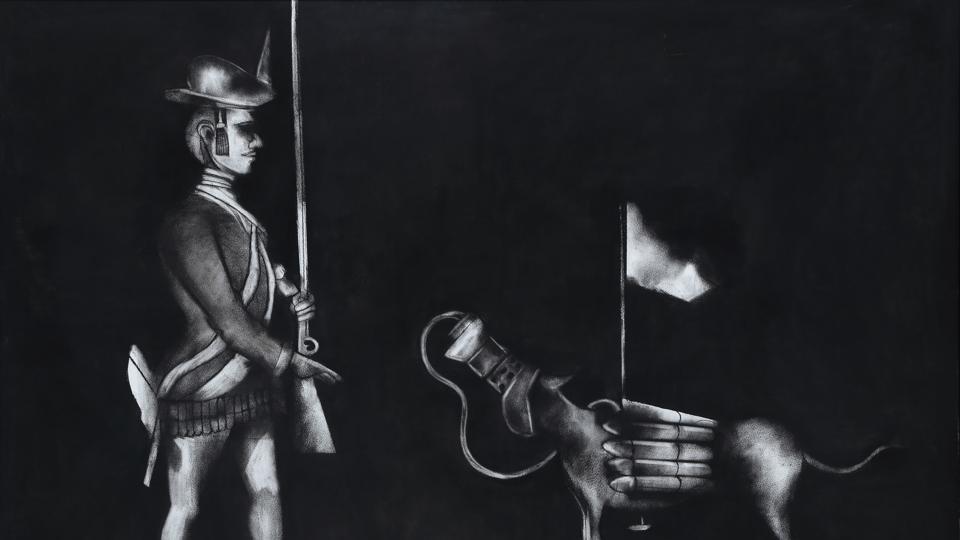
Selected works of artist and filmmaker Madhusudhanan are on display at the Vadhera Art Gallery
On November 20, 1921, the Colonial government detained more than 90 rebels in Kerala who were said to be involved in the uprising. They were bundled into a freight wagon to the central prison in Podanur city, near Coimbatore in Tamil Nadu. Podanur prison was running to full capacity. It was ordered that the prisoners be sent back. On their return journey, at least 60 prisoners suffocated to death. The incident, known as Wagon Tragedy, is the inspiration for the charcoal drawings made by Kochi-based artist and filmmaker Madhusudhanan, currently on display at the Vadhera Art Gallery.
Through the works titled ‘Marx Archive- The Logic of Disappearance’, the artist has attempted to show the continuous shifting positions of bronze statues of communist leaders such Marx and Lenin in 1991 after the fall of the Soviet Union.
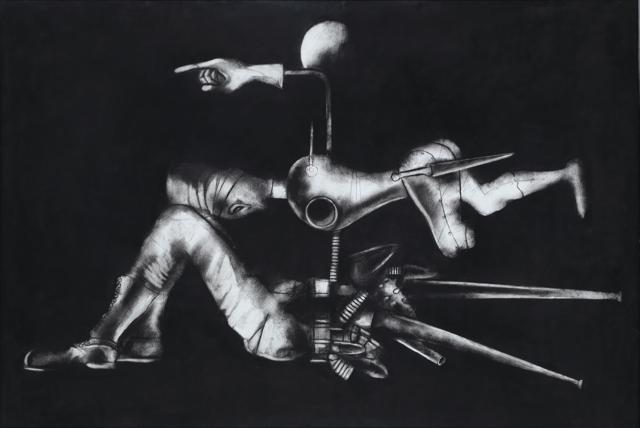
Madhusudhanan has named the series ‘Penal Colony’ based on a 1914 story by Franz Kafka named ‘In the Penal Colony’. The central theme of the story is a mechanical instrument designed to kill a man after a terrible 12 hour-long torture. “The objective was to understand the Wagon Tragedy against the background of Kafka’s story. The tragedy and Kafka’s book had very different contexts and we do not see clear similarities. Yet, both are grim and involve annihilation,” said Madhusudhanan.
One of the works in the series depicts Tipu Sultan, the ruler of the Mysore state, with a toy, picturising his personal emblem, the tiger.
‘Power and Knowledge’ is a series of designs printed on matchboxes. “The matchbox industry shifted from Calcutta to Sivakasi in 1921, the year the Wagon Tragedy took place. Images printed on these boxes include that of Tipu Sultan, a ship and hand grenade. They convey conflict in some way or the other,” said the artist.
While A Marx Archive- Logic of Disappearance has been shown at the Kochi Muziris Biennale 2014-15, the series Penal Colony has been shown at the Venice Biennale 2015. This is Madhusudhanan’s first solo show in the country.
What: Exhibition “Penal Colony” solo show of Madhusudhanan
On till: 10th January
Where: Vadehra Art Gallery, D-53 Defence Colony
Call: 46103550/ 46103551


