E-Paper



Assam has decided to reject Congress, bring BJP to power: Sonowal
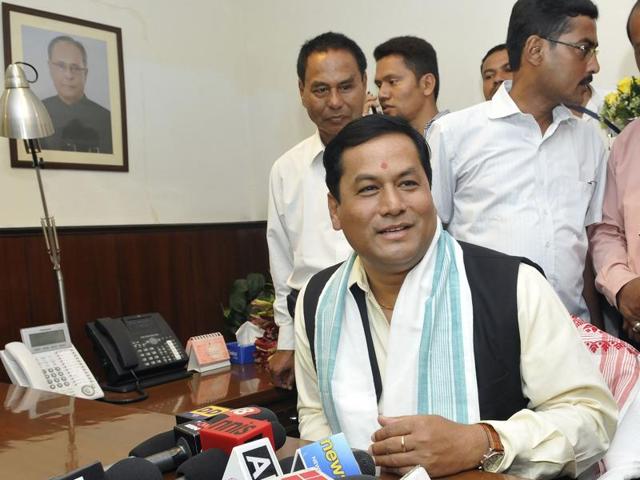
BJP’s chief ministerial candidate for Assam, Sarbananda Sonowal, spoke at length with Utpal Parashar about the party’s prospects ahead of assembley elections.


BJP’s chief ministerial candidate for Assam, Sarbananda Sonowal, spoke at length with Utpal Parashar about the party’s prospects, major polls issues and his chances from the Majuli constituency.
What is your reading of the poll scenario in Assam at this stage?
The people of Assam have decided to bring BJP to power because they want development, good governance and security. Congress has miserably failed to protect the interest of the local people of Assam, the greater Assamese society living in Barak Valley and Brahmaputra Valley.
Congress has polluted the whole system and made it corrupt. Corruption isn’t confined to the state capital but it has been decentralized to the grass roots through ‘panchayati raj’ system. Only Congress leaders, ministers and MLAs benefited during 15 years of Tarun Gogoi’s government.
How many seats are you confident of winning?
BJP is still marching with our target of Mission 84. The target (of winning 84 of the 126 seats in Assam along with alliance partners Asom Gana Parisdhad and Bodo Peoples’ Front) is still very much reachable. We are confident of that and working hard day and night.
The BJP campaign has focused on stopping influx of illegal immigrants from Bangladesh. Do you think it would be a major factor with voters?
People feel that under the Congress regime, the self respect, the ‘swabhiman’ of Assam can’t be protected. Our land, our culture is very much insecure under their regime. They have tied up with elements like Badruddin Ajmal, whose party, All India United Democratic Front (AIUDF), has been advocating for the settlement of illegal migrants in Assam since its inception.
The indigenous people of Assam have become endangered due to such large scale entry of Bangladeshis. Voters now firmly believe only BJP can stop the influx of illegal immigrants from Bangladesh and protect interests of the bona fide Indian citizens living in Assam.
How would you rate 15 years of Tarun Gogoi-led Congress government?
No development took place in the last 15 years. All the major industries have shut down. Unemployment has grown from 9 lakhs in 2001 to 26 lakhs in 2015-16. There is no hope under their regime. People have now decided that Congress should be rejected and BJP brought to power. BJP has been performing in other states like Gujarat, Madhya Pradesh and Chattisgarh excellently, so people think only BJP can bring bright changes to the lives of people of Assam.
What made you decide on contesting from Majuli, the largest river island and centre of Vaishnavite culture in Assam?
Majuli is the most backward constituency in the state. This place has made enormous contribution to the growth of human values and universal brotherhood in Assam. It is most important to protect Majuli from the erosion of Brahmaputra and restoration of culture, heritage and values in Assam. That’s why I have chosen Majuli as my constituency.
What are the problems your constituency faces?
There are several challenges as there are no proper roads, no bridges connecting Majuli to the rest of the world, no infrastructure for health, sanitation or good education, no drinking water. That’s why I thought if any visible changes have to be brought to Assam the starting point should be Majuli. I am quite confident about my victory.
What’s your response to ULFA (I)’s charges against BJP for fielding a former militant accused of masterminding extra-judicial killings from the Margherita constituency?
ULFA may say whatever they have to say but our focus in on what the people think. We have seen that the people of Assam have come forward spontaneously to support us, so it the people who will decide as they are the best judge. The people’s court will decide what is good or bad. Voters are the ones who play a pivotal role in election and we are confident that their verdict will be in our favour.