E-Paper



‘Illegal sand mining can cause Harda-like train tragedy’
A week after commission of railway safety blamed railway officials in its report for Harda twin train tragedy that claimed 30 lives, possibility of a similar train accident has come to light in Madhya Pradesh.


A week after commission of railway safety (CRS) blamed railway officials in its report for Harda twin train tragedy that claimed 30 lives, possibility of a similar train accident has come to light in Madhya Pradesh.
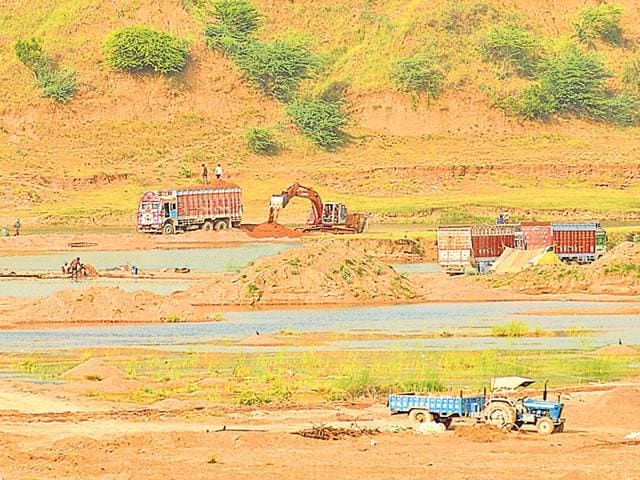
During a hearing in National Green Tribunal (NGT), the central bench was informed that illegal sand mining was going on in close proximity of the railway bridge over Narmada river at Jhansighat in Narsinghpur district’s Kotegoan area, leading to apprehension that such activity near the piers could seriously impair the safety of the bridge itself.
NGT has now asked the government to immediately inform the railway department, especially railway safety wing to take steps for ascertaining at the earliest whether there was any damage as a result of such illegal activity and whether any remedial measures were required to be taken by the railway department for ensuring the safety of the bridge.
The NGT was apprised about this issue during the hearing of a case filed by Vinayak Parihar. NGT got this information from the reply filed by the sub-district magistrate (SDM) Kotegaon Narsinghpur and other documents submitted before it. The hearing was held on Monday, but the copy of the order was made available on Tuesday.
The two-member central comprised justice Dalip Singh, judicial member and Bikram Sing Sajwan, expert member. The next hearing in the case will be on October 29.
What rail officials had to say?
When HT spoke to West Central Railway (WCR) public relations officer Piyush Mathur, he said given the seriousness of the matter he would immediately inform the senior railway officials about the matter. “Our technical experts would visit the railway bridge site soon to check the stability of the piers where illegal sand mining has been carried out,” he said.
Report sought on govt’s stand
The NGT has directed the state government to give details about steps it had taken for preventing illegal sand mining, saying it had come to know that 12 vehicles in the home district of chief minister Shivraj Singh Chouhan were seized for illegal mining.
The NGT gave the directions while hearing a case filed by Kolar-based activist Amarkant Mishra. The hearing was held on Monday, but the copy of the order was made available on Tuesday. The two-member central bench comprised Justice Dalip Singh, judicial member and Bikram Sing Sajwan, expert member. The next hearing in the case will be on September 29.
Bhopal Sand Truck Owners Association (BSTOA) and Confederation of Real Estate Developers Association of India (CREDAI), Bhopal chapter, had submitted applications for their inclusion as interveners in the case, but were rejected by the Tribunal. Counsel for BSTOA and CREDAI, Shantanoo Saxena told HT BSTOA had argued that the ban on sand mining during monsoons was affecting their livelihood, while CREDAI argued they were facing shortage of sand for construction.
NGT, in its order, said the restriction on sand mining during monsoon was not unreasonable. “All commercial activities like business trade, profession etc need to follow the law of the land and can be regulated by any reasonable restriction. The protection of the environment is the constitutional duty of not only every citizen but also of the state. Therefore, any exercise aimed at protecting the environment and having compassion for living creatures including aquatic life needs to be given that much of freedom,” the order said.