E-Paper



Madhya Pradesh: Betul case puts limelight on HIV
The bizarre case in Betul on Tuesday in which a HIV positive man set ablaze his wife and two children in his car, has put the spotlight back on HIV positive people in Madhya Pradesh.


The bizarre case in Betul on Tuesday in which a HIV positive man set ablaze his wife and two children in his car, has put the spotlight back on HIV positive people in Madhya Pradesh.

Though the engineer said on Wednesday that his wife and children were never tested for HIV, the incident has raised many questions on how people are dealing with HIV despite so many advances in medical science.
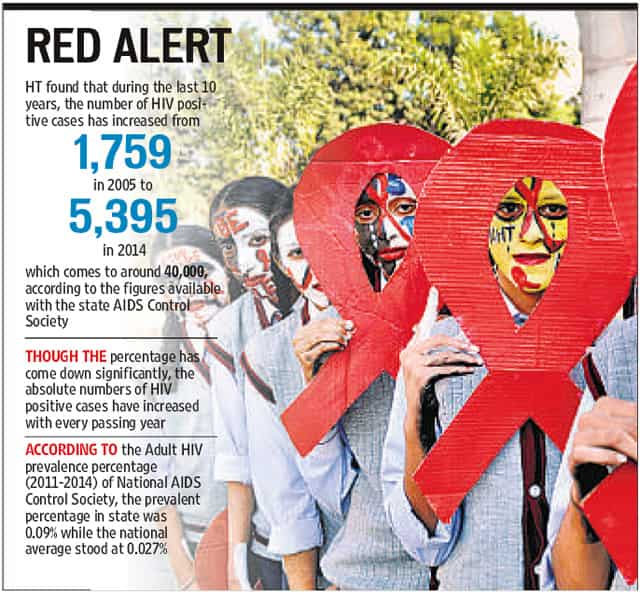
HT found that during last ten years, the number of such persons has increased from 1759 in 2005 to 5,395 in 2014, which comes to around 40,000, according to the figures available with the state AIDS Control Society.
Though the percentage has come down significantly, the absolute numbers of HIV positive cases have increased with every passing year.
According to the Adult HIV prevalence percentage (2011-2014) of National AIDS Control Society (NACO), the prevalent percentage in state was .09% while the national average stood at 0.027%
Mukesh Sinha, executive director of NGO, Madhya Pradesh Voluntary Health Association, said the bizarre incident prima facie shows that the man took the extreme step because of two reasons.
"First, because he would not have been able to deal with the stigma associated with the disclosure of his HIV positive status. Second, the fact that he was perhaps fully aware of HIV/AIDS. From my personal knowledge, I know many HIV people who have survived for nearly 18 to 20 years with proper nutrition, precautions and healthcare. Also, he should have known that HIV positive mother infects her child in only 30% of the cases. In 70% cases, she doesn't infect her child. And if this man had not got his children tested, it is very unfortunate. May be they didn't had HIV,” Sinha said.
When questioned about the surge, Sinha said that though there was an increasing trend, but the fact also remains that detection rate has also increased.
On whether awareness on AIDS has yet not percolated to the ground level in the remote areas, he said in recent times the funding for AIDS control had shrunk and AIDS control programme was yet to be made a mainstream campaign in the health department.
"Because of such things, the overall programme has suffered," he said.
Despite repeated attempts to contact the officials of the Madhya Pradesh State AIDS Control Society, they were not available for comments.
Read:HIV+ engineer who burnt wife, children changes statement