E-Paper



Madhya Pradesh govt to table bill against ‘forced’ interfaith marriage
Madhya Pradesh home minister Narottam Mishra said the Madhya Pradesh Dharm Swatantrey (freedom of religion) Bill, 2020 will be passed in the next session of the state assembly.

 Prefer HTon Google


Two Bharatiya Janata Party (BJP)-ruled states, Madhya Pradesh and Haryana, signalled on Tuesday that they will enact laws to regulate interfaith marriages between Hindu women and Muslim men, becoming the first states to formalise the crackdown on a hot-button issue for Hindu activists.
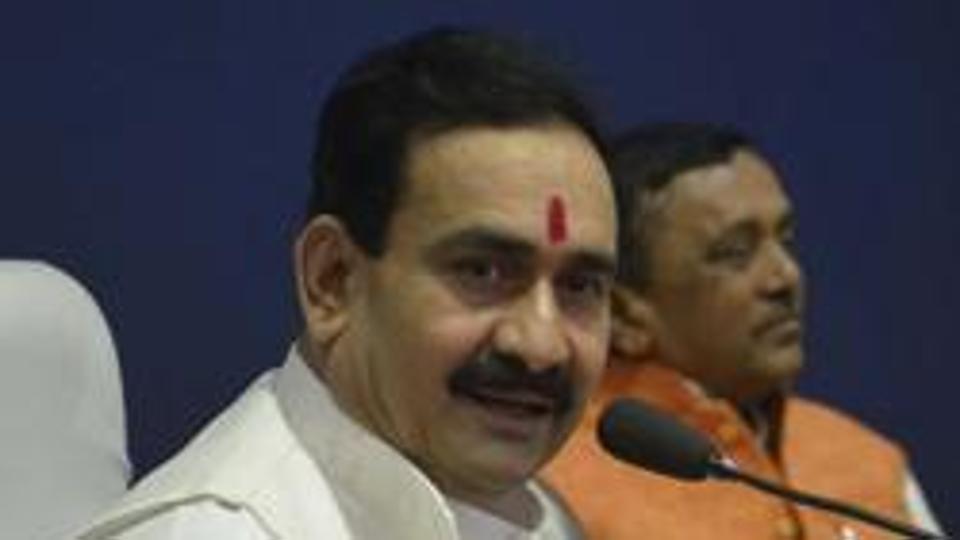
Madhya Pradesh home minister Narottam Mishra said the Madhya Pradesh Dharm Swatantrey (freedom of religion) Bill, 2020 will be passed in the next session of the state assembly.
He said the law -- with a provision of five years in jail for forced conversions for marriage -- was necessitated because of rising cases of love jihad, a term used by Hindu right-wing activists to describe marriages between a Muslim man and a Hindu woman.
“We are going to table the Madhya Pradesh Dharm Swatantrey Bill ,2020, in this winter session in December against love jihad, which means a woman is forced or lured by a person of other religion for marriage and later she is tortured for conversion,” said Mishra. He insisted that the BJP government was not against interfaith marriages but only against incidents of love jihad.
Later in the day, Haryana home minister Anil Vij said the state government intended to constitute a committee of officials to study and draft a law against love-jihad. “We will first have a discussion with chief minister, ML Khattar in this regard,’’ Vij said.
Vij said a representative of the advocate general’s office would also be a part of the committee. This committee will study similar laws enacted by other states, he added.
In MP, the proposed law -- key provisions of which were shared with HT by home department officials on condition of anonymity -- doesn’t mention any religion in particular in its provisions.
Mishra said the bill proposes rigorous imprisonment for five years for “luring a person through fraud and forcing marriage by religious conversion”. Other proposed provisions include making it mandatory for kin of the person being converted for the purpose of marriage to file a complaint.
“The forceful conversions and marriages will be a cognisable offence and non-bailable. There will be a provision for declaring such marriages null and void,” said Mishra. Besides, those assisting in such acts will be made co-accused in the case, he added.
The announcement came roughly two weeks after chief minister Shivraj Singh Chouhan signalled the government’s commitment to end love jihad, which Hindu activists describe as an organised conspiracy of Muslim men to trick Hindu women into marriages and effect a demographic change.
Haryana, Uttar Pradesh and Karnataka -- all ruled by the BJP -- have also promised to bring legislation to end love jihad.
In Haryana, Vij told the assembly on November 6 that the state government was deliberating on enacting a law to check forced conversions. He also referred to the murder of a young college student by her stalker outside her college in Faridabad.
Despite the political mobilization, experts say that the charges of love jihad are bogus and that adult men and women are free to convert under the constitutional right to freedom of religion. In February, the central government told Parliament that there was no definition of the term and no such cases were reported by agencies.
Retired high court justice AK Gohil pointed out that there was already a law against forceful conversion -- the MP Freedom of Religion Act -- which has a provision for imprisonment of up to two years. “If the state government wants to bring a specific law against forceful interreligious marriage, they should first define the meaning of love jihad because it is more an agenda of saffron organisation. Forceful interreligious marriage, which is emerging as a big problem, should be dealt sensitively,” he said.
Mishra said any person converting for marriage has to inform the magistrate of their district a month in advance. The Special Marriages Act, 1954, which allows interfaith marriages, has a similar provision, in which a magistrate issues a public notice about an interfaith marriage.
Congress legislator Kunal Chaudhary said the party will support any law for the safety of women. “The home minister should ensure the implementation of existing law as crimes against women are increasing by the day and the government is not taking any strict steps to curb it.”
BJP spokesperson Rajneesh Agrawal said, “We are happy that the state government is serious about these torturous marriages. The new law will definitely save the lives of many women.”
Jamiat Ulema-e-hind state president Hazi Haroon said, “The state government should understand the meaning of Love and Jihad first. This law will target people of one religion. This will definitely increase the gap between people of two religions as Love Jihad term was coined by a section of people to create communal tension.”