Sign in

MP: Implementing blanket ban on polythene from Jan 1 to be a challenge

Implementing the blanket ban on the use of polythene from January 1 will be a big challenge for the Madhya Pradesh government, given the legalities involved and its track record on enforcing curb on use of polythene less than 40 microns.

Published on: Dec 23, 2015, 19:30:06 IST
By , Bhopal
Share
Share via
  • facebook
  • twitter
  • linkedin
  • whatsapp
Copy link
  • copy link

Implementing the blanket ban on the use of polythene from January 1 will be a big challenge for the Madhya Pradesh government, given the legalities involved and its track record on enforcing curb on use of polythene less than 40 microns.

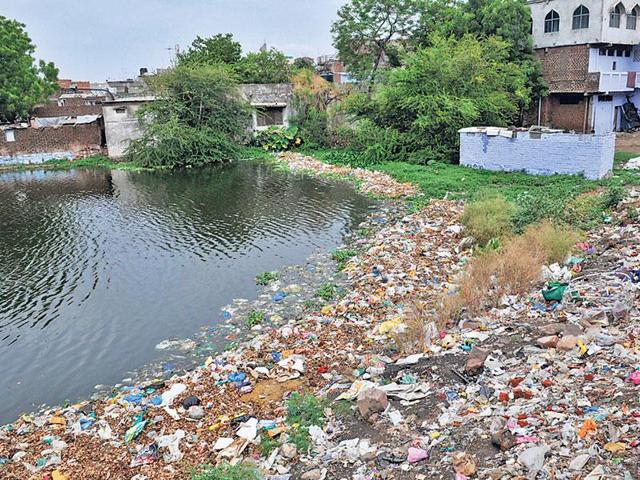
Polythene will be banned in the state from January 1, 2016. (HT file photo)

To protect the environment and public health, the Madhya Pradesh government has called for a complete ban on the use of plastic in the state from January 1, 2016 when a central legislation bans the use of plastic bags not having minimum thickness of 40 microns.

Sachin Verma, counsel for the state government in the 2013 Sandeep Lahariya case, told HT that though the state government had in principle agreed to ban polythene there were several legal impediments in making it work.

“A central legislation on the issue bans only polythene less than 40 microns in thickness. So in a way we can’t go against the central legislation on our own. And even if the MP government bans polythene, the plastic manufacturers would file a case against the state government, arguing there was no law which bans polythene over 40 microns,” said Verma.

Environmentalist Subhash Pandey too feels putting a ban on polythene in general would be difficult as polythene was used in many packaging materials. “Forget about polythene above 40 microns, the authorities have failed to enforce ban on polythene less than 40 microns. Since 2011, the administration has been trying to enforce a ban on the polythene have thickness below 40 microns, but it has not succeeded,” he said.
  • Neeraj Santoshi
    ABOUT THE AUTHOR
    Neeraj Santoshi

    Neeraj Santoshi is the Chief of Bureau for Hindustan Times in Uttarakhand, where he leads the state reporting team while covering government, politics, environment, wildlife, Uttarakhand High Court, and issues shaping the Himalayan region. With more than two decades in journalism across conflict zones, he has covered politically sensitive regions and environmentally fragile landscapes, and focused on stories that combine public interest with in-depth storytelling. An alumnus of Pune University with a Master’s in Communication Studies, he has reported extensively from Jammu & Kashmir (2003-2010), Madhya Pradesh (2010 to 2018 ) and Uttarakhand (Since 2018), covering subjects ranging from insurgency, elections and governance to wildlife conservation, mining, climate change, agriculture, human rights and social justice. He has covered politics and legislative assemblies of both Jammu & Kashmir and Madhya Pradesh over more than a decade. Before taking over as Chief of Bureau in Uttarakhand, he served as Special Correspondent with Hindustan Times in Madhya Pradesh and earlier reported for both Hindustan Times and The Indian Express in Jammu & Kashmir, where he covered state politics, environment and insurgency-related developments. Over the years, his stories have focused on environmental degradation, wildlife, illegal mining, governance and the changing social fabric of Himalayan states and Central India. He is particularly interested in long-form explanatory journalism, and stories that explore the intersection of ecology, conservation, governance and society. Outside the newsroom, Neeraj enjoys reading widely on neuroscience, consciousness studies, Artificial Intelligence and quantum physics, with a special interest in Kashmiri Tantric Shaivist traditions. He is also passionate about wildlife, mountaineering and the Himalayas, interests that continue to inform his reporting and deepen his understanding of the region he covers.Read More