E-Paper



‘Psychiatrists can help check farmer suicides’
The World Psychiatric Association’s first-ever Indian-origin president Prof Dinesh Bhugra said in Bhopal on Thursday that instead of playing down farmer suicides, the Indian government should seek the help of psychiatrists and use a holistic multi-pronged approach to prevent farmers from taking such an extreme step.


The World Psychiatric Association’s first-ever Indian-origin president Prof Dinesh Bhugra said in Bhopal on Thursday that instead of playing down farmer suicides, the Indian government should seek the help of psychiatrists and use a holistic multi-pronged approach to prevent farmers from taking such an extreme step.
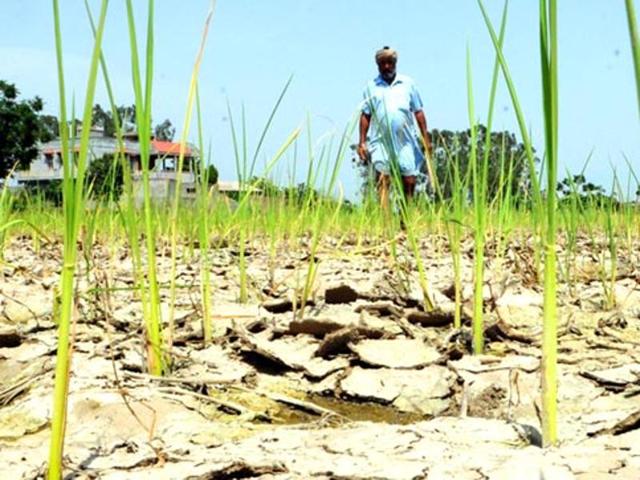
Bhugra spoke to HT on the sidelines of the four-day national conference of the Indian Psychiatric Society that began here on Thursday. Over 2,500 delegates, including 1,800 psychiatrists are participating in the conference, which is being held for the first time in Bhopal, according to Dr Vaibhav Dubey, organising secretary of the conference.
“Mental health cannot be looked in isolation. If you want a mentally healthy society, a society where farmers don’t commit suicides, you have to deal with the issue in a holistic manner. You have to deal with education, economy, employment, law and a whole range of other issues collectively. The approach has to be multi-pronged and accordingly the government has to tweak its policy. Then only farmer suicides or other issues related to mental health could be approached in the right way,” said Bhugra, who is professor of mental and cultural diversity at Maudsley International Health Service and Population Research Department David Goldberg Centre United Kingdom.
Bhugra, who is also a Fellow of the Royal College of Psychiatrists, stressed that farmers in India were committing suicides as there was no social support system when they faced a crisis.
He said the government should give basic training in mental health to all allopathic, homeopathic, Ayurvedic and Unani doctors, besides health staff at the ground level so that they could identify people suffering from mental disorders and counsel them to seek treatment from the nearest psychiatrist.
Bhugra said he was optimistic about India. “See India is a culture in transition. Ultimately it will find its balance. The question is whether it actively seeks to gain that balance by being aware of the pit falls or the balance will come in future on its own. India, unlike West, has advantage on two fronts. Indians have a strong sense of spirituality and family. Both these factors act as a support system, a buffer for people here when they are having a rough time,” he added.