
 E-Paper



Bihar election wide open, repeat of Maharashtra situation cannot be ruled out
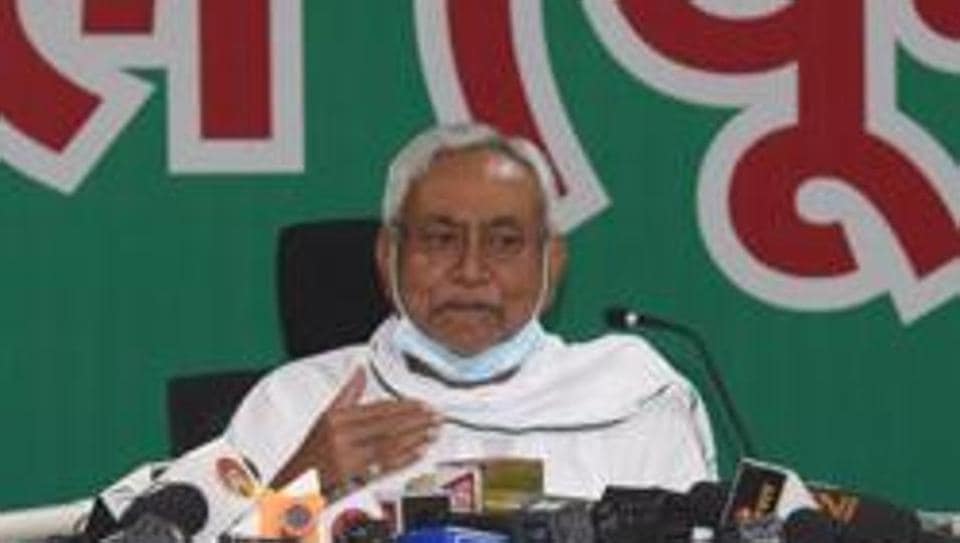
Officially, Nitish Kumar is the NDA’s chief ministerial candidate in Bihar but the LJP’s exit can create an impression that BJP can have its own CM, if the party wins more seats than the JD (U).

 Prefer HTon Google


The exit of Ram Vilas Paswan’s Lok Janshakti Party (LJP) from the National Democratic Alliance (NDA) in Bihar has opened up the state assembly elections.
Till last week of September, the NDA was considered as a clear winner with most opinion polls predicting an overwhelming majority for NDA and poor second for Rashtriya Janata Dal (RJD)-led Grand Alliance (GA) getting less than 100 seats in the 243-member Bihar assembly.
That sense appears to have changed with the LJP’s exit, creating an impression that the Bharatiya Janata Party (BJP) does not have faith in Nitish Kumar, who before 2015 assembly elections left the NDA and joined the Grand Alliance only to return to the fold in 2017.
Officially, Nitish Kumar is the NDA’s chief ministerial candidate but the LJP’s exit can create an impression that BJP can have its own CM, if the party wins more seats than the JD (U). The LJP can help the BJP as party president Chirag Paswan has been saying that Bihar needs an alternative to Kumar, who has been the chief minister for the last 15 years.
The only time the LJP contested alone in assembly polls in the past two decades was in 2005. In the election in February that year, the party contested 178 seats and won 29, bagging 12.63% of the votes. A fractured verdict meant another election in October in the same year in which the LJP contested 203 seats and won 10, with 11.1% of the votes. Since, then the party’s vote share has been on the decline.
Click here for full coverage of Bihar Assembly Election 2020.
The BJP considers that its vote transfer is a must for victory of JD (U) candidates in many seats dominated by upper castes. In the 2010 assembly election, when the BJP and JD (U) contested together, the JD (U) fought on 141 seats and won in 115 getting 22.61% votes. In 2015, when JD (U) was part of the Grand Alliance, it contested 101 seats and won in 71 seats, getting 17% of the total votes polled. The two assembly elections show that JD (U) has done better in NDA as the BJP votes got transferred.
The LJP’s decision to contest against the JD (U) is apparently aimed at preventing the transfer of BJP votes. The LJP’s decision to put up candidates in all the 122 seats that the JD (U) would contest is being seen more as a vote cutting exercise, in which the BJP sympathizers could opt for LJP, still an NDA ally, instead of the JD (U). It would be interesting to watch who would be the LJP’s candidates in these seats.
If the plan works, the BJP could emerge as a king-maker by winning more seats than JD (U) and can, thereby, wrest the CM’s post from the JD (U), a long standing wish of BJP leaders of the state.
Political activists say the LJP’s exit from NDA in Bihar is part of a plan to marginalise Nitish Kumar in state politics. “I think the revolt of Chirag Paswan (of the LJP) is not spontaneous. In some ways, it looks like a sponsored agenda to marginalise Kumar. I think this is the game plan, which will hurt the JD (U) and benefit the BJP to further strengthen its position,” said Patna-based political activist Saibal Gupta.
DM Diwakar, a former director of AN Sinha Institute of Social Studies, said it appears the LJP is working in tandem with the BJP. “If Dalit votes fragment and BJP’s committed support go to the LJP, then the JD (U) will find the going tough in those seats, where there is a distinct possibility of a triangular contest,” he said.
The irony for Nitish Kumar is that the main opposition to him becoming the CM for the fourth time is emerging from the BJP and not from the GA, which is considered far behind the NDA in the contest, according to different opinion polls published in September.
There is a view among a section in the BJP that Nitish Kumar wants to beat the anti-incumbency factor by riding on the popularity of Prime Minister Narendra Modi and become CM again. The BJP may not want to give the CM’s post to Kumar so easily this time and Chirag Paswan would test Kumar’s popularity for the NDA.
The LJP’s revolt against JD (U) can change the dynamics of pre-poll alliances as happened in Maharashtra where the Shiv Sena contested the 2019 Maharashtra assembly polls in alliance with the BJP but formed the government with help of the Congress and the Nationalist Congress Party (NCP).
Although the Shiv Sena quit on the ground that it wanted Uddhav Thackeray as the chief minister, analysts said the party felt marginalised as the BJP’s vote share was increasing and its own was declining. In Bihar, Kumar can use the similar reason to walk out of NDA and support the Grand Alliance, a possibility in the realm of politics.
Although the Rashtriya Janata Dal, dim-lit in polls without back room abilities and maneuvering of Lalu Prasad, is wary of Nitish Kumar since he dumped the GA in 2017, the Congress is not. The Left parties, which are also part of the Grand Alliance, may be willing to co-opt with Congress to keep the BJP out.
But, all would depend on the number of seats individual parties will win in the three phase polls, results of which would be announced on November 10. That politics is about achieving the impossible was underlined in Maharashtra and a new political equation emerging in Bihar after November 10 cannot be ruled out.
(With inputs from Arun Kumar in Patna)


