
 E-Paper



9/11, Osama and the cultural space
In the 20 years since the attack on the Twin Towers, a number of books have been written on everything from the events of that day to the killing of Osama Bin Laden.The best sellers spanned the spectrum between crowd-pleasing assertions and conspiracy theories. A look at some interesting titles

 Prefer HTon Google


9/11 is embedded in the minds of not just Americans, but most of the world. It was an easy-to-comprehend moment in history for it left no room for greys. There were the bad guys and the good guys. Twenty years later, the US continues to use the death of the 3000 people killed in the hijacked planes to steer its foreign policy as “war against terror” and, ironically, mimic the terror tactics it claims moral superiority over.
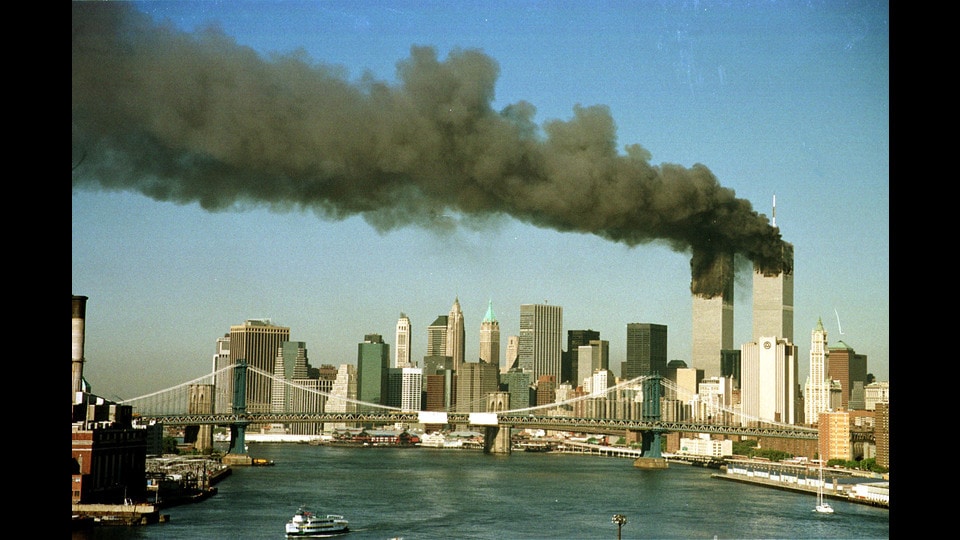
Many more disaffected groups have formed almost solely on the ballast of what a paranoid society referred to as “anti-Americanism”. In the US, the pugnacious emotive appeal and ‘saviourism’ of the US to “bring back democracy” in other countries worked to whip up nationalism.
It is for this reason that the fall of the Twin Towers and Osama Bin Laden became talking points for several years, and gave rise to many best selling books that spanned the spectrum between crowd-pleasing assertions and conspiracy theories. Reality always makes for good fiction.
The operation
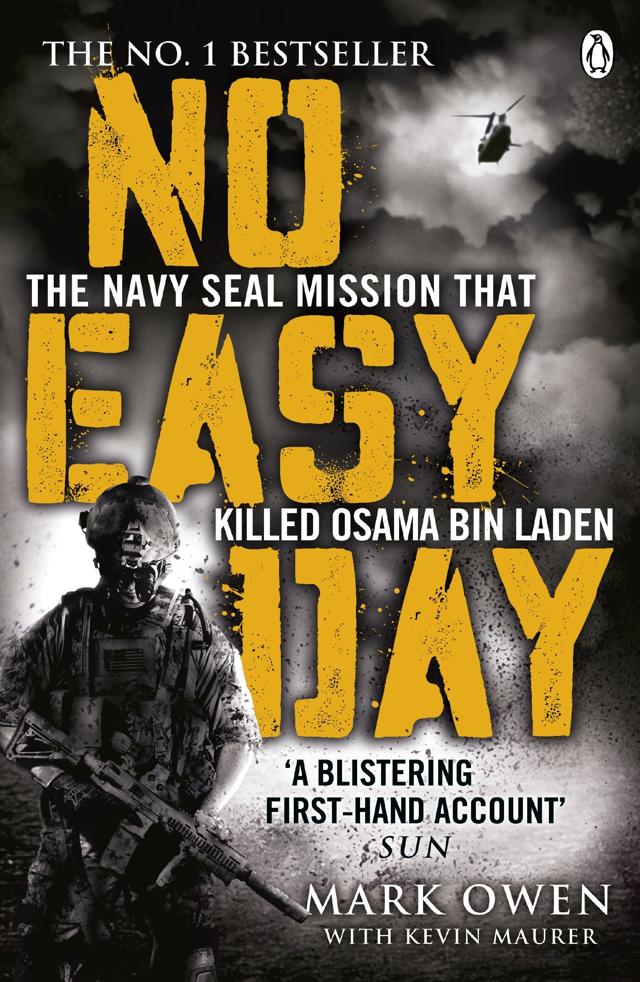
A year after they “got him”, No Easy Day: The Firsthand Account of the Mission that Killed Osama bin Laden by a former Navy SEAL, and a team leader on Operation Neptune Spear, created a flutter. Writing under the pen name ‘Mark Owen’, Matt Bissonnette was the first to witness Bin Laden’s death.
The events were too recent to qualify as history and too late for them to be a ground report. After his identity was exposed, the Pentagon sued him for civil damages. But the government was in a quandary. If they took him to court, they would be expected to reveal secrets, and that would be counter-productive. Among the pieces of information ‘Owen’ provided, perhaps the most damaging was that Bin Laden was not armed; the US administration had maintained all along that he was.
A veteran of many sorties, ‘Owen’ had been waiting for a call for his team to be deployed in Afghanistan since 2001. As he wrote, “We never got the call. I was frustrated. I hadn’t trained so hard and for so long to become a SEAL only to watch the war on TV.”
Finally, 10 years later when the day arrived, hovering 30 feet over the target, strapped with 60 pounds of gear, he “could see laundry whipping on a clothesline. Rugs hung out to dry were battered by dust and dirt from the rotors. Trash swirled around the yard, and in a nearby animal pen, goats and cows thrashed around, startled by the helicopter”.
At the White House Situation Room on May 2, 2011, President Barack Obama and his national security team sat watching live updates. This was followed by the solemnity of a video conference, the victory cry of “We got him”, the refusal to release pictures, the contradictory statements – to call this “one of the most successful military and intelligence operations in US history” was an exaggeration, for if Pakistan could keep Osama, then they might have handed him over on a platter too.
Osama’s ghost
The funniest headline I read on the operation: “He was unarmed and dangerous”.
Sceptics had even suggested that Bin Laden worked for the CIA. Among them was actor Charlie Sheen who even raised doubts about the hijackings: “It seems to me like 19 amateurs with box cutters taking over four commercial airliners and hitting 75 per cent of their targets, that feels like a conspiracy theory. It raises a lot of questions.”
15 of the 19 hijackers were Saudi, but the US has never attacked the kingdom of Saudi Arabia. Its targets were nations that had played no role in 9/11 at all.
Interestingly, those who were accused of pushing conspiracy theories came to be called Truthers. Truth may be relative but cannot be invalidated. Facts, on the other hand, can be tampered with.
The media and politicians were in cahoots to feed the public trivia instead of truth. There were ridiculous references to Bin Laden’s hideout as the “Abbottabad mansion”, a rundown place with a room full of porn DVDs and sexuality-enhancing drugs in the draws, a figure bent over a squat TV screen, alarmingly with only 500 Euros and two telephone numbers sewn in his pocket ready to flee – and all this right in the middle of the army quarters in Pakistan.
Then came the domestic stories about groceries and chicken purchases, the wives fighting with each other, the sons kept away from jihad. Finally, the body taken in a bag and given a sea burial.
Nobody got to see any photographic evidence of this great operation.
Republican House Intelligence Committee Chairman Mike Rogers had justified it thus: “Imagine how the American people would react if Al Qaeda killed one of our troops or military leaders, and put photos of the body on the internet. Osama bin Laden is not a trophy – he is dead and let’s now focus on continuing the fight until Al Qaida has been eliminated.”
Americans see their troops get killed when the government sends them on missions to other nations; they have seen pictures of some of their own inflicting unspeakable tortures on prisoners at Guantanamo Bay. It is doubtful they’d recoil seeing the most hated man as a corpse.
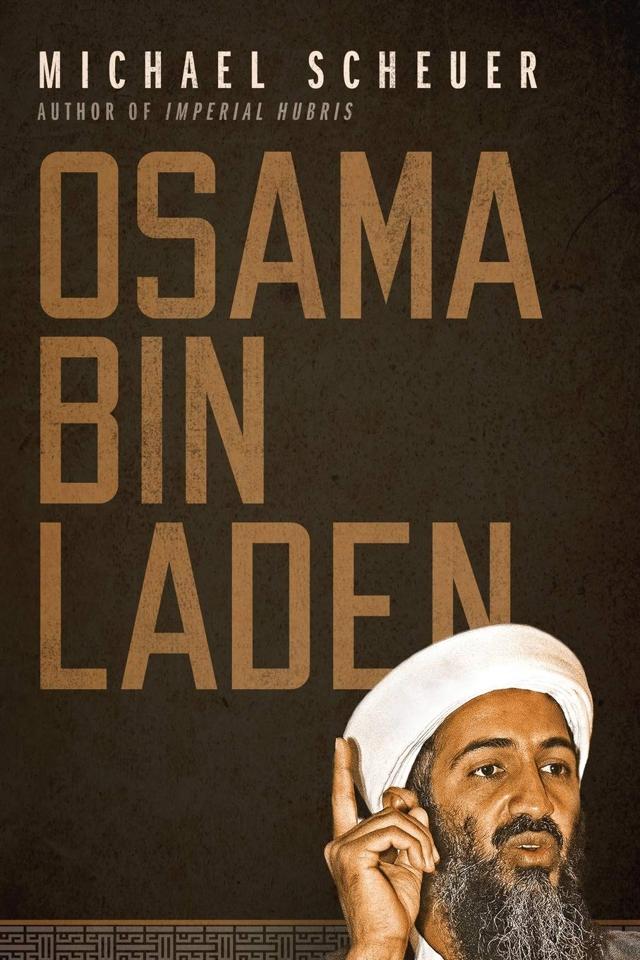
Bin Laden was a trophy and a handy caveman stereotype. But there were others who believed in providing a more rounded picture. In Osama bin Laden, Michael Scheuer explained his writerly intent: “The terms ‘nihilist’, ‘mass murderer’, ‘Nazi’…’madman’, and ‘criminal’ – all part of the traditional Western-centric definition of a ‘terrorist’ – will not be used because they are inapplicable. While such words salve the wounds, buttress the egos, and satisfy the emotions of those who write or talk about the man who traumatized and humiliated America and its allies, they also move us no closer to understanding him, and therefore no closer to defeating him.”
Critics question the sagacity of humanising a criminal, but how he thinks often reveals the nature of his purpose. Bin Laden had told his bodyguard, “If ever the Americans encircle me, I absolutely do not want to end my life as a prisoner of the United States. So, you will be in charge of killing me. I would rather receive two bullets in the head than be taken prisoner. I want to die a martyr - but certainly not in prison.”
Invisible people
Unlike the souvenirs industry that sprung up on Ground Zero immediately after the attacks, the American establishment sanctified this opportunism to blatantly ride on the back of its biggest tragedy to market nationalism.
The hierarchy was maintained here too. While the World Trade Centre and the Pentagon attacks have become a part of collective memory, the fourth plane that crashed in a field in Somerset County is a mere footnote.
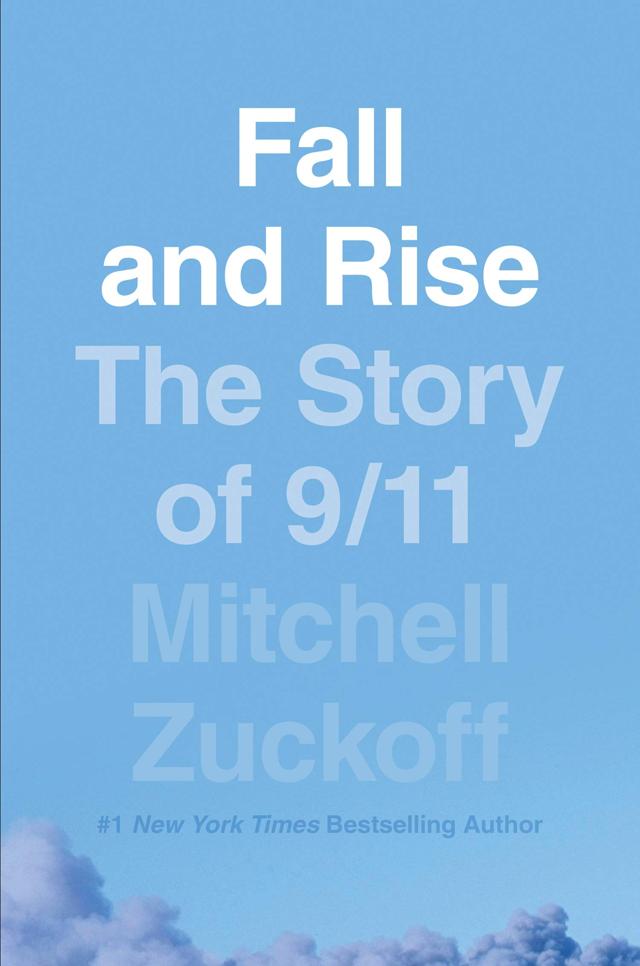
Mitchell Zuckoff, the reporter who covered the tragedy, wrote Fall and Rise - The story of 9/11 to highlight the victims caught in a political warfare. But he, too, couldn’t help but refer to the ‘Freedom Tower’ at One World Trade Center, as “an audacious middle finger to America’s enemies”.
There is always a reason to mourn, and no one would deny those who lost and those who fear losing that space for catharsis. But a report in Forbes on the National September 11 Memorial Museum reveals an element of voyeurism: “Benches within alcoves provide dozens of multi-media presentations and emotional narratives designed to make you feel the mournful experience, with tissue provided nearby. Behind partly-hidden alcoves are the graphic photos of falling bodies…For respite from all this emotional overload, a cafe is on the second floor…”
The 9/11 Museum and Memorial at Hangar 17 at JFK International Airport that is now nearly empty housed the remains of the day. It had identity cards, mangled keys, a woman’s bloodstained shoes, a fire fighter’s crushed helmet, an executive’s singed credit card, wrist-watches and mobile phones.
Such museums should have a section for updates and the fallouts of 9/11. Drones continue to attack many parts of the world, killing thousands of innocent people. There are no curators for what’s buried beneath the debris there. History should be recollected by connecting the dots as an ongoing process of exorcism.
***
Farzana Versey is a Mumbai-based writer. She tweets at @farzana_versey


