
 E-Paper



A poetic time capsule
Poet Adil Jussawalla’s memorabilia that has been made available online provides some fresh details about post-independence Indian poetry in English

 Prefer HTon Google


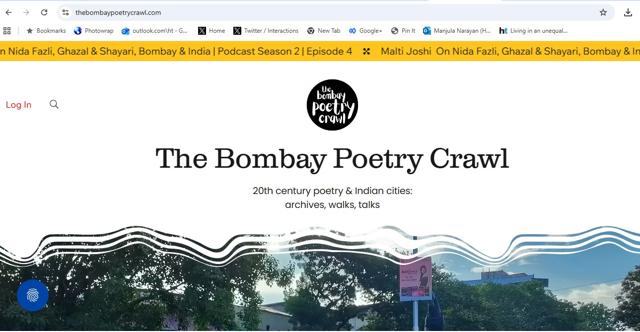
Memorabilia, donated by poet Adil Jussawalla from his private collection, has been digitised and made available online. These letters, photographs, covers of literary journals and event posters span the period from the 1960s to the millennium. The public can view each of the scanned image files of these items at www.thebombaypoetrycrawl.com.
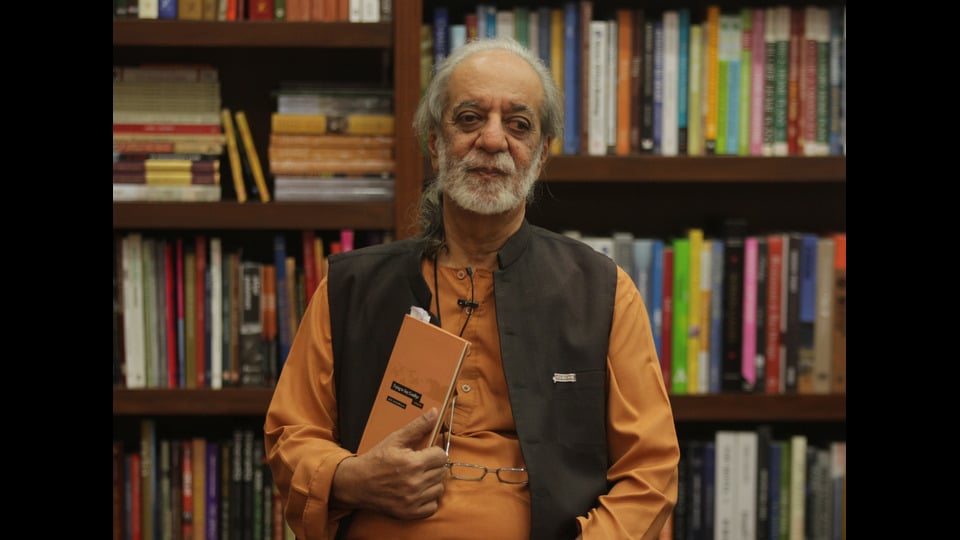
They bring to public gaze fresh details of the history of Indian poetry in English, including additional insight into the friendly relationship and personalities of two major Indian poets, Jussawalla himself and Nissim Ezekiel (16 December 1924 – 9 January 2004).
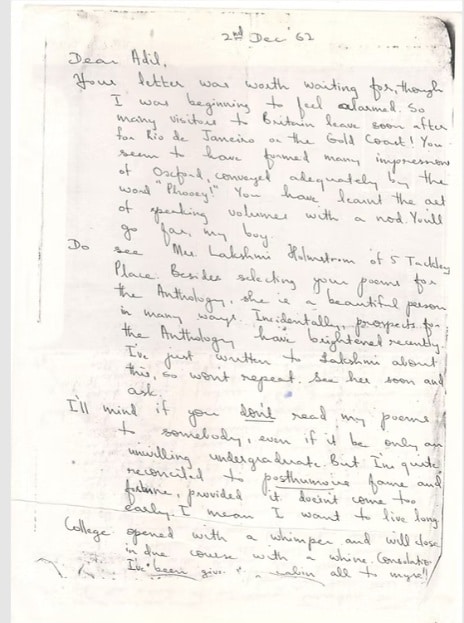
The collection also includes letters to Jussawalla and his mother by Ezekiel dating back to the 1960s and ’70s. These are significant for what they reiterate about Ezekiel, described by many established poets as a kindly mentor. The letters display this character trait vividly. In one, he gently asked Jussawalla to focus on his studies for his future’s sake. In another, he counselled the younger man to shelve a batch of poems and write fresh ones. Many mention topical matters of writing and publishing at the time. One paragraph alludes to a Pakistani poet who withdrew his contribution to ‘an anthology’ being compiled by Jussawalla; it also alludes to how the correspondents were thinking about poetry in South Asia. This seems to be new information.
The letters belong to a transformative period in Jussawalla’s student life, when he began to correspond with Ezekiel, whose work he had read. “With Nissim, before I left for London (to study at Oxford) I didn’t know him. I left Bombay in 1957. But I would read things of his, poems etc. which appeared in the Illustrated Weekly of India,” he said. “Then, in 1961, when I chucked up Oxford, I thought I’d come back here forever. That’s when I got to know him better,” he adds. There was no correspondence between the two at that time. “He lived quite close by on Warden Road then.” So, they only exchanged a postcard or two occasionally when in Bombay, Jussawalla said, likening it humorously to texting.
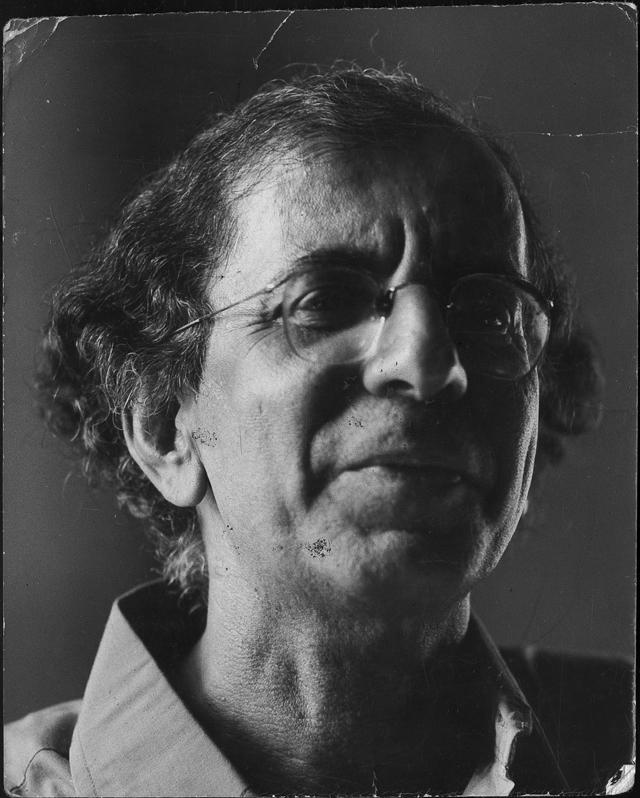
The letters were written mostly when both of them were back in the UK. “I crawled back to Oxford a year later and he was in Leeds, I think, at that time. And maybe that’s when we corresponded. We did meet, and my parents were naturally so anxious about what I was doing, having given up (degree studies in) architecture, having chucked up Oxford for a year. So, he kept a sort of gentle tab on me and reported to them.”
While this friendly relationship has been written about by Jussawalla himself and others, the fairly long letters provide hitherto unknown detail and nuance about the nature and flavour of the relationship.
The digitised collection also includes four book covers designed by poet/designer Arun Kolatkar. These were for Clearing House, the publishing collective he founded with Jussawalla, Arvind Krishna Mehrotra and Gieve Patel. There are also a few covers of books brought out by another important publishing group in Bombay, Newground, founded by Santan Rodrigues, Melanie Silgardo, and Raul D’Gama Rose.
Further, typed poems possibly submitted for publication to Jussawalla reveal names of a few writers who were either not well published or who are hard to find.
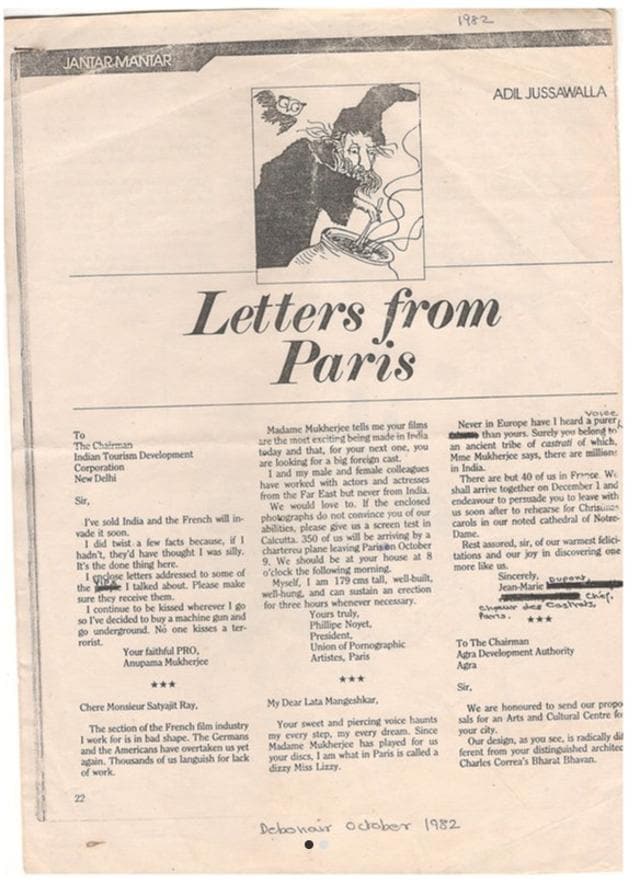
The collection also contains a number of clippings of writings by Jussawalla published in defunct magazines and newspapers such as Debonair and The Afternoon Despatch and Courier. Some of these are poetry reviews. Most are columns that display his affinity for satirical writing and a penchant for humour that is topical, irreverent, and sometimes racy. They reveal a side of his writing that is less known to later generations of his readers.
A few articles about poetry and poetry publishing written by journalists add historical notes to the largely undocumented history of Indian poetry in English. Posters of poetry readings provide names of literary gatherings and people active at the time. A handful of photographs of Jussawalla and others reveal a few occasions and names of writers about whom little is known. There are also a number of clippings of the column on poetry written by poet Keki Daruwalla for The Hindu.
These different media might be linked together in future by a text of some kind, said Saranya S, founder of The Bombay Poetry Crawl.
The BPC site is being developed as an archive of texts, images, audio and video recordings and interviews of relevance to poetry in India.
The digitisation initiative began last year when recitals of 24 poems recorded on an audio cassette donated by Jussawalla from his private collection were brought online as audio files on the website. These recordings were made during a meeting of Indian poets organised by Jussawalla and his journalist friend Ratnakar Kini at the latter’s London residence in 1969. These feature over 10 poets writing in various Indian languages, including Dhoomil, Go.Vi. Karandikar, Jussawalla himself and Farrukh Dhondy. They read out each other’s poems.
The second and larger instalment of various media from the ‘Jussawalla collection’ was uploaded in August 2026.
A planned third instalment will comprise scanned copies of front covers of bygone literary journals collected by Jussawalla. These include rare issues of PENumbra, The Indian PEN, The Bombay Review, Kavi, and a publication from the International Congress of PEN International, 1953. Saranya S might also digitise the contents of the journals as they convey a sense of the times. “A lot of the Indian PEN magazines that I put up were published in the 1980s,” she said adding that they reflect a sense of that decade for India and Bombay. She believes the journals reflect “a lot of what was happening at the time”, including “writing about working class narrative” and “translation in poetry, which I found very interesting, considering how translation is such a big industry right now”.
All of which will certainly be of great value to scholars and researchers and especially to those passionate about Indian English literature.
Suhit Bombaywala’s factual and fictive writing appears in India and abroad. He tweets @suhitbombaywala.


