
 E-Paper



Akbar was intensely invested in experiencing the world: Ira Mukhoty
The author of Akbar: The Great Mughal, on the man who shaped the culture and etiquette of the Mughal court into the entity that is recognisable even today

 Prefer HTon Google


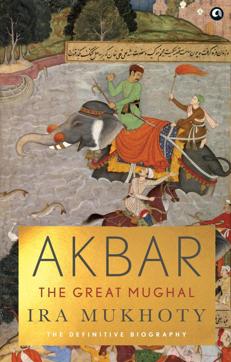
For someone who claims to be an accidental writer of history, Ira Mukhoty’s writing is nuanced and deeply personal. Her third and latest work is the herculean effort to chart the life of Mughal Emperor Akbar the Great. Titled Akbar: The Great Mughal, its pages paint the life of a personality, “intensely invested in experiencing the world and forging his destiny”.

“Akbar was the sort of person who inhabited his world in a visceral, all-consuming way so every experience was valuable in shaping various facets of his personality,” says the author about his formative years, living in exile when his father Humayun lost the Mughal Empire to Sher Shah Suri. It would take Humayun 15 years to re-establish the Mughal Empire, before he stumbled on the stairs of his library, to his eventual death, handing over the reins of the dynasty to a 14-year-old boy. “It is this gradual layering of Akbar’s personality and humanity that I have tried to illustrate in this book,” she says. Excerpts:
How did you get interested in history and what was the reason behind penning Akbar?
I am an accidental writer of history, who literally stumbled into historical non-fiction when my daughters were small and I was interested in telling them stories of heroic Indian women. All the stories I came across were suspiciously similar, bland and uninspiring recordings of women whose stories had been made to fit into an acceptable model of feminine behaviour. So, I began looking into different sources around heroic Indian women and this led to my first book, Heroines, in which I discuss the many different ways in which it was historically possible to be an articulate, transgressive woman in India, and how these narratives have been manipulated over time.
As for Akbar, once I had written Daughters of the Sun it was almost inevitable that I would turn towards him because he dominates Mughal history in such a comprehensive way. He shaped the culture and etiquette of the Mughal court into the entity that is recognisable to us even today. I thought it would be an interesting exercise show to the lay reader the unfurling of this culture, with all the influences that shaped it. Moreover, the current public discourse around the Mughals has become so toxic and volatile, I thought it would be useful to take a fresh look at one of our most recognizable monarchs, and challenge some of facile ‘Mughal-shaming’ that has become current. Since academic knowledge in India mostly remains within the circle of academia, presenting scholarly facts and research in an engaging and accessible manner so that more readers are tempted to learn about this incredible period of our history and thus become better equipped to combat ignorance and prejudice, seemed to me a worthwhile endeavour.
Did your previous books have any role in you getting interested in the life of Akbar?
When I was writing Daughters of the Sun, about the women of the Mughal Empire, I noticed that while the earlier Mughal women, at the time of Babur and Humayun, had considerable freedom and influence, these women disappeared around the time of Akbar, rendered nameless and voiceless. And yet Akbar was known to have been sensitive to the plight of women, critical of laws both in Islam and Hinduism that were biased against women. So this dichotomy fascinated me, and I was interested to understand some of the reasons behind this change in attitude towards Mughal women, that seemed to originate under Akbar.
What do you say were the important incidents that shaped Akbar to become who he would grow up to be?
Akbar was the sort of person who inhabited his world in a visceral, all-consuming way so every experience was valuable in shaping various facets of his personality. His infancy in the care of his milk-mothers, while his parents were in exile in Persia, resulted in a life-long devotion to these women and staunch, and often tested, loyalty to his milk-brothers. His possible dyslexia, which meant that he grew up illiterate, meant that he spent his childhood in the company of his milk-brothers and the animals that inhabited the countryside of Kabul. And there he began a habit of understanding the world by observing all around him, and using his keenly developed power of judgement to evaluate the temperament and talent of men and animals. Then when he met Raja Bharmal and married his daughter, Harkha Bai, at just twenty years of age, and this also shaped the development of his religious sensitivity. At every moment of his life, Akbar was intensely invested in experiencing the world and forging his destiny. It is this gradual layering of Akbar’s personality and humanity that I have tried to illustrate in this book.
How was it exploring the relationship the emperor shared with Birbal? Numerous school curriculums in India have lessons based on their camaraderie…
Very early in Akbar’s career, an erudite and genial Brahmin named Mahesh Das joined the Mughal court. This man had a gift for poetry, for generosity, for elegant repartee and bonhomie. Indeed these were all the traits that a perfect Mughal courtier was expected to possess, and the Brahmin possessed them all and soon grew very close to the Padshah. Badauni, Akbar’s critical biographer, grumbled that it became a case of ‘thy blood is my blood and thy flesh is my flesh’ between the two men, such was their friendship. This man earned the title Kavi Rai, or King of the Poets, and also Vir-Var (Brave Warrior), which became Bir-Bar or Birbal. I believe Akbar grew exceedingly close to Birbal, kept him close to the court, and depended on his loyalty, sharp intellect and excellent conversation skills. He was also the only Hindu to ever join Akbar’s Din-e-Ilahi sect, a further proof of the great bond the men shared. However, the Akbar-Birbal stories that sprang up around the Emperor have been shown by Scholar C. M Nain to be parodies and exaggerations, and are not based in actual reality. Akbar was by no means a genial buffoon- he was an extremely intelligent and discerning man, one who, moreover, would not have tolerated any such lambasting by Birbal. These stories, it has been suggested, may have been a form of gentle push-back against the might of the Mughal Empire, or an attempt to make more human a larger-than-life personality like Akbar’s.
Although Akbar has been known to be the most tolerant of the Mughals, he was also a brilliant military commander…. If one would compare his military success to that of Aurangzeb, according to you, who comes on top?
I would loath to comment upon Aurangzeb, since I don’t know enough about his reign, but Akbar’s military successes were certainly spectacular. Akbar brought his usual spirit of invention, innovation and psychological acuity to all his battles. He adapted the use of firepower to the Indian battlefield, mounting rockets and cannons onto carts, elephants, camels etc. to create an extremely explosive and dangerous environment for battle. Akbar was personally involved in all elements of battle planning and logistics was as carefully worked out as tactics and strategy. Even while fighting in one corner of the empire, he gave detailed instructions for campaigns happening at the opposite end of the country. Akbar also refused to abide by long-standing habits of battle, such as avoiding campaigns in the heat of summer or the downpour of monsoon, and pushed himself and his men to such extremes of speed and precision that his opponents were psychologically undone even before the first shot was fired. After a few spectacular successes early in his career, Akbar was then able to use the demonstration of the power of the Mughal empire to convince enemies to submit to Mughal rule, direct confrontation was often no longer necessary. Since, Akbar simultaneously also actively courted warriors and rulers from all religions and clans, it soon became more profitable for these opponents to join the empire as respected mansabdars than to actively oppose it.
What do you make of times like these, when there are attempts to discredit the Mughals and their contributions…
I think it is indeed a shame, that we remain shackled by a mind-set fostered initially by the English to excuse their rapacious take-over of Hindustan, and then adopted by the Hindu right in the 20th century. It was the English who in the early 19th century first split India into a Hindu, Muslim, and European period, with a sub-text of oppression and subjugation by all Muslim monarchs. The truth was always a great deal more textured and nuanced. People were united by community, by language, by geography, by clan, by food and so much more, religion being only one marker among many others, often not the most important at all. Hindus were often pitted against other Hindu Rajas while they had Muslim generals in their armies, and vice versa. To reduce everything to religion is entirely noxious and narrow-minded. It shows we still have not matured enough as a nation to be confident of our place in the world and the achievements of our past. Our mind-set, in a sense, remains colonised. To blindly malign almost 250 years of Mughal rule, with all its diverse accomplishments, is baffling.
The Mughal Empire, under Akbar, grew greater that the Safavids in Persia and the Ottomans too… Do you feel that the Mughals have received due credit when it comes to their achievements being known around the world?
I believe that if the Mughal empire had occurred in almost any other country, then it would be widely celebrated and studied. Look how well versed other countries are with their past, whether it is the French, English, or Japanese. The smallest achievements of the past are feted and recognised. Whereas the Mughal empire, which remains unmatched in terms of wealth, glory, size, power and culture in Indian history, is still a battlefield for politics and petty point-scoring. Even within India, the true texture of the empire remains a black void for most people, lit up by a few fragments of beauty, like the Taj Mahal or so-called Mughal cuisine. The real oppressors of Indian society, the caste system and patriarchy, remain unexplored. Whereas it could be potentially so beneficial for everyone if we were able to truly translate the message of the Mughal empire for a larger audience.


