
 E-Paper



Beware, the eye in the sky
The International Spy Museum in Washington DC reveals the deepest, darkest secrets of the world of espionage, from World War I to today’s drone-led warfare

 Prefer HTon Google


Mysterious, gripping and nerve-racking, the world of espionage keeps us on the edge of our seats. It’s why we dig Mission Impossible and the James Bond series. But it’s all fiction you think? Not really.
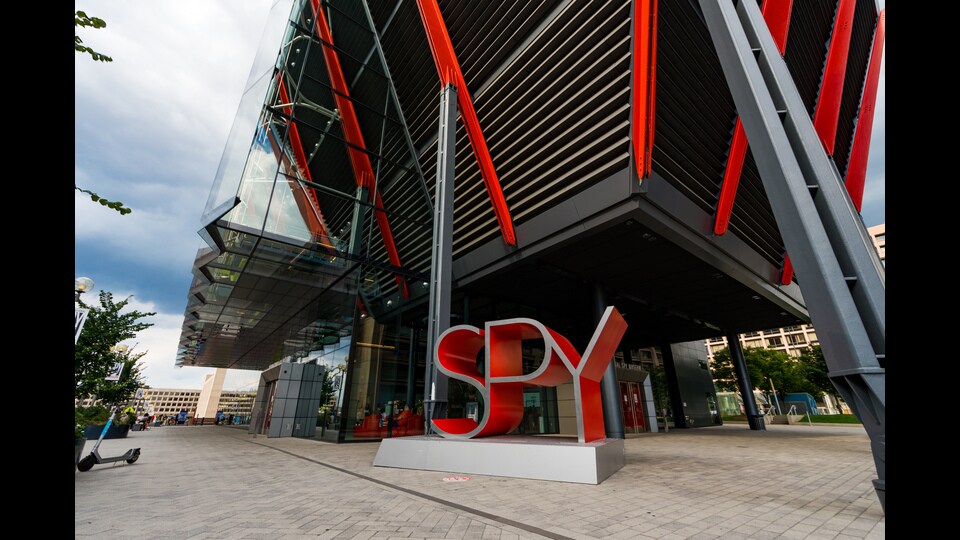
The spy universe is every bit as exciting even in real life. The International Spy Museum in Washington DC unmasks real-life spies, divulging their deep, dark secrets, sharing confidential details of their classified missions, their modus operandi, and tools of deception. It’s all backed with original artefacts, archival documents, and technology-driven interactive stations that tell stories from the time men climbed trees to spy on rival tribes to drones-led warfare.
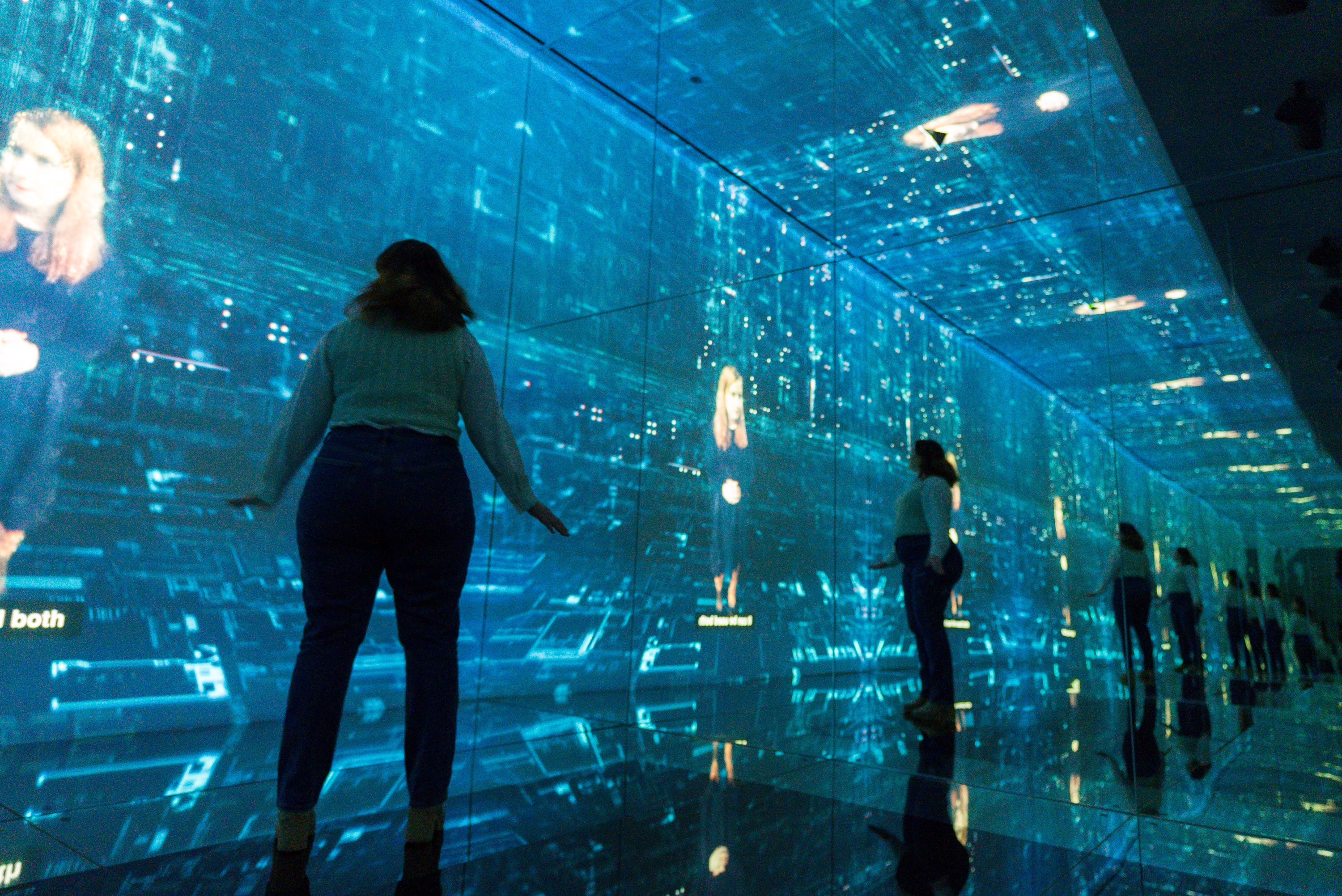
The collections inform the viewers about how intelligence is processed and interpreted — codes, analysts, signals, surveillance; techniques and tools of secret missions including sabotage, propaganda, undercover operations and the consequences of covert operations; and major historical episodes where spying made a big difference. It also examines counter intelligence, modern threats such as surveillance, privacy, etc.
Just the thought of being inside the largest spy museum in the world, housed in a chic, angular building with over 10,000 artefacts, gave me goose bumps. I was about to unearth some of the best-kept secrets in the world. And I wasn’t disappointed. There are several hair-raising artefacts and tales in there, and some very intriguing and impressive people too.
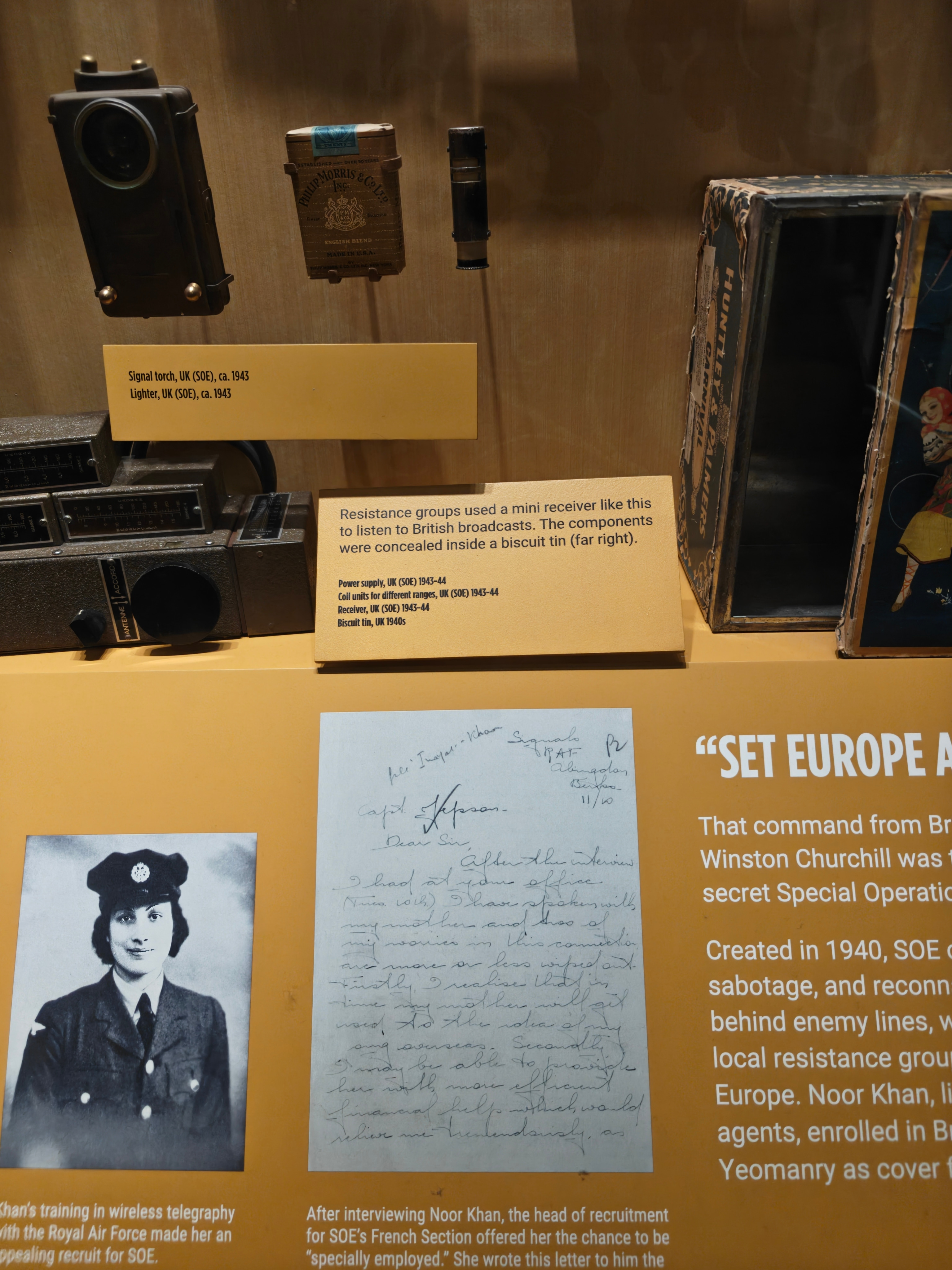
Meet Noor Inayat Khan. A children’s-book-author-turned-spy of Indian origin. A descendent of Tipu Sultan, and the daughter of Sufi saint Inayat Khan and American poet Ora Ray Baker, she worked for the British during World War II and was killed by the Nazis in 1944. The first woman wireless operator deployed by England to be stationed in France after the Nazi occupation, her code name was Madeline and her job was to work with the French resistance network, Prosper.
At the museum, you see her military uniform, pictures from her life before she became a spy, including one in a sari, playing a veena. There is also a set of receivers used to listen to British broadcasts concealed in a decorative biscuit tin. An original copy of her book Twenty Jataka Tales is in there too as is a letter written by her. Also on display are common deception tools used by female spies such as a lipstick gun and a clutch.
Khan, they say, was selected for the mission as she was a fluent French speaker and good at her job. In June 1943, she was sent to France where, for three months, she alone handled the communication between London and occupied Paris, helping 30 airmen escape.
The Germans were closing in on her and her superiors suggested getting her out but she resisted as she believed her job wasn’t yet done. She constantly changed her appearance and location to escape arrest but eventually fell into the hands of the Gestapo (Nazi police). Though she was tortured and starved for a year, she gave nothing away. She was shot dead at the Dachau concentration camp and it is believed that her last word was “Liberte”.
It’s one thing to see her life unfold in the Netflix movie A Call to Spy, and to read about her in Spy Princess, a book by Shrabani Basu, but the story gets so much more impactful when you see her clothes, her hand-written letters and tools at the museum.
I was moved, and inspired to discover more about the secretive world of spies, this time during the Cold War. I was stunned to find a dead rat in the display. Back then, America’s Central Intelligence Agency used gutted rats as dead drops. They hid money, messages and films in their carcasses. Then doused it in pepper sauce to deter scavenging cats. Clever, isn’t it? Who would ever think of touching a dead mouse?
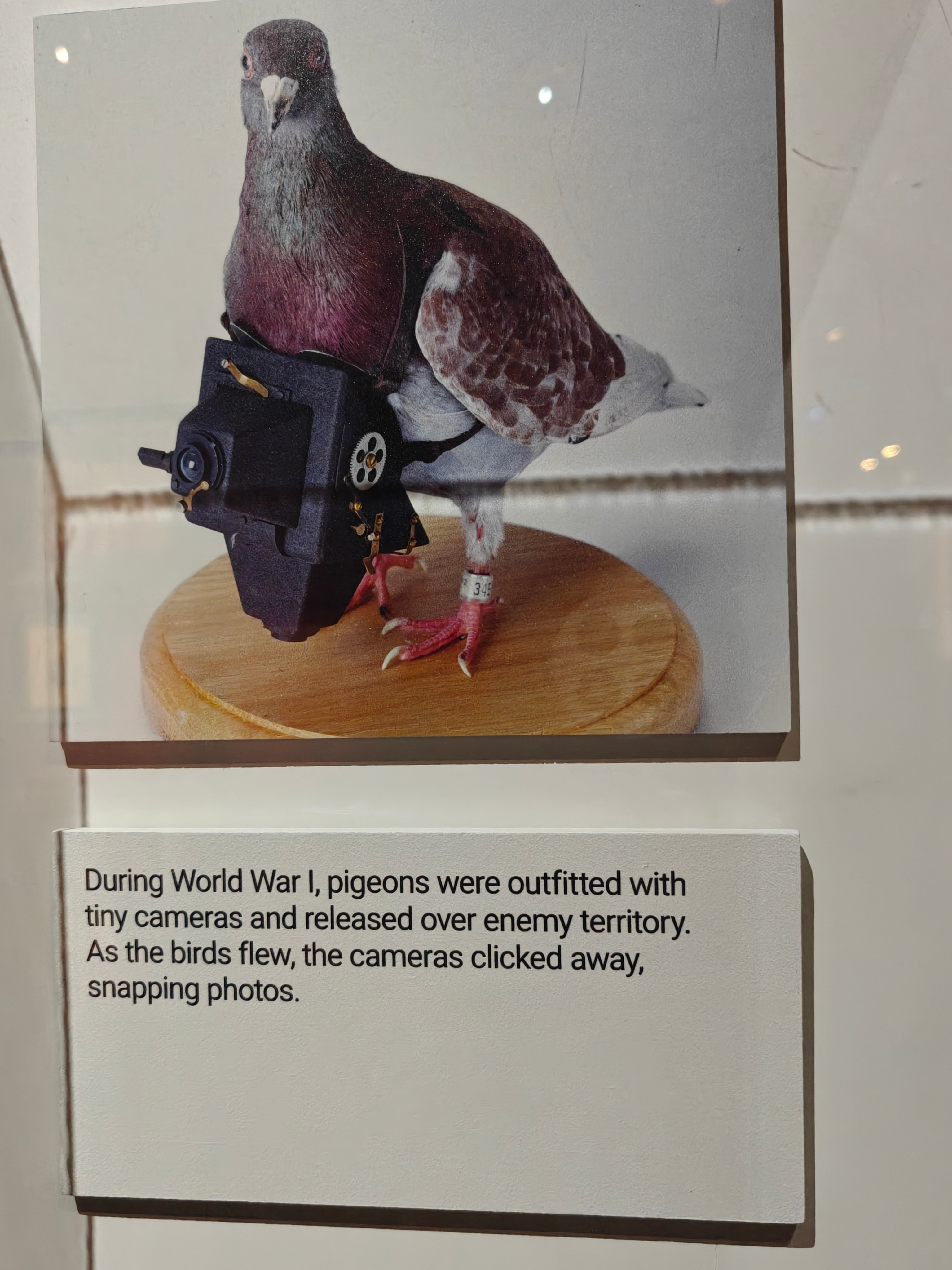
Talking about the role of animals in wars, there is also a photograph of pigeons fitted with tiny cameras. The original drone cameras of World War I, the birds were released over enemy territory so top angle pictures could be taken of enemy layouts.
Another interesting photograph is of a group of uniformed soldiers, titled The Choctaw Telephone Squad. Germany would easily tap US phone lines, crack the codes and capture runners with messages. The Americans had no other way to send messages securely until a captain overheard two Chactow soldiers speak in their native tongue. It was a complex, unheard and unwritten language that baffled the Germans. The code talkers were sent to strategic locations to send and receive messages. Stories circulated that the US had invented a way to speak underwater. After all, it’s a world where anything is possible.
Today, the modus operandi and the tools have changed. Contemporary spies who operate on the dark web are often expert hackers. Remember Jester, a mysterious hacktivist who shut down WikiLeaks? His or her personal laptop, The Jester Laptop printed with the Jester signature, is displayed in the museum, and is quite popular among young audiences.
Another crowd puller is a section dedicated to current spying strategies, which includes an exhibit about Open Source Intelligence (OSINT). Intelligence agencies are carefully tapping every newspaper article, website, blog, Facebook and Instagram account and other such open source platforms to gather information and create strategies. In 2015, over 100 people were killed in Paris by terrorists wearing suicide vests. Bellingcat, an open-source organisation, used public Facebook profiles to identify one of the bombers, Bilal Hadfi. A dark mark above his nose helped their investigation.
There is one from the Russia-Ukraine war as well. In 2014, a Russian sergeant posted a few of his pictures on Instagram along with this text: “I still don’t understand what we’re doing here, so we’re continuing to go slightly crazy, listen to Swedish House Mafia and wait for new news from Ukraine!” The geo-tagged selfie proved Russia had troops inside Ukraine, despite official denials, demonstrating how a digital footprint can expose military operations.
But spying doesn’t happen only in the military world. It’s a trade and business tactic as old as, perhaps, time itself. And the museum tells this story too with visual representation. In British-occupied India, the trade in indigo dye flourished. The French wanted in as well, so, they sent a spy who collected indigo seeds and made diagrams of indigo dyeing tanks. Unfortunately, the seeds didn’t survive the journey back to France. In the 15th and 16th centuries, the silk weavers, glassmakers and ship builders of Venice were the envy of the world. Through informal networks, spies from other European countries made repeated efforts to find out how these products were made. To counter them, he ruling council of Venice created one of the earliest and most effective centralised intelligence services. The Venetian Secret Service built a tightly organised system of spies, informants and even cryptology to keep a watch on, both, citizens and visitors to ensure trade secrets weren’t leaked.
Other highlights of the museum include a silver dollar with a suicide pin for pilots in the U-2 programme. The U-2 was a top-secret American spy aircraft project developed during the Cold War to gather intelligence, mainly photographic, over the Soviet Union. There is also a coat with a buttonhole camera and a Steineck ABC wristwatch camera (Germany) for covert photography. A lipstick pistol used by operatives in the Cold War, and a section of the Berlin Tunnel used in the early 1950s to tap underground Soviet communication lines.
If all of it is a little overwhelming for you, take spy breaks. Scan your photo at a kiosk, answer a few basic questions and see your spy avatar. I was a fitness instructor in Finland. Continue the game. Remember your details, solve mysteries and puzzles and figure out whether you’d make for a good intelligence officer or not. I certainly am qualified. For one thing, I wanted to see every object in the huge museum.
For more information log on to spymuseum.org
Riddhi Doshi is an independent journalist.


