
 E-Paper



Book Box | A favourite short story and the latest Cormoran Strike
Journeying through 'The Paper Menagerie,' 'The Covenant of Water,' and Robert Galbraith's (JK Rowling's pseudonym) latest 'The Running Grave'

 Prefer HTon Google


Dear Reader,
I am teaching my favourite short story to 60 business management students. It’s a Saturday evening, with a weekend vibe, and we are animated, as we dissect dialogue, plot, characters and conflict.
The Paper Menagerie by Ken Liu is about a Chinese-American boy who learns his family's history through magical origami animals. It's also the story of a culture clash between the US and China. We discover history (China’s cultural revolution & repression) and economics ( ‘Your mom makes toys for you from trash?’) and xenophobia (‘The child looks unfinished. Slanty eyes, white face. A little monster’)
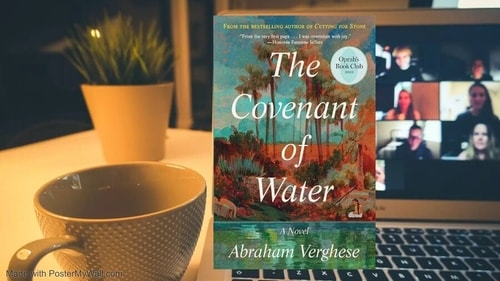
Returning home, I open up my laptop for a book club meeting on Zoom. We are meant to discuss Hello Beautiful, a book about four sisters living in Chicago, a retelling of Little Women. It’s a book that also features in Barack Obama’s 2023 Summer Reading List. The characters and family relationships are compelling, and there's much to discuss. But before we get to this, there is another book we can’t stop talking about -- a generational saga set in the lush landscape of Kerala. The Covenant of Water by Abraham Verghese is 736 pages long, you can hear it on audio, or read it in print, immersing yourself in the story of Ammachi, the 12-year-old girl who got married to a widower in early 1900s colonial India.
"It makes you fall in love with the landscape, I can’t think of another India based novel of such depth and breadth," says someone.
"If I had to be devil's advocate, I’d say it is a romantic view of life - there is no evil in the book except for circumstances, it takes a superficial look at the realities of social problems in Kerala, the feudal class, the rise of the Naxalites etc." counterpoints another.
We compare The Covenant of Water to another famous Kerala novel, The God of Small Things. We agreed that both novels are beautifully written, but that they have different approaches to tragedy. The God of Small Things is a more immediate and raw portrayal of grief, while The Covenant of Water is more stoic and accepting - we make the best of what we have and soldier on, fortified by food like ularthiyathu.
Like the Kerala fish curry that appears many times in the novel, this dish of fried meat is one that Ammachi cooks to perfection, a dish she discovers is the “secret to getting what you wanted from your husband”. In preparation for asking her new groom to attend church with her, she "brings it out, sizzling, the oil still spitting on the blackened meat’s surface… Before she’s done ladling it on his banana leaf, he’s popped a piece in his mouth. He can’t resist.”
The next morning, I have an early morning flight I am actually excited about!
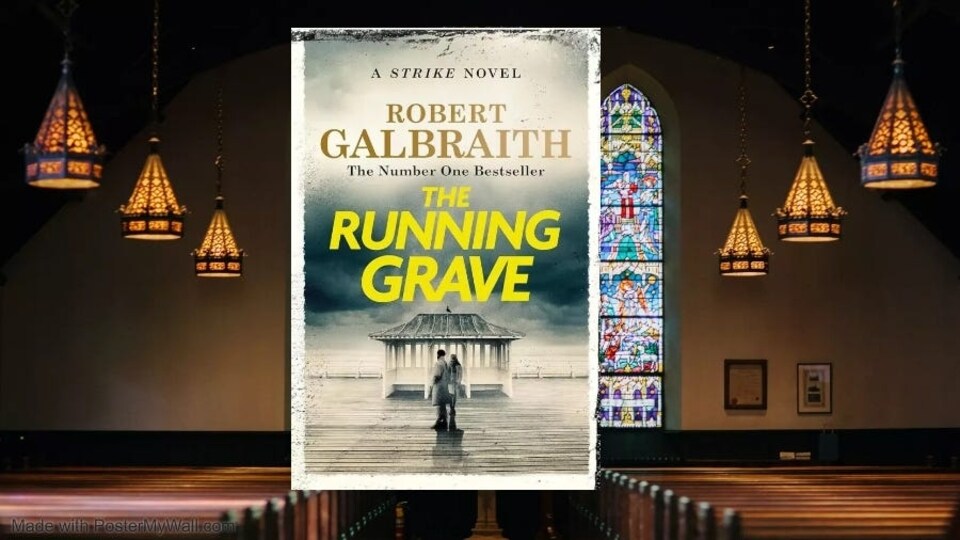
I have with me The Running Grave, the latest Cormoran Strike, the seventh in the series by Robert Galbraith aka J K Rowling. It was released a few days ago, and I have been carrying it around in my Kindle, resisting the urge to set everything else aside and start to read. And read.
This one is 960 pages, sixty pages shorter than The Ink Black Heart, which was the sixth in the series, but Readers, don’t balk at the page count, because it’s pure pleasure.
At the airport, my flight was delayed, but I couldn't care less. I skip my coffee run and dive into The Running Grave. It's a gripping tale, possibly the best Cormoran Strike and Robin novel yet.
While The Ink Black Heart explored the world of online communities, trolls, and anonymity, this one takes us deep into the workings of a cult. We get a front-row seat to the recruitment strategies of the Universal Humanitarian Church's founder, Jonathan Wace. It's a chilling lesson in manipulation —in the power of presentation, packaging, and using light, sound music, and the right words to prey upon impressionable minds.
One such impressionable person, a troubled young man, falls into the clutches of this church, and his desperate father seeks the help of Strike and Robin to rescue him. The only way to unveil the truth and break the cult's tight grip is for Robin to go undercover. For a good chunk of the book, she's living incognito on a farm, battling to hold onto her sense of self as the cult tries to indoctrinate her. There's suspense, a clever plot, and, of course, the eternal question—will they or won't they, Strike and Robin?
The novel ends with a cliffhanger, and I'm already counting down to number 8.
Speaking of countdowns, we are now on World Wildlife Week. To celebrate, next week I bring you two amazing books on wild women plus a conversation with a natural world lover, reader and publisher.
Until next week, happy reading!
Sonya Dutta Choudhury is a Mumbai-based journalist and the founder of Sonya’s Book Box, a bespoke book service. Each week, she brings you specially curated books to give you an immersive understanding of people and places. If you have any reading recommendations or suggestions, write to her at sonyasbookbox@gmail.com
The views expressed are personal


