
 E-Paper



Book Box | Azerbaijan, Ali and the art of eating with your hands
These books helped me read the room, and the world, and discover the geography of thought.

 Prefer HTon Google


Dear Reader,
I grew up in a family where eating with one’s hands was considered uncouth. My Oxbridge-educated grandfathers were in awe of all things Western, from the opera to the art of eating with a knife and fork.
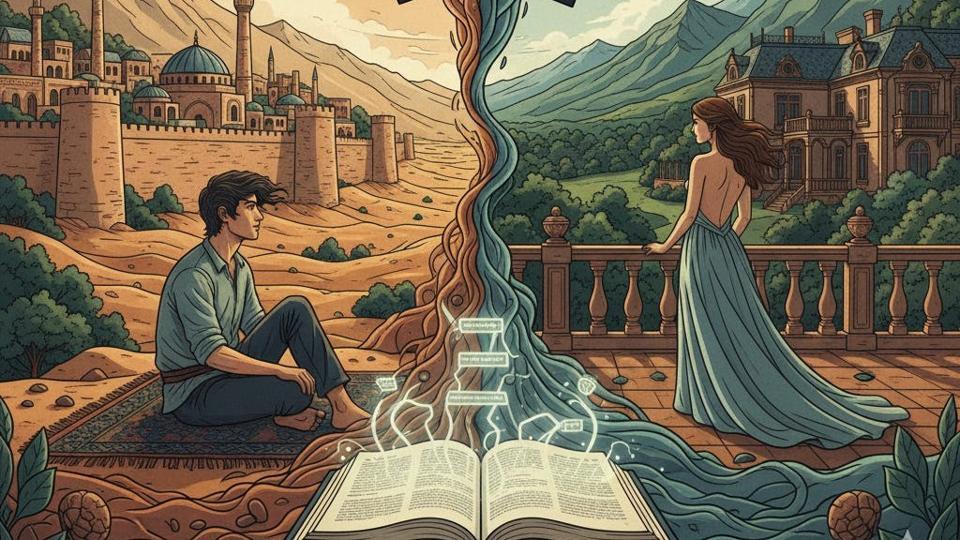
A memory of this came back to me recently, as I was reading Ali and Nino, a classic love story set in Azerbaijan. It’s a gem of a tale, a Romeo and Juliet love story across religions - Ali Khan is a Shirvanshir, a Shia who loves nothing better than to sit in the old town of Baku, close to the mosque and dream of the desert. He falls in love with Nino, a pretty Georgian Christian girl whose version of hell is being abducted for her wedding, being forced to wear a veil and made part of a harem.
Everything about their lives is different. They love each other deeply, but remain baffled by the chasm of their cultures.
“Why are Russians so conceited about their art of eating with a knife and fork?” wonders Ali. “Nino says our way of eating is barbaric”, he tells us.
And suddenly I am back forty years to my moment of childhood shame.
‘Why must you eat like a jungli?” asks my grandfather, as he quietly observes me enjoying a hearty hand-eaten meal of curry and rice. How mortified I felt.
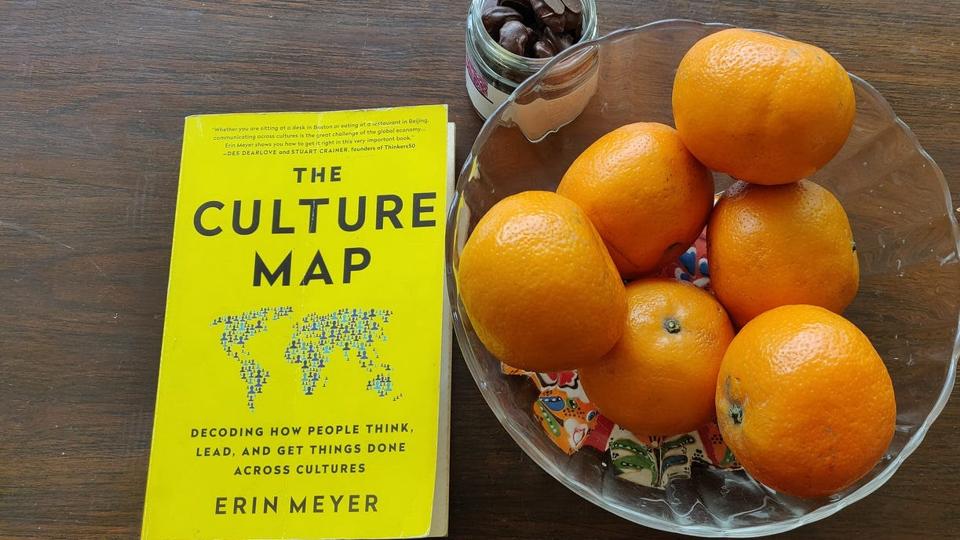
Today, I’m better at ‘reading the room,’ thanks in part to books that have helped me decode such cultural clashes. The Culture Map by Erin Meyer, for instance, unpacks differing styles of negotiation, feedback, and even perceptions of time across cultures.
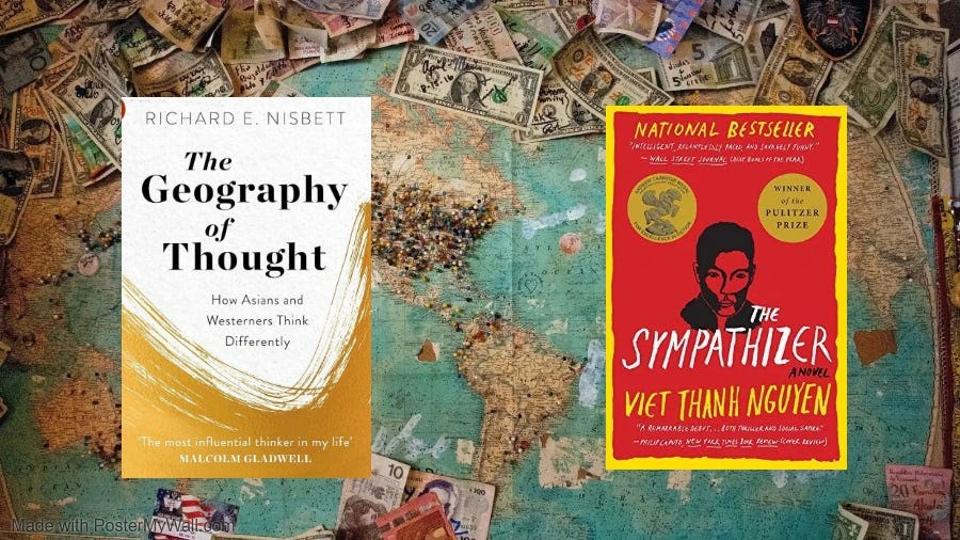
Earlier this year, I read Richard Nisbett’s The Geography of Thought, which brilliantly links cultural attitudes to the historical and philosophical forces that shaped them — explaining why the West leans to the individualistic and the East to collaborative, and how this divergence influences everything from the way we love, to the way we lead.
The tragedy of these differences is that each culture insists on its own superiority - a theme the writer Ken Liu explores with poignant mastery in The Paper Menagerie. In this short story, a biracial boy feels ashamed of his Chinese mother and the origami paper animals she folds for him.
We see this dynamic again and again — in life and reflected in literature. Another powerful portrayal is the Pulitzer Prize-winning The Sympathizer. In this novel, the conflict between Vietnam and the United States plays out tragically within the protagonist’s own divided consciousness, with his very identity split between two ideologies.
Ali and Nino is as tragic, rooting its grand conflict in the fragile hope of young love. Written in German by a mysterious man under the pseudonym of Kurban Said, this novel was translated into English in 1970.
It’s a book built on binaries: the bare backs of Georgian gowns versus the modesty of the veil, Sunni versus Shia, the arid Azerbaijani desert versus the lush highlands of Georgia, Persian ambition versus Russian dominance, the West versus the East.
As I read it, I realize with amazement, that this little novel written a hundred years ago, is still as incisively relevant- in a world that continues to polarize, even as we live, work, and fall in love across cultures.
Our book club flies to Azerbaijan in two weeks. As preparation, we’ve been reading widely -fiction and non-fiction alike- but of all the books we’ve read set in this part of the Caucasus, it is this slender love story that best captures the soul of the place, its tangled histories and shifting borders.
I sigh as I close its final pages. This is the magic of great literature: it tells you a story that kindles sympathy and understanding for the complex realities of another land and another people- and if you are lucky, for your own contradictions too.
These days, I no longer flinch when I eat with my hands. I think of The Paper Menagerie, of The Geography of Thought, and of Ali and Nino, and I realize it’s okay to belong to more than one world.
And what about you, dear Reader? Have you ever felt caught between two worlds, or quietly shamed by some part of the world you came from? In those moments, what has helped you find your footing?
-------------------
(Sonya Dutta Choudhury is a Mumbai-based journalist and the founder of Sonya’s Book Box, a bespoke book service. Each week, she brings you specially curated books to give you an immersive understanding of people and places. If you have any reading recommendations or suggestions, write to her at sonyasbookbox@gmail.com.The views expressed are personal.)
The books referred to in this edition of Book Box
Ali and Nino by Kurban Said
The Culture Map by Erin Meyer
The Geography of Thought by Richard E. Nisbett
The Paper Menagerie by Ken Liu
The Sympathizer by Viet Thanh Nguyen


