
 E-Paper



HT Picks; New Reads
This week’s interesting reads includes a book that places man eating felines at the centre of the question of how we are to comprehend a planet in crisis, a collection of landmark speeches delivered by the leaders of our national movement, and a volume that takes the reader on a journey across the world’s future battlefields

 Prefer HTon Google


Beastly Encounters in the Anthropocene
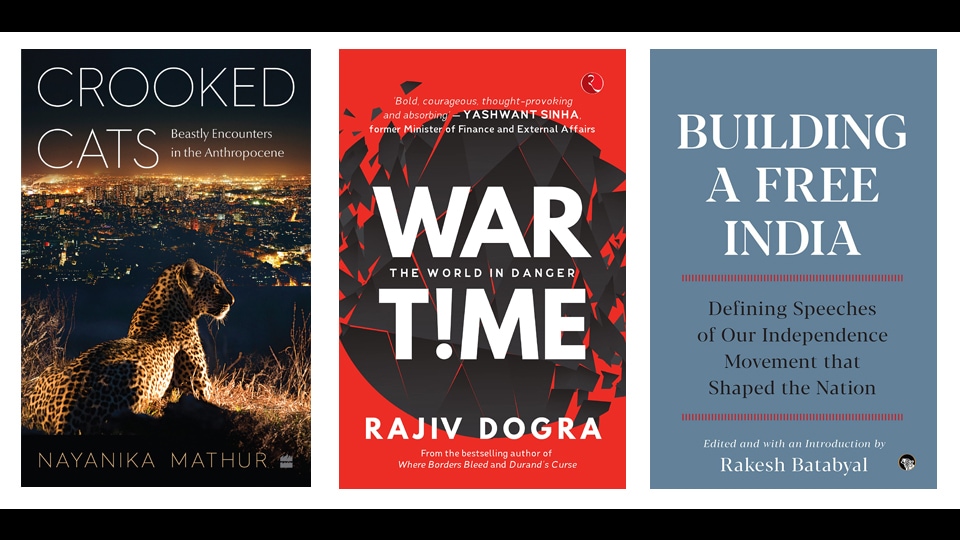
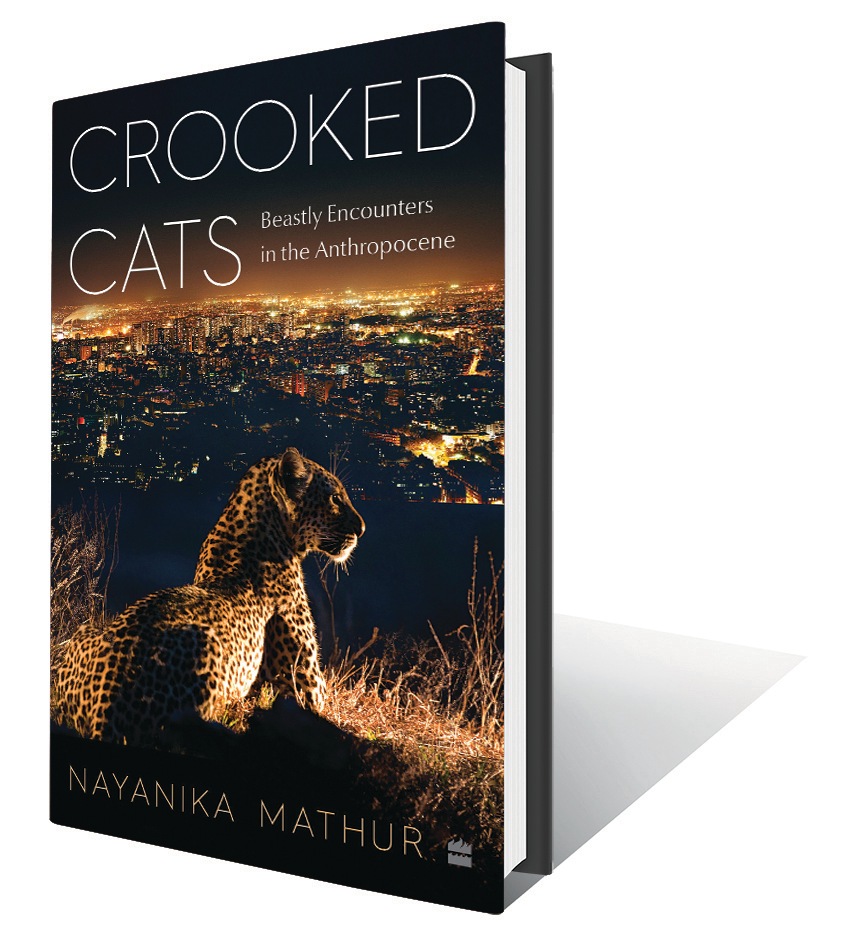
Big cats ― tigers, leopards, and lions ― that make prey of humans are commonly known as “man-eaters.” Anthropologist Nayanika Mathur reconceptualizes them as cats that have gone off the straight path to become “crooked.” Building upon 15 years of research in India, this groundbreaking work moves beyond both colonial and conservationist accounts to place crooked cats at the centre of the question of how we are to comprehend a planet in crisis.
There are many theories on why and how a big cat comes to prey on humans, with the ecological collapse emerging as a central explanatory factor. Yet, uncertainty over the precise cause of crookedness persists. Crooked Cats explores in vivid detail the many lived complexities that arise from this absence of certain knowledge to offer startling new insights into both the governance of non-human animals and their intimate entanglements with humans. Through creative ethnographic storytelling, Crooked Cats illuminates the Anthropocene in three critical ways: as method, as a way of reframing human-nonhuman relations on the planet, and as a political tool indicating the urgency of academic engagement. Weaving together “beastly tales” spun from encounters with big cats, Mathur deepens our understanding of the causes, consequences, and conceptualization of the climate crisis.*
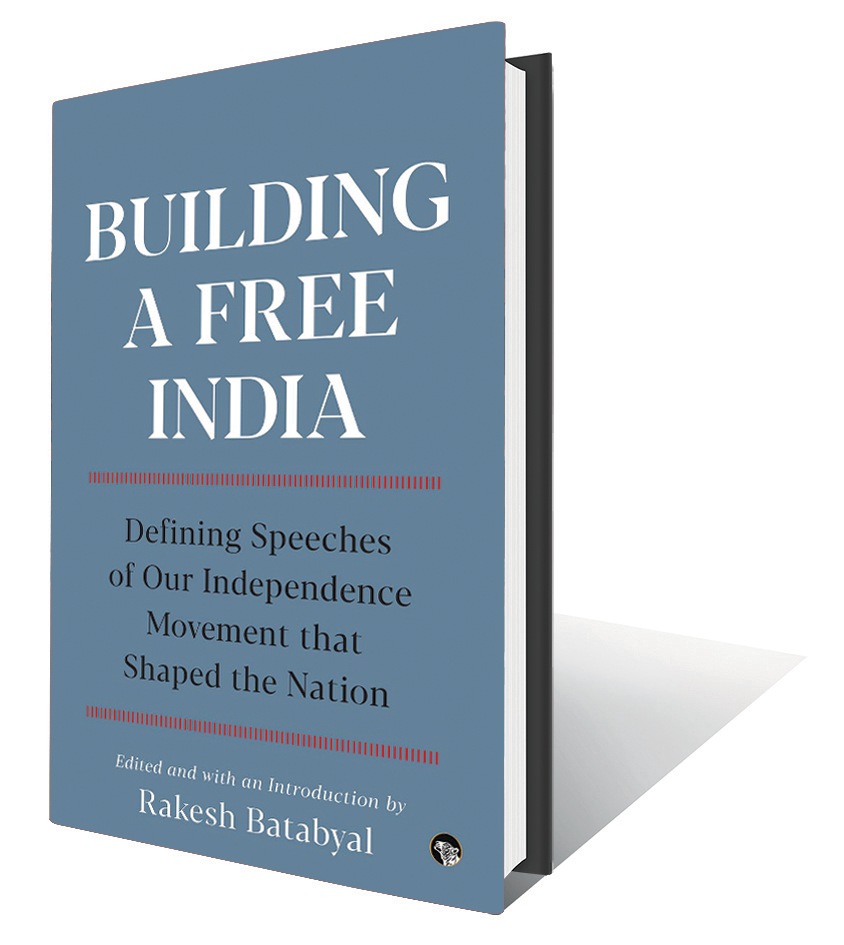
Defining speeches that shaped the nation
‘[U]nder this Flag there is no prince and there is no peasant, there is no rich and there is no poor… Whether we be Hindus or Muslims, Christians, Jains, Sikhs or Zoroastrians and others, our Mother India has one undivided heart and one indivisible spirit.’
— Sarojini Naidu, on the resolution on the national flag in the Constituent Assembly, 22 July 1947
The new public sphere that emerged in nineteenth- and early-twentieth-century India was a space that enabled magnificent public oratory, particularly that which mounted a challenge to colonial rule. From social and political platforms like the Indian National Congress, or in the courts of law, or inside legislative bodies, leaders of the freedom struggle gave eloquent and clear-eyed articulations of not only the social, economic and political problems that faced India and their possible solutions, but also the kind of sovereign nation we must collectively aspire to be. India’s democratic ethos was a product of these foundational ideas of the freedom movement.
As the movement progressed — from the economic critique of colonial rule by the early nationalists, to the unequivocal demand for Purna Swaraj and the immense moral authority of the Mahatma Gandhi-led resistance — the notion of an equal society that ensured dignity to all — irrespective of caste, class, gender or religion — came to occupy a central place in it. By the time the Constituent Assembly met in December 1946, not just civil rights, but the particular rights of women, of minorities, of the Depressed Classes and the Adivasis were being articulated and demanded, not as favours but as a matter of course. As the editor of this volume writes in his brilliant introduction, the effect of the speeches delivered by the leaders of our national movement was to focus ‘political action towards scripting an ennobling nationalism that would give us a just and equal society’.
Building a Free India brings together these landmark speeches delivered over roughly a century by the leading lights of the national movement — from Dadabhai Naoroji, Surendranath Banerjee, Bhikaiji Cama, Lajpat Rai and Tilak, to Gandhi, Nehru, Ambedkar, Bose, Sarojini Naidu and Maulana Azad — as well as a range of lesser-known but equally remarkable figures. This unprecedented collection is not only an invaluable history of our freedom movement but also of the ideas of universal equality, dignity and justice that are — and must always remain — at the root of our democracy.*
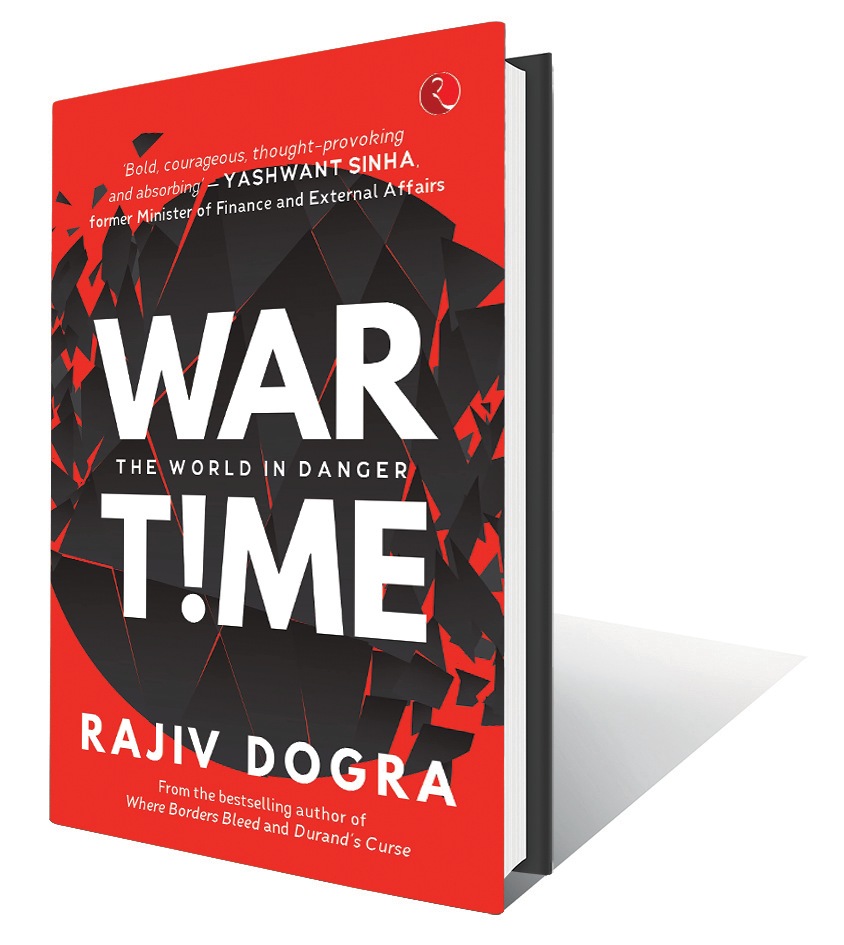
A World in danger
‘If imperialists unleash a (nuclear) war on us, we may lose more than three hundred million people. So what? War is war...’ — Mao
Is the nuclear “war” that Mao spoke of, finally upon us? There are other questions as well: When did the second nuclear age start? Why must the Doomsday Clock have regional settings? Will there be many small wars before the big one? Where and when will it start? Will nuclear weapons be used in that major war?
In Wartime, best selling author Rajiv Dogra incisively examines these and other key issues transforming the global order. A master storyteller and foreign policy expert, Dogra takes the reader on a riveting and timely journey across the world’s future battlefields, and makes a powerful geopolitical case about the major powers and their strategic choices.*
*All copy from book flap.


