
 E-Paper



HT Picks; New Reads
On the reading list this week is a collection of short stories translated from the Malayalam, an advertising man’s memoir, and a book that aims to create awareness about our moral responsibility towards other beings

 Prefer HTon Google


Tapestry of Malayali experience
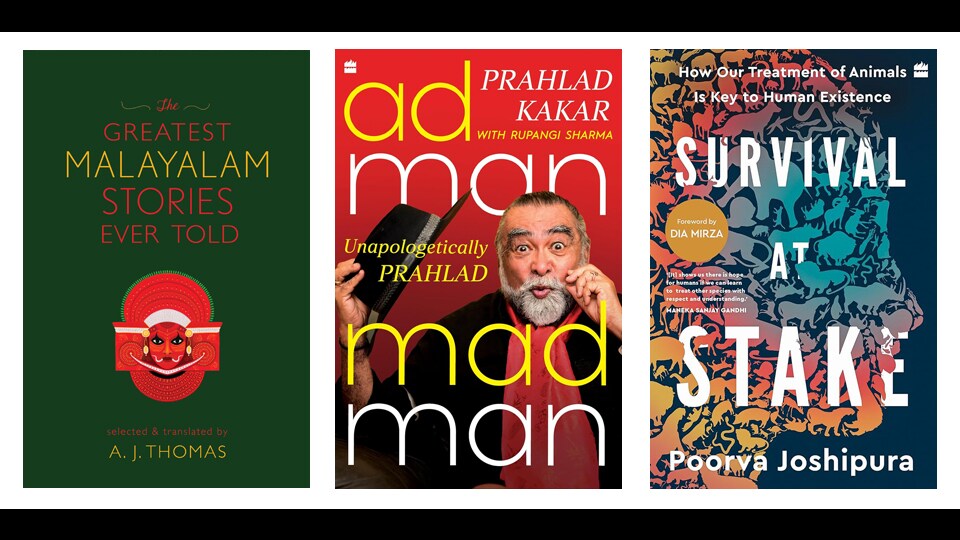
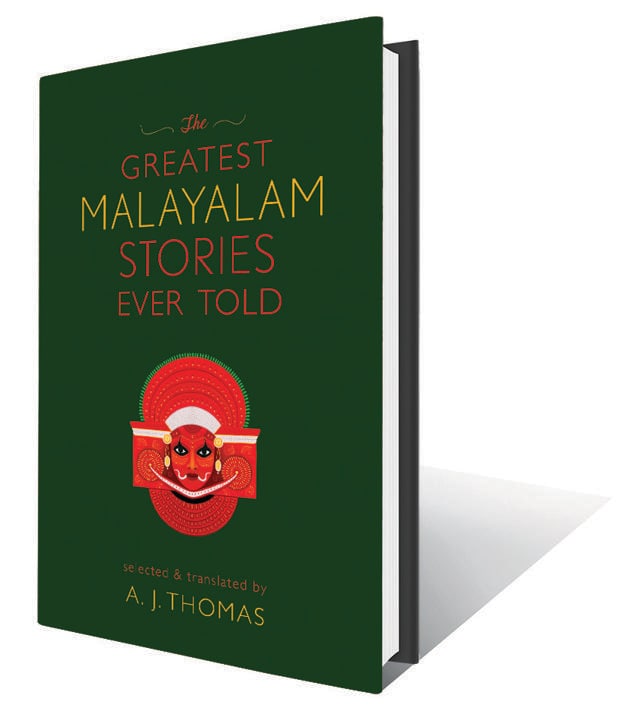
The Greatest Malayalam Stories Ever Told is a collection of 50 brilliant short stories translated from the Malayalam. Selected and translated by poet, editor, and translator AJ Thomas, this collection includes established masters such as Karoor Neelakanta Pillai, Vaikom Muhammad Basheer, Lalithambika Antharjanam, Ponkunnam Varkey, Thakazhi Sivasankara Pillai, SK Pottekkatt, Uroob, OV Vijayan, MT Vasudevan Nair, and Paul Zacharia, as well as accomplished new voices such as N Prabhakaran, CV Balakrishnan, Aymanam John, Chandramathi, and others.
The Farmer by Thakazhi and The Speaking Plough by Varkey deal with the trials and tribulations of village life. In Pillai’s story Wooden Dolls and Kesadeva’s The Oath, we encounter the seemingly simple, but intrinsically complex personalities of three rural women characters. In his classic story The World-renowned Nose, Basheer, the master satirist, resorts to biting satire to expose human vanity. In Antharjanam’s Dhirendu Majumdar’s Mother, the mother emerges as the revolutionary heroine of the Partition of 1947 and the Bangladesh Liberation War of 1971. Humans and Animals by Nandanar narrates an unbelievably macabre incident from the horrors of Partition. In OV Vijayan’s masterpiece, The Hanging, the reader is drawn into a father’s sorrow over the death of his child. Madhavikkuty in Scent of a Bird draws in bold strokes the existential angst of a modern woman who wishes to make a career for herself. P Vatsala’s story Pempi describes the plight of Adiyar tribal women. MT Vasudevan Nair, in his celebrated story, Vision, underlines the freedom and liberated state of women choosing for themselves. Photo by M Mukundan is a harrowing story about child molestation. Zacharia, in his inimitable style, tells the story of an eccentric and reclusive masseur-physician who is challenged by a patient to heal her in The Garden of the Antlions. Sara Joseph’s Sweat Marks shows how caste elites come together to dupe a brilliant Dalit student. These and other stories in this collection portray with brilliance and nuance the complex tapestry of the Malayali experience down the ages.*
Telling riveting stories in 30 seconds

In 1971, clutching a princely sum of three hundred rupees in his pocket, Prahlad Kakar arrived in Bombay Central station. During his early days of dire struggle, he slept on benches in train stations and on the sofas of reluctant friends. Scratching the underbelly of Colaba Causeway, he learnt many life lessons for his survival and eventual climb to notoriety. Four decades later, he swears by Murphy’s law, “Anything that can go wrong will go wrong.” From the bizarre to the brazen, prepare yourself for one hell of a journey.In this no-holds-barred memoir, Prahlad serves up scoops of his most unforgettable experiences, peppered with funny anecdotes from his personal life and seasoned with lessons on how to tell a riveting story in 30 seconds. Learn secrets of the trade to create memorable brands. Travel behind the scenes of celebrated advertisements that launched the careers of models who then went on to become famous Bollywood actors. Hear about the genesis of this accidental serial entrepreneur. From those who have a love for advertising to those who have a zest for life, from the young to the old, this memoir will capture your heart and your mind, and tickle your funny bone.
How our treatment of animals is key to human existence
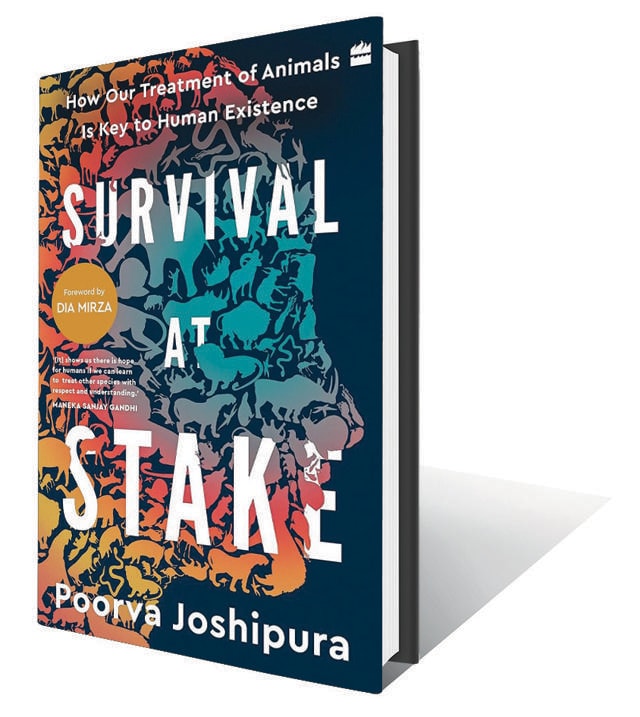
With science now recognizing animal consciousness, intelligence, emotion and even morality, there must come an awareness of our own moral responsibilities towards other beings. But there’s another reason to consider animals’ well-being – because it is intertwined with our own.In Survival at Stake, leading animal rights activist Poorva Joshipura argues passionately that, evolutionarily, humans are far more like other animals than we care to believe. She examines how hunting wildlife leads to pandemics and epidemics, which, in turn, harm us; how the production of meat destroys forests and causes climate change, which, in turn, destroys us; how blood sports hurt both humans and animals; how leather production damages the environment and human health; how animal experimentation is often a threat to public health; how cruelty to animals leads to violent crimes; and so on.It is Joshipura’s view that if we reject speciesism-the belief in human superiority-and accept that we are animals too, irrevocably interconnected to other species, from the largest elephant to the smallest bee, and a part of, rather than holding dominance over, nature, we can take the necessary steps towards the betterment of all the planet’s inhabitants.*
*All copy from book flap.


