
 E-Paper



HT Picks; New Reads
On the reading list this week is a memoir of a fifty-year engagement with public action, a volume on the south Asian explorers who documented over one million square miles in central Asia and Tibet, and an account of VS Naipaul’s family and of cultural change in Trinidad by his sister

 Prefer HTon Google


Making a difference
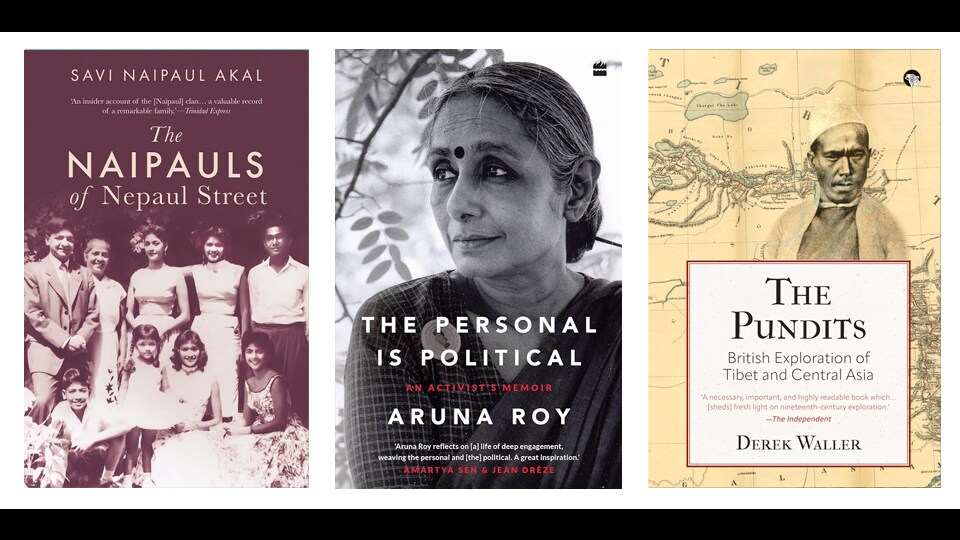
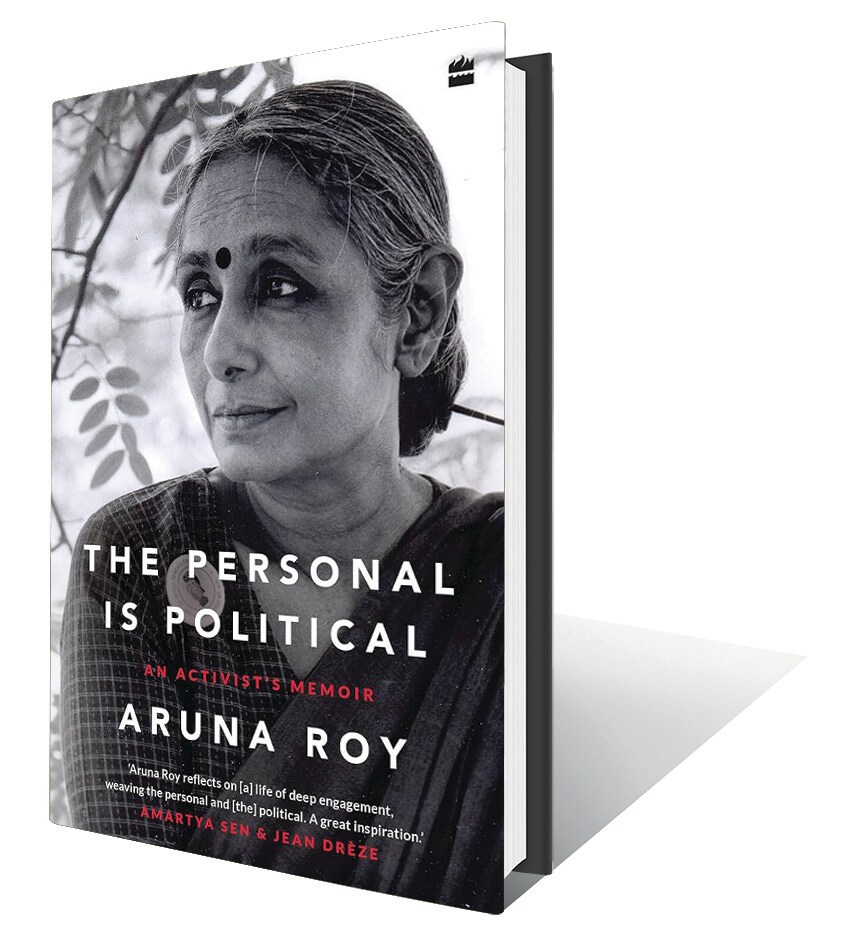
Magsaysay Award-winning social activist Aruna Roy’s remarkably forthright memoir is the story of two parallel journeys – a fifty-year-long engagement with public action in India, and a personal narrative that traces how the author has striven to convert her ideological convictions into practice.
For long decades, Aruna Roy has lived with and worked for the benefit of marginalized communities in rural India, fighting for the right to survive in a hostile environment. Alongside accounts of the plight of the vulnerable and the transformative power of mass-based grassroot social movements, her recollections are marked with stories of resilient individuals and communities and their extraordinary resistance to oppression.
Roy recounts a powerful lesson learnt from her extraordinary life: that every issue, whether it is poverty, discrimination, inequality or corruption, has personal as well as political ramifications. It is only by connecting the personal and the political, Roy says, that each one of us can make a difference.*
Of native explorers and spies
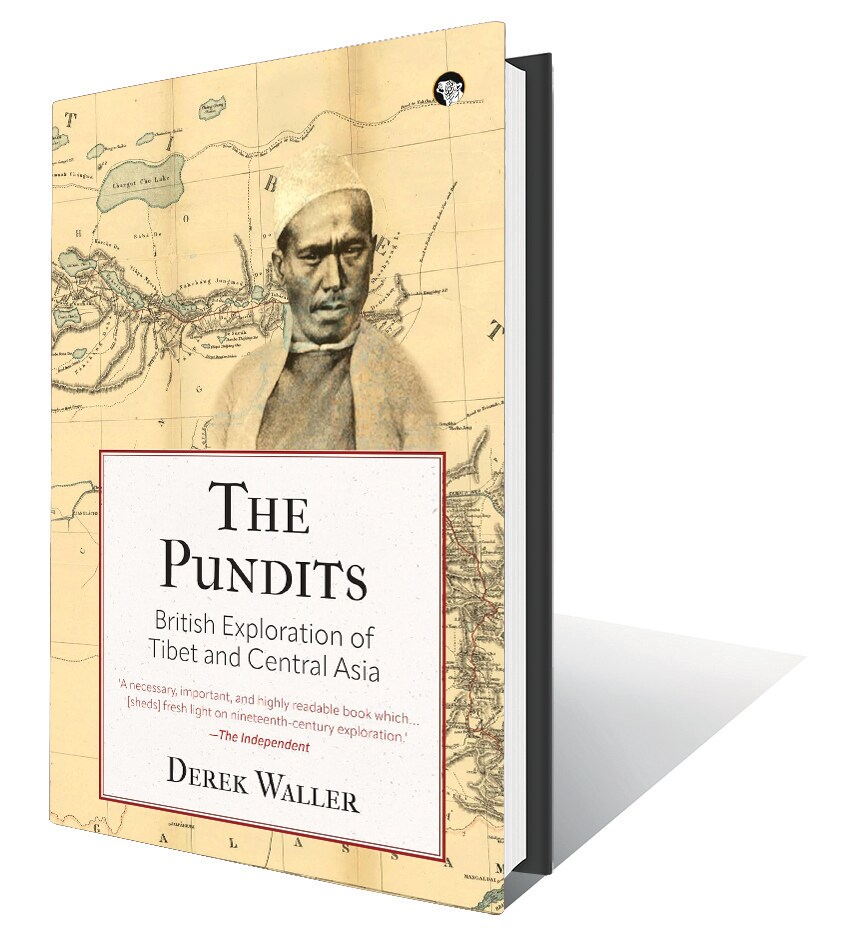
On a September day in 1863, Abdul Hamid entered the Central Asian city of Yarkand. Disguised as a merchant, Hamid was in fact an employee of the Survey of India, carrying concealed instruments to enable him to map the geography of the area. Hamid did not live to provide a first-hand account of his travels. But he was the advance guard of an elite group of Indian trans-Himalayan explorers — recruited, trained, and directed by the officers of the Great Trigonometrical Survey of India — who were to traverse much of Tibet and Central Asia during the next 30 years.
Derek Waller presents the history of these intrepid explorers — Nain, Mani, Kalian and Kishen Singh, Mirza Shuja, Hyder Shah, Ata Mahomed, Abdul Subhan, Mukhtar Shah, Hari Ram, Rinzing Namgyal, Ugyen Gyatso, Nem Singh, Lala and Kintup — who came to be called “native explorers” or “pundits” in the public documents of the Survey of India. In the closed files of the government of British India, however, they were given their true designation as spies. As they moved northward within the Indian subcontinent, the British demanded precise frontiers and sought orderly political and economic relationships with their neighbours. They were also becoming increasingly aware of and concerned with their ignorance of the geographical, political, and military complexion of the territories beyond the mountain frontiers of the Indian empire. This was particularly true of Tibet.
Though use of pundits was phased out in the 1890s in favour of purely British expeditions, they gathered an immense amount of information on the topography of the region, the customs of its inhabitants, and the nature of its government and military resources. They were able to travel to places where virtually no European could venture, and did so under conditions of extreme deprivation and great danger. They are responsible for documenting an area of over one million square miles, most of it completely unknown territory to the West. One of the first books to be written about them, The Pundits is a work of exceptional scholarship.*
A remarkable Indian family from Trinidad
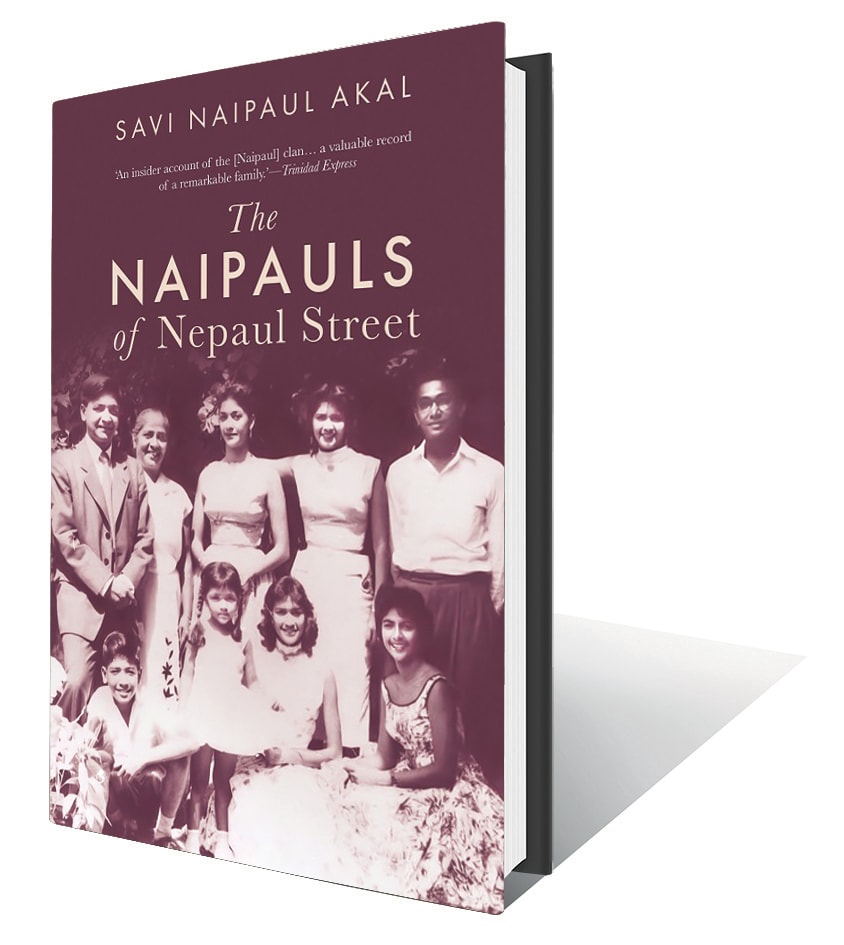
This is a moving story of a Trinidadian-Indian family’s beginnings, growth and its inevitable dispersal. Savi Naipaul Akal’s memoir pays tribute to extraordinary parents: Her father Seepersad Naipaul, virtual orphan in a dirtpoor rural Indian family, one generation away from indentured migration, who through self-education became a remarkable journalist and writer. And her mother Dropatie, who displayed remarkable diplomatic skills in sustaining a relationship with the large, prosperous and inward-looking Capildeo clan, of which she was the seventh daughter, whilst loyally supporting her husband’s insistence on independence and engagement with Trinidadian life. After Seepersad’s tragically early death, Dropatie held the family together, so that all seven children achieved university education.
It is an account of family loyalty, sacrifice, and sometimes tensions; pride in the writing achievements of her brothers Vidia and Shiva, and sorrow over estrangements and Shiva’s premature death. The memoir also gives a sharply observed picture of cultural change in Trinidad from colony to independent nation, of being Indian in a Creole society, and of the role of education in migrant families.
Elegant and lucid, written with a distinctively personal voice, the book is further enhanced by the generous quantity of family photographs that say so much about these people and the times they lived through.*
*All copy from book flap.


