
 E-Paper



HT reviewer Vivek Menezes picks his best read of 2020
A well-timed volume arrives in the heat of the majoritarian battle to usurp the idea of India


Anyone even moderately interested in Indian history has to be aware of the veritably tectonic presence of Romila Thapar’s oeuvre: even when seemingly invisible it is still very much there, extending majestically just below the surface like a continental shelf. Her intellectual stature possesses an uncanny dimension as though she has always been around, and always will be.
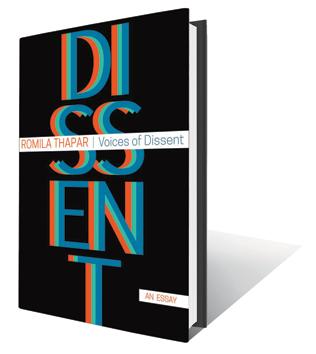
To be sure, this isn’t just an impression, but also plain facts, because the 89-year-old historian remains at the height of her powers in an extraordinary innings: when my father studied for his MA in History at the East-West Centre in Hawaii in the early 1960s he attended her lectures, and I did the same four decades later at the London School of Economics. Next up are my own sons, and I’ve no doubt they will have their own turn in line.
Yet, even if you have closely followed Thapar’s spectacularly wide-ranging scholarship for decades – as I have – her new Voices of Dissent: An Essay comes a delightful surprise. This is distilled, meticulous history writing of the highest calibre, and brilliantly well-timed because it arrives in the heat of the majoritarian battle to usurp and seize the idea of India for its own purposes.
There is tremendous moral authority in this book, part of which derives from the fact Thapar has witnessed – up close – the entire lifespan of our nation-state. As a teenager, she had an encounter with Gandhi (in the early 1940s in Pune) which she says, “In a curious way, it seemed to touch a latent inclination on my part to go beyond the obvious, to search for what I like to call the context of thought and action.”
Thapar’s excursion to the Shaheen Bagh protests provides Voices of Dissent with its emotional core. I found those passages to be particular moving and inspirational, where she writes with great feeling, “I felt after many years that I was witnessing a form of dissent that was somehow taking off from the roots of anti-colonial nationalism. There was no mistaking its all-inclusive character. It took me back to the 1940s and to my very youthful participation in anti-colonial nationalism…The future can only lie in the state and citizen being in effective dialogue to ensure the rights and duties each have to the other.”
Vivek Menezes is a photographer, writer and co-founder of the Goa Arts and Literature Festival


