
 E-Paper



Interview: Agnès Martin-Lugand, author, Happy People Read and Drink Coffee - ‘I never deliver a preachy message to my readers’
The clinical psychologist and best-selling author talks about the origin of her ideas and about self publishing her first novel on Kindle in 2012. The book as now been translated into 34 languages including English, Portuguese, Lithuanian, Turkish and Chinese

 Prefer HTon Google


You’re a practising child psychologist. How and when did you decide to become a writer?
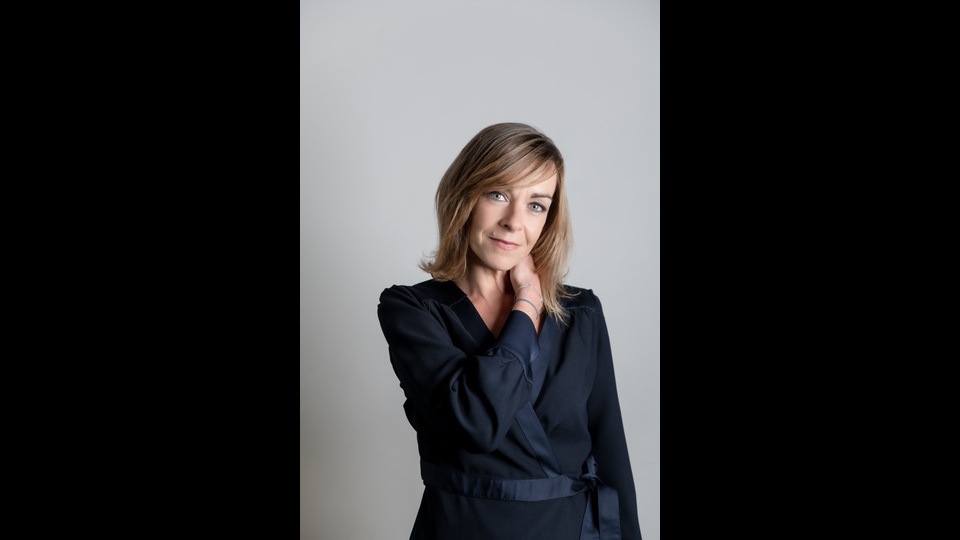
I discovered the pleasure of writing during my studies as a psychologist. I used to tell myself that one day, I would write and tell those stories, but I never dared to formulate the dream of becoming a writer. I practised my profession for several years, and then I became a mother. The desire to write came after that. I finally felt strong enough to confront the dream.
How did the story of your first book, Happy People Read and Drink Coffee, come to you?
One day, as I watched my son, who was then 18 months old, playing with his daddy in the living room, time stopped, anxiety gripped my throat, and I wondered what would happen to me if I lost them both. I felt like burying myself alive somewhere. The anxiety haunted me for some time and a few days later I told myself that if I was going to try to write a novel, it was with this story.
How did you invent the character of Diane? Who did you have in mind while writing her?
In order to invent her, I first got to know her. I asked myself a multitude of questions — her likes, her nature, her history — I let her come to me, reveal herself little by little, and then I projected myself into her. It’s imperative for me to merge with my protagonist; I needed to forget myself for her benefit.

You write about grief (Diane losing her husband and child), but you also end your novel with “hope”. How important is the message of “hope” for you?
In spite of all the tragedies and sorrows that can cross a life, I am firmly convinced that human beings have an unsuspected capacity to overcome hardship. This is why hope had to be present in this novel. Of course, life will never be the same again, but perhaps Diane can learn to live with her dead husband and child, her absent ones... I never try to give lessons, or deliver a preachy message to my readers. I simply try to make them put themselves in the place of the characters, without judgement.
What was your experience self-publishing the book like?
I self-published my first novel in digital format on Amazon. For me, this was the culmination of the work of the previous two years. I wanted my novel to exist in some way, whether it worked or not. It was a challenge to myself. But it was also very exciting! Especially when the novel became a success within the first few days. Everything went very fast for me. You know, this experience was rather short. Three weeks after launching the novel, Michel Lafon contacted me and a few weeks later I signed my contract.
What are your comments on self-publishing a book today.
My experience of self-publishing goes back 10 years. Things have changed since then. I am unable to formulate an analysis of the current situation. But I am convinced that working with a publisher is essential, exciting, and a rich exchange that allows the novels to fly out to the readers. Without a publisher, I would not be answering your questions!
How do you come up with these cool and casual titles?
My titles always come at the end of the writing process. I don’t consciously look for them to be cool or casual. In fact, I look for the title to already tell a story on its own. I like the idea that it can make a reader pick up the book. Long titles are not a principle or a ritual for me, and I’ve evolved over the years; today my titles have only one word.
How much do your novels borrow from your experience as a psychologist?
I would like to believe that I am not Agnes, the psychologist for my characters. On the other hand, my knowledge gives me a different, particular view of the themes I deal with. I have a passion for understanding what goes on in the unconscious, for analysing our reactions, our attachments, our inner conflicts, and this comes from my first profession; that’s for sure.
Arunima Mazumdar is an independent writer. She is @sermoninstone on Twitter and @sermonsinstone on Instagram.


