
 E-Paper



Interview: Kamal Swaroop, director, Om Dar-B-Dar:‘My masterpiece ruined my life’
The maker of the cult classic reminisces about his life and his idea of cinema

 Prefer HTon Google


What was your childhood like and how did films happen?
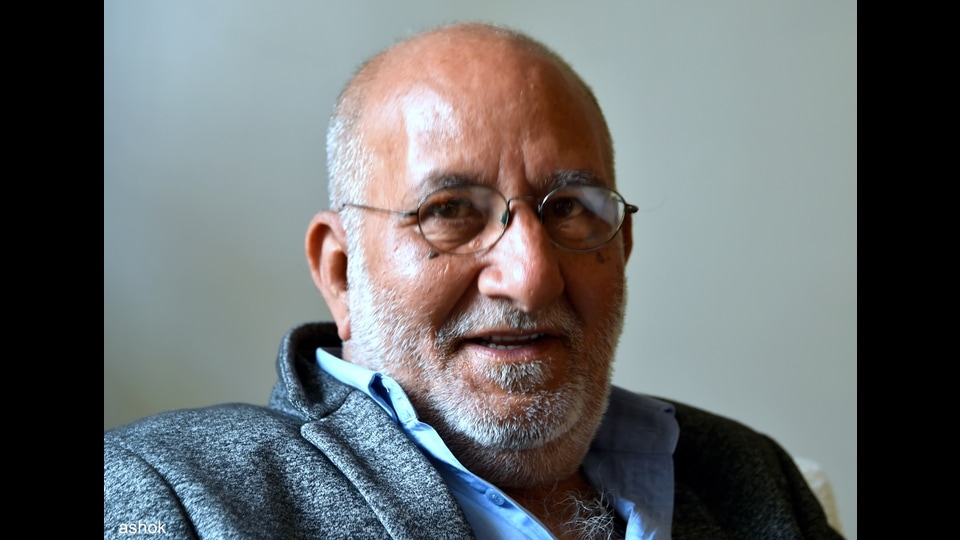
It’s been too long to my childhood. I am not sure if I could remember it all. I was born in Kashmir, spent a few years there. Then I moved to Rajasthan with my family. We lived in many small villages there, tribal villages as well. Then I completed my graduation from Ajmer. We were a big, happy family as far as I remember. My childhood was a happy place.
When did writing and your love for films begin?
In my childhood, I had nothing to do with writing or films. In fact, I had nothing to do with those things. Yes, I used to read a lot; a lot of Hindi literature and some western books. I vaguely remember reading every day, in fact. But as a skill, I had nothing. I used to copy some stories from some magazines and tell people that I have written them. That was the only skill I had. My worth was that of a cut-paste artist.
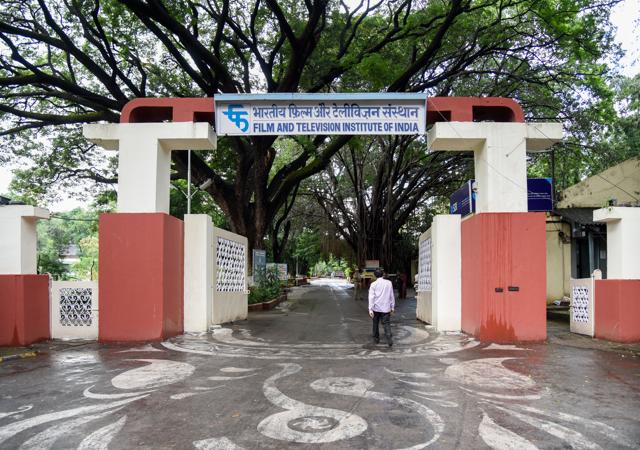
I actually started writing when I came to Poona to join FTII. At that time, there was no such thing as a professional writer in films. Nobody knew what film writing was about. People used to rely only on books and literature. From there, they used to make some kind of a production script and would use it for films. In commercial cinema, people wrote dialogue but nobody really had an idea of screenplay writing. Art cinema, at the time, was controlled by English-speaking people. They didn’t know how to make a film in Hindi. So if anybody was from the north, he or she could find work as a dialogue writer. And those art cinema guys would pick up anybody who knew Hindi. People used to work for free for them as well. The idea of payment didn’t exist then. So some of us were cast as writers. I could be useful to them. After I graduated from FTII, I did some writing for Mani Kaul and Kumar Shahani. I wrote dialogue for Kumar’s film Tarang. But I started my career, after FTII, at Indian Space Research Organization (ISRO). There I did writing, direction and production for two years. We used to make science programmes for children and also made some documentaries.
Why did you join FTII if you had no interest in film as a child?
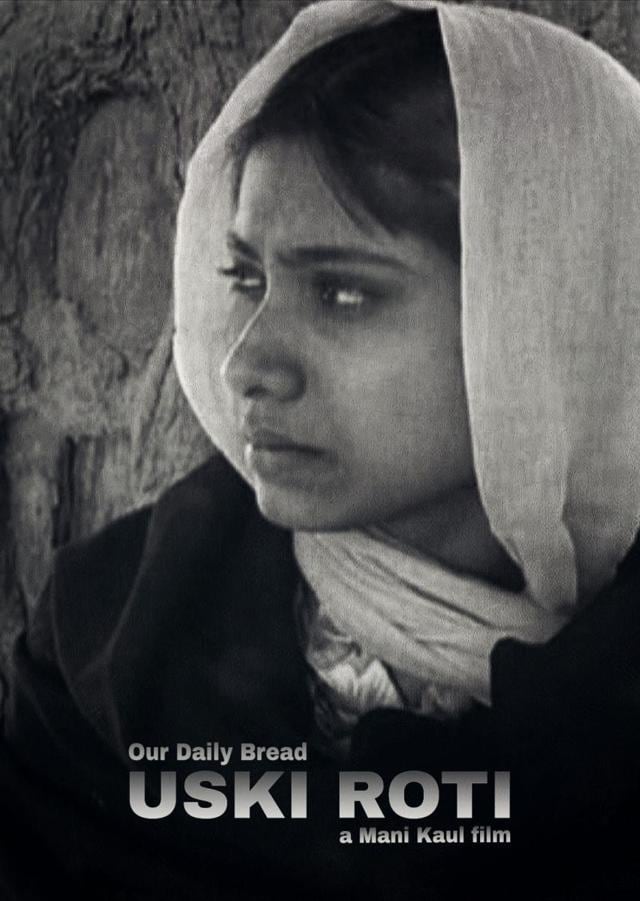
Purely because I wanted to get out of the house. And FTII was cheap. That’s the only reason. I knew about FTII as it would get mentioned in newspapers. And in those days, people like Mani Kaul and Kumar Shahani were getting very famous. Their films were getting talked about. The first avant garde film was Satyadev Dube’s Shantata Court Chalu Aahe. Then films like Uski Roti and Sara Akash got noticed. In Dharmyug and Madhuri and magazines like those, there were a lot of write ups about Uski Roti and these small films. Those guys were from small towns like me. I thought even I might get lucky with films and applied to FTII. And then I got through. Who doesn’t want to be famous? Today, I know the cost of fame. But back then, in your early twenties, you think it’s going to be easy.
How important has FTII been in your journey? Did it make you fall in love with cinema?
I won’t say love for films and all. I am not sure any more if I can call it love. But it is the only profession I know or perhaps don’t know. But it was a matter of luck and chance that I landed in FTII. It was a gamble. And I don’t know if it has paid off. I haven’t made a great career or money, you know. I am not saying it was the right decision to join FTII but that’s what I did and here I am. I won’t romanticize being in FTII. Also, I was very young, just 19 years old, when I went there, and graduated when I was 22. I don’t think that’s an age when you really understand what you’re seeing. The problem with FTII is that it makes you believe that you could be one of the greats; that greatness is very much possible. You read great literature and philosophy and aesthetic at that age. You get affected by FTII’s grandeur. And that creates complications in life because most of us don’t really understand what we are encountering but are simply smitten by its aura. You tend to role-play greatness. And then get cut off from your family and friends because you start thinking you are special and you are living with the greats and stuff like that. You develop a certain contempt for your people and your ordinary friends. Everyone goes through this. It’s a natural process. I did too.
What was it like after working for ISRO?
Then I wanted to make films. So we opened this cooperative called Yukt where we made films like Ghashiram Kotwal and Saeed Akhtar Mirza’s Arvind Desai Ki Ajeeb Dastan. I wrote dialogues for Arvind Desai Ki Ajeeb Dastan and four of us, Saeed Akhtar Mirza, Mani Kaul, K Hariharan and I, directed Ghashiram which was based on Vijay Tendulkar’s Marathi play.
You are still associated with FTII as a teacher. How has the institute changed from then to now?
Well, today people have access to world cinema and so much material even before they join FTII. Kids now are intelligent. Also, today, there is a lot of promise. You could get a lucrative job and there’s a lot of value to the FTII degree on paper. At our time, we had no clue and there was a sense of depression, you know. People used to stay alone, locked up in their rooms, studying, reading. Cinema wasn’t a business then. We lived there as if there was no future. Also, at our time, a lot of older people used to come there. People at the age of 30-35 even. I was an aberration at 19. People used to come there and meditate. It was an opportunity to be away from the world. And there was no politics; no sense of crowd and groupism. People were more individualistic back then. No party politics, no group identity. A certain kind of a depression and being resigned to life is how people were. Having said that, people were sensitive. They may not be as smart as today’s generation but they were sensitive.
Did you ever want to make a hit Bollywood film? How did you survive with arthouse cinema?
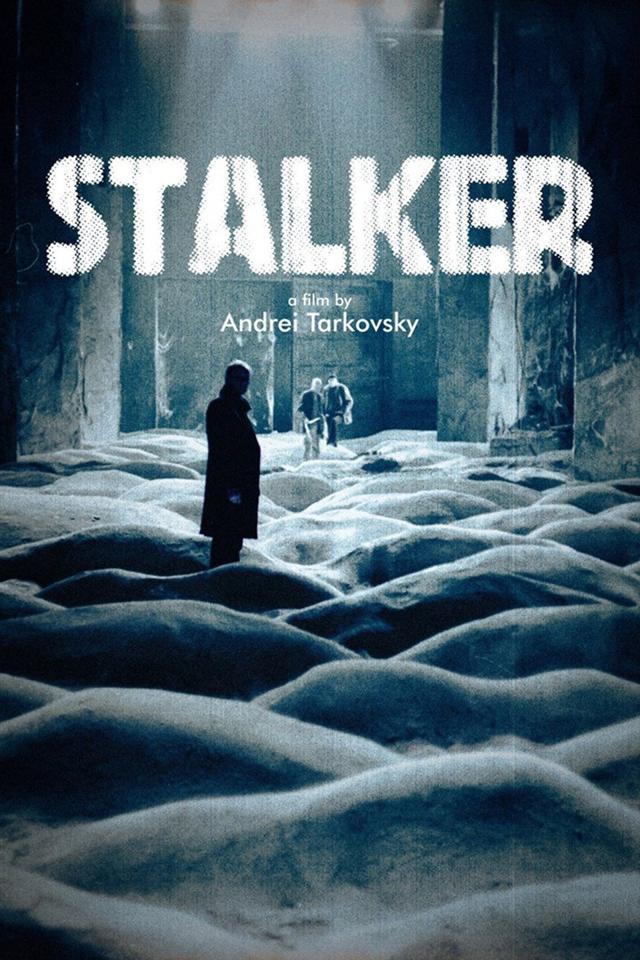
No, no, I never had the courage. There was a certain flamboyance and attitude and robustness to that business which always scared me. I was very thin and shy and I was afraid of approaching those guys. Of course, there was a sense of romance back then. I had read novels about the industry and there was an attraction I did have for it but never really had the guts to be on that side of things. I somehow saw a possibility in art cinema. So, I got into that circle. These art cinema kind of guys used to come to FTII. They were the middle class intelligentsia. Somehow, either by policy or by natural process, the commercial guys were looked down upon by the art circle. A differentiation was created between the masses and the classes. A kind of proletariat and bourgeois was at play. This differentiation started not only in FTII but in magazines like Filmfare as well. We happened to slot ourselves into the classes. And then we began operating in that world. Arthouse cinema was a very small world. Although, in reality, a lot of the FTII people also worked in advertising and in commercial cinema because it was lucrative to do so. They used to mint money during the day with some heavy-duty commercial stuff and at night, after getting drunk, they used to talk about Tarkovsky and philosophy and what not. Some people also tried to break the barrier between these two coexisting worlds. But there was no use of breaking that image because the projection of purity, romance, art was benefitting them.
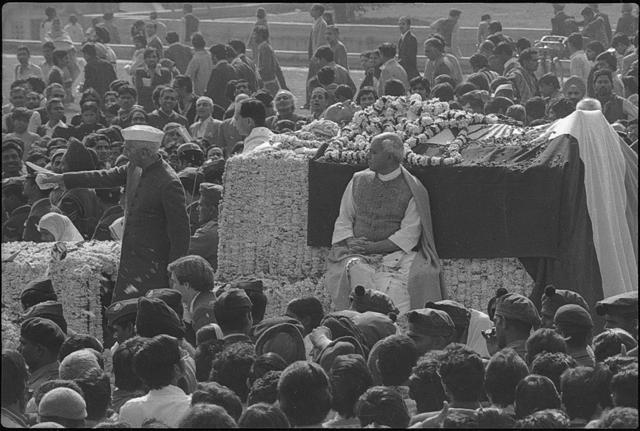
I, for one, had no desire to get into commercial cinema. I was okay not making money. It’s still a mystery to me how I have survived so long without working in any of that. I sometimes would do the odd writing job for someone but I have no memory of working regularly. I have worked in foreign productions as well. Those paid well. I assisted Richard Attenborough on Gandhi. I was the person who was in charge of handling the crowds. I think I always had the skill of handling a crowd. This affected my filmmaking as well because in a very low budget I managed to create a spectacle by playing with crowds. Gandhi was a six-month long project. Then I also worked on A Passage to India and some other films. I didn’t have too many monetary needs so even if I worked on one such project it would facilitate my survival for a whole year. I lived like this till I made Om Dar-B-Dar.
Please tell me about the journey of writing and making your cult masterpiece – Om Dar-B-Dar. How did you get the idea to begin with?
The idea occurred to me when I was working on Gandhi and when I told stories to keep the crowd busy. Also, I was always interested in folk tales and mythological stories. Gandhi paid me well as it was a foreign production. So after I got my cheque, I took a house on rent for a year and started working on Om Dar-B-Dar. It was not written as a single idea. I used to have a register back then and I would scribble stuff in it. One idea from here, another from there. I didn’t know what the whole story was. You can imagine the process to be similar to how David Lynch operates. You get ideas from different places and fuse them together in a pot and let them all cook together. It is a surrealist work. Sometimes what I wrote made sense. Sometimes, I told myself what I have written is bullshit and would discard it. So sometimes I felt happy, sometimes depressed. The process itself was terrific. I was alone with the subject. Small bits of information would sneak into the draft. The idea was to load the script with information. The information then crystallizes into small ideas. Sometimes, I would write about what is past; sometimes about what is class. Then I’d crack them into seeds, different abstracts and then gather them back.
I had a friend called Jindal, who you might know as the producer of Satyajit Ray’s Shatranj Ke Khiladi, who was a big supporter of mine. He told me that I had been living with the subject for too long and that I should now start to make it. His nephew had a typewriter and we started putting all the stray ideas I had written in one document. For three nights, I narrated the story and he typed it out. In three days, we had the script. I submitted it to NFDC. Eventually it got approved. But the script was written in English. So after it got approved, I had to spend another year-and-a-half on dialogue. Because you can write anything you want in English at a script level. When you actually go ahead and make it in Hindi, the dialogue work really starts. So then it got into a more surreal zone. I, in fact, always work like this. I cannot follow a plot line or the Hero Journey structure. I always have multiple ideas, sometimes five to seven of them and I fuse them together. I always think, “Why waste the whole film on one single idea?”
I find all these middle-class films terrible. Husband-wife and one plot line and stuff like that. I can’t stand them. I try to make things more and more complex for me and more and more difficult. I tend to create greater hurdles for myself to the point that it’s almost impossible to make the film. And then try to overcome them. It’s a form of self-torture. I don’t know what enmity I have with myself!
Do you think your unique process is why Om Dar-B-Dar is a film like no other? Also, how did your life change after the film?
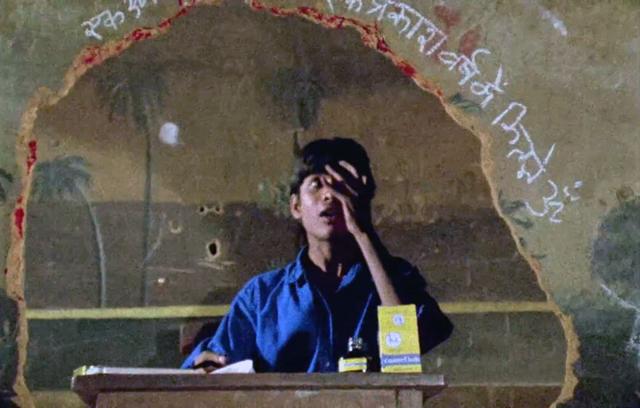
Yes, maybe; because it is dense. It is not a fixed pattern or an idea; it is generative. At no point can you say that you have understood the film. It does not have a definite meaning. It generates into multiple ideas. The film is a living object. And just like living objects, you cannot and need not fully understand the piece. My process is more of an anarchic activity. I destroy the film. That’s why I faced a lot of mental violence. At that time, some people said Om Dar-B-Dar is not a film at all. It didn’t get into Panorama, didn’t win any award. It got rejected by everyone when it came out. NFDC almost banned it too, you know, because they thought the film is very different from the script I had presented to them. They felt cheated. They also felt there must be some hidden sinister messages in it so even the censor board gave it an A certificate. The film was fully doomed when it came out. What had happened is that one of the copies I made got leaked and eventually it started getting distributed underground. Then in 2012, 24 years after I made it, it got revived because, I think, Neena Gupta noticed it and drew attention to it. That was the time it was restored and finally got accepted. But, for 24 years, I lived as a loan defaulter. I had compounded interest accumulating on me and NFDC banned me from working with them. I couldn’t find any work. Now, they have taken over the film and are minting money from it.
What you call my special film or masterpiece in reality ruined my life. People used to laugh at me. They’d tease me saying, “Dar-B-Dar ghum raha hai, dekho!” As an artist you need to be castled. You need some protective system. I didn’t have any of it. People won’t miss a chance to make fun of you especially if you’re a filmmaker or a celebrity. If you show the slightest vulnerability, then you are doomed. And I was vulnerable all through my life. In some ways, I am still paying for Om Dar-B-Dar. Yes, I got accepted after 2012 but honestly, it was quite late, my friend. I was already 60 by then. I had started to lose faith. I had almost given up. I was manically depressed for long years before that. Yes, I made a couple of documentaries in between but I was never accepted. My situation after Om Dar-B-Dar was I was neither the masses, nor the classes. I was simply rejected.
I now think some of it was also self-created, you know. I could have shifted into another direction and redeemed myself but I didn’t. You cannot be a cult figure for cheap. It comes with a heavy cost. I now know a lot of people who could die to have made a cult film like Om Dar-B-Dar. But what you need to bear with for that is something nobody wants or even understands.
There’s a new thing in society and cinema: too much emphasis on correctness. Where do you stand on that?
In the clutches of correctness, there is no expression anymore. Everyone will soon come to a sterile consent where there is no individuality left. Or they will create a common invisible hate object where they can take off their anger and bond with each other. But that hate object is abstract, very abstract. Everybody is looking for the hate object where they can come together. Hate is the only place where they will arrive at consent. You can’t openly speak any more. I think correctness is really stupid. A person’s life is dynamic, you know. It’s paradoxical and ironical and sick and so many other things. But you can’t open up about those things anymore. Some people want this to be overcome but they don’t want to do anything about it themselves. They want another person to take that fight and get beaten up. Nobody wants to volunteer. Who wants to bear with so much, right? This is taking society and cinema down together.
Any filmmaker whose work you were influenced by or admired?
See, when I was growing up, in the FTII days, we were trained to dislike Satyajit Ray and Ritwik Ghatak. We were foot soldiers trained to dislike everything except the old masters. I don’t think any film influenced me. For me, it was the kind of the life I was living that inspired my films: my life in Ajmer and Kashmir and everywhere else. I wanted that to come out. I didn’t want my film to look like another film. Having said that, sure, you do get attracted to some films. I was very fond of (Luis) Bunuel and his surrealist cinema. Now they call it experimental cinema. I was more into that zone. The conventional dramatic narrative never attracted me. In fact, now, when I teach and after all these years, when I know filmmaking, I have begun to appreciate the difficult process of filmmaking. When I made Om Dar-B-Dar, I did not know filmmaking. Today, when I look at Ray, some of the scenes he’s created are stunning. But I would personally still be more attracted to the David Lynch kind of cinema. Also, I don’t get anything classical. Before this, I did have a sense of cinematic rhythm but I don’t think I knew the craft.
How political should cinema be?
Our very existence is political. Om Dar-B-Dar is a political film but it’s not about party politics. These days, most people, when they say, they have a political stance, they actually have propaganda. Be it the right or the left. Most of it is propaganda. Nothing comes from individuality. The people who call themselves political filmmakers run around in groups and actually have no political stance of their own. Their personal politics is at zero.
You have had an extremely eventful life and are now 70 years old. Is there anything that you would do differently if you got another chance?
Of course. First and foremost, I wouldn’t get into this business. Given a chance, I would go back to the time when I joined FTII and tell myself not to go anywhere near films. I’d pick up a government job, do it well and then live off the pension post retirement. That would be a good life.
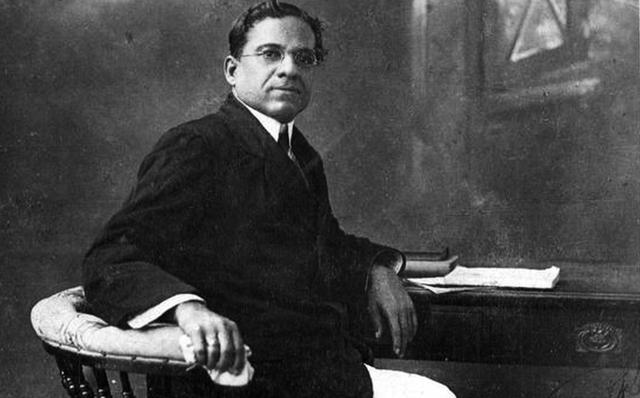
I don’t know if my journey was worth it. You know, for the last 30-35 years, after Om Dar-B-Dar, whenever someone asked me what I was up to, I told them I’m working on a film on Dadasaheb Phalke. I have done lots of research; also written a book on Phalke. But I haven’t yet made the film. Now, I don’t know how much is left in me. But, you know, if I am able to crack Phalke before I go, I’d say this was all worth it.


