
 E-Paper


Lost in the crowd? Here’s what you should look for at Delhi Book Fair 2016
Making the best of a book fair is like learning an art. Luckily, scouting as a trait isn’t new for Delhiites -- who throng the Capital’s popular flea markets with the resolution to conquer and bargain their way to claim a product.

 Prefer HTon Google


Making the best of a book fair is like learning an art. Luckily, scouting as a trait isn’t new for Delhiites -- who throng the Capital’s popular flea markets with the resolution to conquer and bargain their way to claim a product.
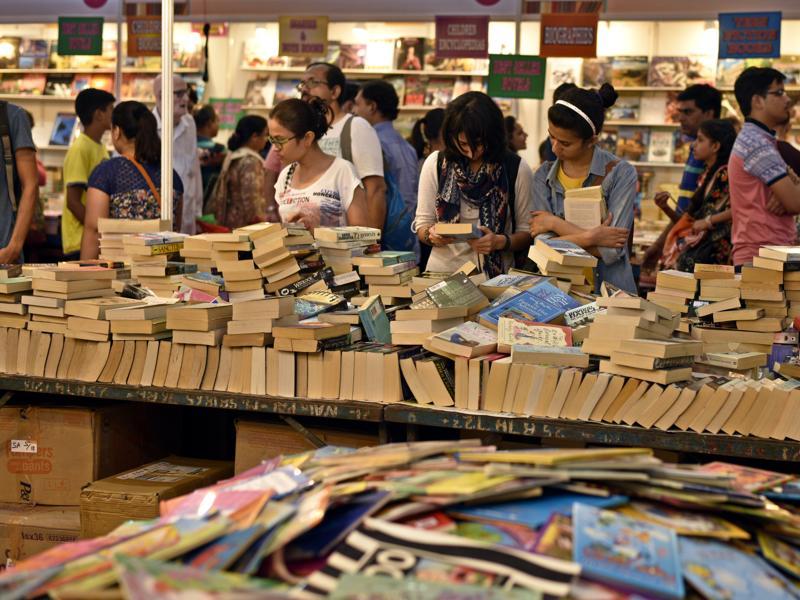
As the nine-day Delhi Book Fair 2016 opened at Pragati Maidan on Saturday, we realised there are lessons to be learnt. Here’s what you need to know about annual contest between bibliophiles:
Read | Rekindle your love for reading at Delhi Book Fair 2016
1) Flanked by Amazon Kindle ads mounted on poles, the road to the Delhi Book Fair is a simplified replica of Old Delhi’s chaotic Daryaganj market -- in an air conditioned hall with fewer people (the fair will get more crowded and the stocks will deplete in the coming days).
Unlike Daryaganj, books won’t be sold according to their weight but many stalls in Hall 9,10 and 11 featured a similar range of English bestsellers, classics and popular fiction. The prices were nailed at Rs 100, including hard cover novels and Agatha Christie, Frederick Forsyth, John Grisham, Arvind Adiga, Khaled Hosseini, Meg Cabot, Stephanie Meyer, EL James, Jane Eyre etc. were found strewn about in nearly every stall selling them.
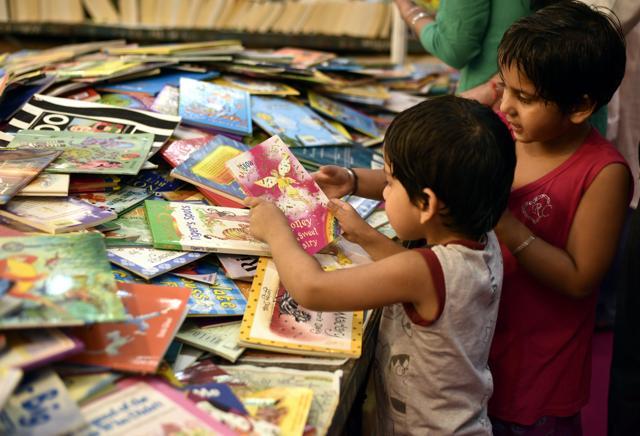
2) A look at the crowd explains why the Delhi Book Fair isn’t exclusively for book-lovers. There were parents who had occupied counters for educational books that cater to school students and those appearing for competitive exams. Pre-school kids weren’t ignored either. Indigenous publications selling children’s books, nursery rhymes in English and Hindi languages and colouring books were lined up in bright shades of stalls to attract the young buyer.
3) The fair shouldn’t be missed just because novels aren’t your thing. It offers second-hand but glossy, coffee table books littered with illustrations and pictures, and wrapped in equally attractive hard-bound covers. If you’re fortunate, some cost just Rs 100 but most informative ones inclined towards the expensive end of the spectrum.
4) Do you call yourself a collector? Do you drool over first editions or signed books? Do you love running your hand over a yellowed page that emanates the familiar scent of an old book?
Moving beyond the popular fiction stalls covered with hanging placards reading ‘Rs 50 for 2 books’, you might encounter gems in the corners. One such discovery was a Rs 300-book decorated with an ornate golden sequence on a royal black cover that hid a Thomas Hardy novel published in the UK in 1978. Suffice to say, there was an old wooden library shelf housing many more such classics.
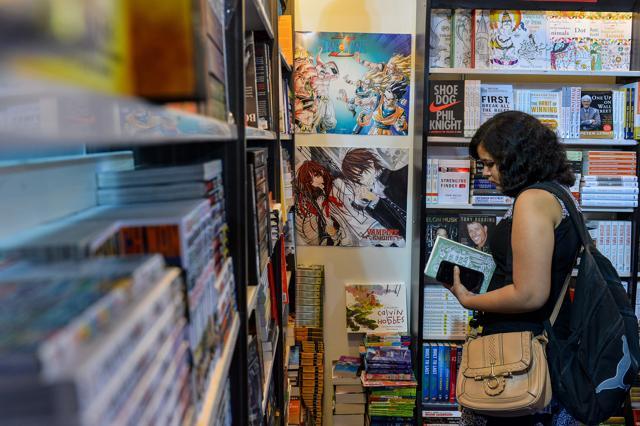
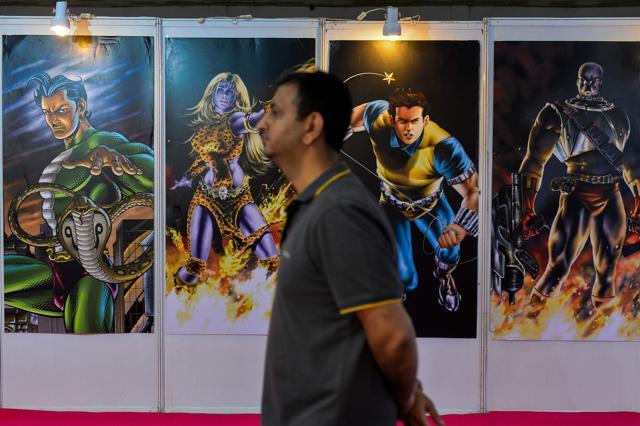
5) As we delved deeper into the fair, graphic novels too greeted us. Award-winning cartoonist Joe Sacco’s Footnotes in Gaza and Palestine were the unlikely discoveries but prices for most comics were not coherent with novels and cost anything from Rs 300 - Rs 1,400.
6) The stationary fair that occupied a large hall (Hall 12A) was where you’d go bonkers stocking up on notebooks with artistic covers, study table paraphernalia, bookmarks, incandescent papers (!) and crisp new sheets beckoning you to buy them.
The Delhi Book Fair may be a less-glamorous edition of the World Book Fair -- also held at the same venue every year -- but it is worth a visit. You never know, you might stumble on a treasure.
Read | Prepping for a brave new world: 5 books for students starting college


