
 E-Paper



Ministhy S: ‘Words like compassion are extremely relevant in a hate-filled world’
On the poetics that informs her translations, and on translating Benyamin’s The Second Book of Prophets from Malayalam

 Prefer HTon Google


Before this translation of Benyamin’s novel, I had read your translation of VJ James’ The Book of Exodus. Though different, both novels borrow extensively from religious texts which are multilingual and context-heavy. In an era when sentiments are easily hurt, how cautious were you while translating these texts?

Kerala has always been a frontrunner when it comes to iconoclastic ideas, books, or movies. You will remember the 2021 New Yorker article by Richard Brody, praising the Dileesh Pothan-directed Malayalam movie ‘Joji’, which is loosely based on Macbeth, in the context of the Covid-19 pandemic. Sometimes I wonder whether the Jnanpith winner MT Vasudevan Nair’s 1974 National Award-winning film Nirmalyam (tr. Ritualistic Offerings at Dawn) — based on his popular short story — would have been acceptable today. I shall let you discover that classic from the film archives.
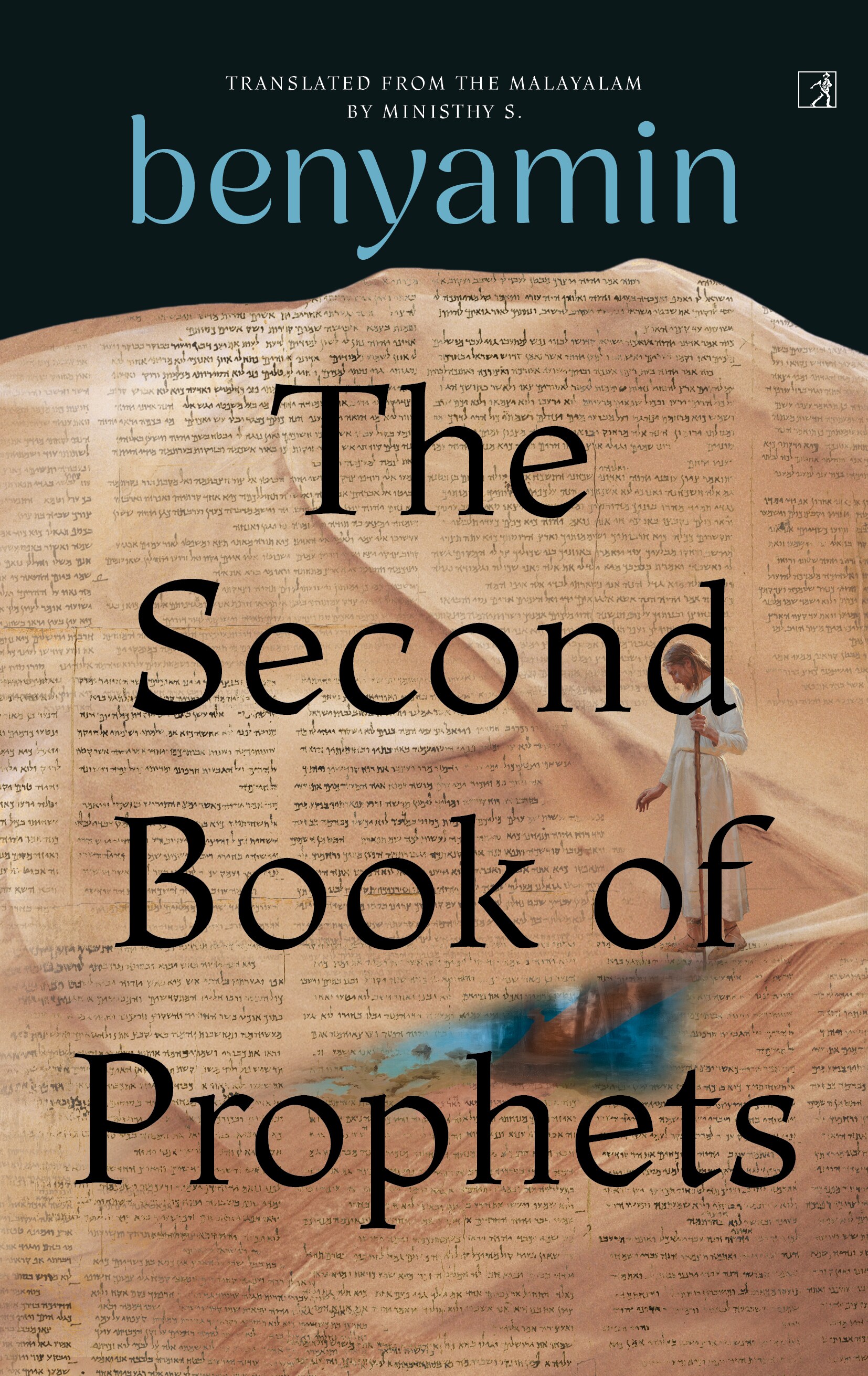
In Benyamin’s book The Second Book of Prophets, Jesus is portrayed as a rebel, a fiery leader who rages against social inequalities, battling fatigue, migraine, and self-doubt. A very human figure, “a Son of Man” rather than “the Son of God.” In VJ James’ Book of Exodus, there are deep philosophical ponderings on faith, quoting from multiple religious texts.
Yes, we live in a world of increasing intolerance where questioning is equated to overt subversion. However, when I like a book as a reader, and I find that it needs a worldwide audience, I do not let such apprehensions discourage me.
Just to weave all the threads together, there is a dialogue between a young trade unionist and a parish priest in a film by MTV Nair (Vellam [tr. Water], 1985). The priest scolds the young man for not attending church, saying that he is wasting time with his social justice nonsense. The young man retorts: “Tell me, Father, who do you think organised the poor fishermen of Galilee for the first time?”
So, in a world of darkness, words which can illumine, clear the path, make one shake out of one’s insular existence, are welcome. And when I attempt to translate books which are context-heavy and multilingual, I’m also accepting that across the world, the human experience is nonlinear and intricate. And hence, all the more necessary to carry words across the boundaries of languages.
While I’ve not read all of Benyamin’s works, the impression I get is that The Second Book of Prophets is markedly different from his previous works. What do you make of this distinction as a reader of Malayalam literature and translator?
Yes, Pravachakanmarude Randam Pustakam, aka The Second Book of Prophets, stands out from Benyamin’s other books in its theme and style. This book was first published in 2007. Many of his award-winning books were published afterwards.
Retelling Christ’s life from a perspective of Qumran [Caves] Scrolls [aka the Dead Sea Scrolls] and Nag Hammadi texts is not an easy task. We have had many daring retellings of stories from the Ramayana and the Mahabharata in Malayalam literature. But novels on Christ’s life have not been too numerous. Apart from the sensitivity of the topic, there is a mind-boggling amount of research and study involved in unravelling the threads and knots of these scriptures. For an author to offer his new narrative/retelling/alternative perspective within the framework of the existing historic and eschatological context needs brilliance, boldness, and scholarship.
You’ve noted that you had to read a lot before translating this book. Please tell us more.
I’ve been translating many books based on the New Testament and the Old Testament in my translation journey. In 2024, two [such] novels were published: Sheela Tomy’s Do Not Ask the River Her Name (Harper Perennial) and VJ James’ The Book of Exodus (Vintage). Both entailed a very deep reading of the Holy Bible in both Malayalam and English. I might not have been able to understand the delicate nuances of Benyamin’s retelling of Christ’s life if I hadn’t worked hard on those books.
I also have the habit of reading discourses on the Bible in both Malayalam and English. There are world-famous authors like Max Lucado, Henri Nouwen, Thomas Merton, CS Lewis, et al. whose writings have illumined my life. Very learned priests and bishops of Kerala have written beautiful books linking world literature, movies, stories, and philosophical texts to Christ’s life, particularly Father Bobby Jose Capuchin’s books and lectures.
I revisited Anatole France’s short story The Procurator of Judea (1892) [translators include Michael Wooff and Frederic Chapman] to understand [Pontius] Pilate’s mind better and read Khalil Gibran’s classic, Jesus, the Son of Man (1928). Gibran’s work has characters whose views on the Messiah are filled with hatred and cynicism. For example, Caiaphas, the High Priest and Head of the Sanhedrin, says: “Now that man was defiant to us and to Rome. He poisoned the mind of the simple people, and He led them as if by magic against us and against Caesar.”
Surprisingly, much of what I read and heard also visualises Christ as the most humane of humans, so compassionate, merciful, and forgiving of our human deficiencies. So, when Benyamin depicts him as a young man — more of a revolutionary leader than a divine creature untouched by mortal flaws —questioning his ambitions, and who, without flinching, asks himself whether he is power hungry, too, I could so easily relate to that honest portrayal.
What were the sorts of discussions that informed your translation?
A reader familiar with the Bible will observe that the apostle Peter in Benyamin’s novel replaces Simon Peter and Simon the Zealot. Then, Benyamin also introduces Saint Thomas, whom we all know has an interesting history, as Didymos the Greek. [Didymos means ‘twin’ in Greek, and it’s also the Greek translation of the Aramaic name ‘Thomas’.] Characters pop in and out, but are bound by a razor-sharp logic and chronology. Peter’s sword did end up slicing Malchus’ ear, you see!
I was often found scribbling my doubts and queries as I translated. Truth is, there were no disagreements, just clarifications. I had to do a lot of reading about Jewish history and the various Roman rulers of the time. I was very careful about every single word describing the Lord, since it is also a story of unparalleled compassion and love.
In this novel, at a wedding feast, Jesus is appalled by the treatment of some guests. The story goes that he transformed “120 gallons of water into wine.” It helps explain a leader’s virtues and values. But given that Benyamin retells it, making it idiomatic — that wine flowed like a river at this feast — was it his intention to contextualise the myth into a believable reality? And what did you make of it while translating the chapter?
Benyamin narrates Jesus’ first social experiment, of removing the injustice of serving water to the low-born (of the Jewish tribes) and wine to the high-born in the chapter, The Wedding at Cana. Across the world, over the centuries, discrimination over water and food has written indelible chapters of shame in human history. I found it a very forceful, pure and logical retelling. A leader who practised what he preached: equality of every human being.
It wouldn’t be incorrect to read this novel in the contemporary context of the genocide of Palestinians.
Yes, when such a genocide is happening, where children are starving to death and most of us have become numb to the daily bloodshed, it is but natural to reflect on the relevance of the script in today’s world. Words like compassion, mercy, kindness, and humanity are extremely relevant in a hate-filled, divisive world.
This novel is in many ways about leadership, but there’s often a meticulous erasure of a leader’s sexuality. How do you see the silence that authors assume about leaders’ sexuality?
Nikos Kazantzakis, in his great book The Last Temptation of Christ [translated by PA Bein], touched on all aspects of the human being’s challenge. Even the Martin Scorsese film ended up being controversial. I think it relates to something TS Eliot wrote: ‘Humankind cannot bear very much reality.’
We tend to steer clear of topics which shake us out of our comfort zones. Recently, I was translating the 81 verses (as interpreted by Stephen Mitchell) of Lao Tzu’s Tao Te Ching (4th century BC) to Malayalam. One of the verses had a reference to sexuality while describing the Tao way. I paused and checked my words to ensure a neutral tone. So, to be frank, even a translator thinks twice before stepping into the brighter light.
Each language has its idiosyncratic turn of phrases, words, and usages. While translating this book, were there words or styles that made it difficult or fun for you to translate?
Benyamin has adopted the common man’s language in this book, despite the powerful and insurrectionary theme. When villagers speak to one another, stone-drunk and playful, or when Mary’s other children cavil at Jesus, the author uses Malayalam, which we speak at home. But when it came to Judas Iscariot, questioning his beloved Rabbi, the language became sharp and abrasive.
When Jesus was in deep contemplation about his destiny and dreams, the language suddenly turned lyrical and metaphorical, with pangs of yearning. Enter Mary of Magdalene and Barabbas, with fiery speeches on the history of the Tribe of Benjamin, the text was fuming with internecine warfare and the suffocation caused by narrow-mindedness.
When Mary of Bethany speaks of her love for the Lord, or Didymos relapses into sweet dreams, the language changes hues. Let me summarise that it was an intellectual delight for me, translating Benyamin’s beautiful, powerful book.
Saurabh Sharma is a Delhi-based writer and freelance journalist. They can be found on Instagram/X: @writerly_life.


