
 E-Paper



Of bishonen, tales of same sex love and the I-novel
From 17th century author Ihara Saikaku’s stories to Murakami’s queer characters, that reveal the author as a staunch ally, and Mishima’s writing that touches on homosexual themes, Japan has a long and varied tradition of queer literature

 Prefer HTon Google


In one of his most popular novels, Kafka on the Shore, Haruki Murakami’s protagonist — Kafka Tamura — meets a young man called Oshima, whom he describes as “pretty, rather than handsome”. He is someone who wears a “shirt without a single wrinkle” and whose “skin is as smooth as porcelain”. Fifteen-year-old Tamura, who has run away from home is seen seeking refuge in the Komura Library where Oshima works as a librarian.

Oshima is a gay transgender man, an erudite personality, who eventually becomes a mentor to Kafka Tamura. He guides him with his literary wisdom obtained from the plethora of books and authors that he has read and admires: Natsume Sōseki, Shikibu Murasaki, and Sophocles. To help Kafka understand life better, Oshima even attempts to come out to him and explain to the young teenager why he is the way he is by quoting Aristophanes from Plato’s Symposium: “In ancient times people weren’t just male or female, but one of three types: male/male, male/female, or female/female,” says he.
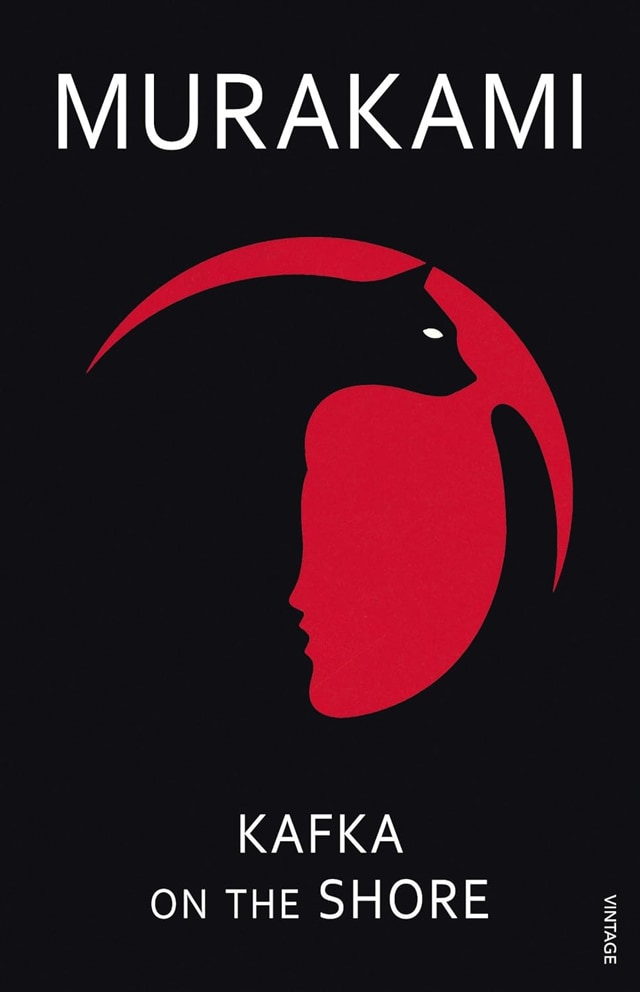
Later in the novel, during a somewhat heated interaction with two women who challenge the library’s principle of sexual equality by referring to how books by female authors were listed after male authors, and accuse Oshima of being a “typical sexist, patriarchic male” who employs cheap phallocentric logic to reduce the female gender to second-class citizens, he makes it explicitly known to them that he is not a male.
“My body is physically female, but my mind’s completely male. My sexual preference is for men. In other words, I’m a female but I’m gay. I do anal sex, and have never used my vagina for sex. My clitoris is sensitive but my breasts aren’t. I don’t have a period. So, what am I discriminating against?” he asks.
Murakami’s considerate sketch of Oshima’s character is noteworthy. A true ally to the queer community, he makes Oshima surrender his vulnerability by saying, “I’m still a human being. That’s what I’d like you to realize. I’m just a regular person, not some monster. I feel the same things everyone else does, act the same way. Sometimes, though, that small difference feels like an abyss.”
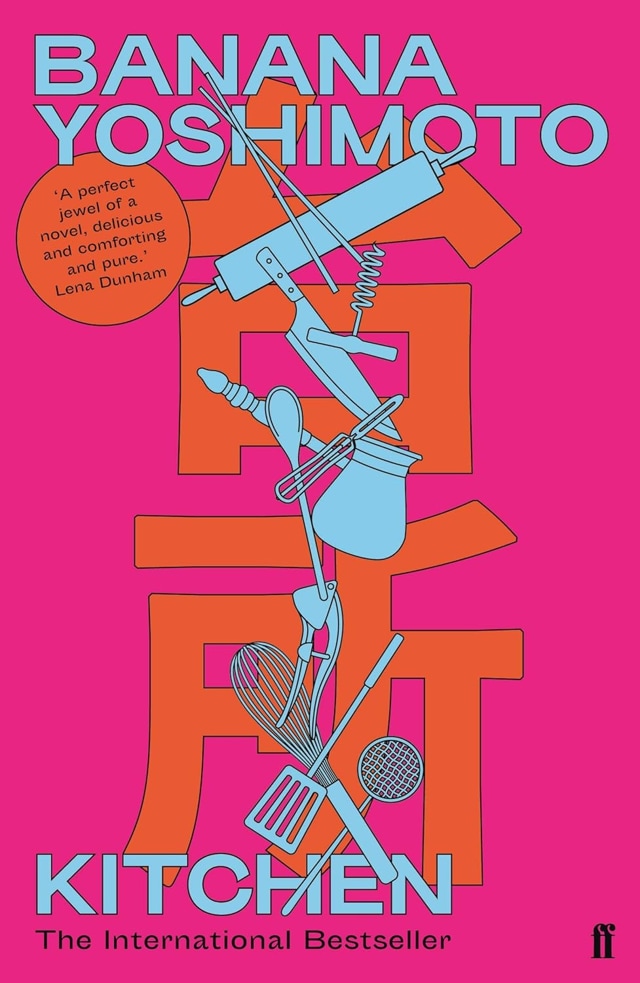
A similar streak of thoughtful queer character portrayal is seen in Banana Yoshimoto’s widely-read novella Kitchen (1988), where a young girl, Mikage Sakurai comes to live with her friend Yuichi and his mother, Eriko, after the death of her grandmother. In the book, Eriko (formerly known as Yuji) is actually Yuichi’s father. She is a single mother who speaks in a “slightly husky voice”, wears “high heels”, and works night shifts at a club to raise her son alone in the city.
Yoshimoto’s representation of Eriko as a “powerful mother” is perfectly in tandem with the then shifting cultural landscape of Japan. Mark J McLelland in his research paper entitled Japan’s Queer Cultures (University of Wollongong) writes about how some young men in the 1980s exhibited “transgender characteristics”. It was a time that saw the publication of Queen, the first commercial “hobby” magazine aimed at male-to-female (MtF) recreational cross dressers. McLelland also brings into perspective activist Torai Masae’s coming out as a female-to-male (FtM) transsexual, which raised further awareness about transgenderism in the country and the hardships faced by those whose gender identity and sexed bodies do not coincide.
To Mikage, Eriko is “stunning” and has a “motherly smile”. It is heart-warming to see her maternal instincts kick in when the young girl, lost and despondent after her grandmother’s departure, comes to live with them.
The queer characters in Murakami and Yoshimoto’s literary works are contemporary in nature. One might even argue that these works were published at a time when Japan was already on the verge of a cultural transformation. Japanese literature, however, was way ahead of its time. In the introduction to his book, Queer Subjects in Modern Japanese Literature: Male Love, Erotics & Intimacy, 1866 – 2014 (University of Michigan Press, 2022), Stephen D Miller claims that examples of male-male sexuality in Japanese literature date back more than 1100 years. According to him, the first period that saw the widespread appearance of queer literature was the Edo/Tokugawa period, and the one significant work that deserves mention here is satirist and poet Ihara Saikaku’s Great Mirror of Male Love (Nanshoku Ōkagami 1687), which contains 40 tales of love between men and boys.
Then, there is Jeffery Angles book, Writing the Love of Boys: Origins of Bishonen Culture in Modernist Japanese Literature, which claims that male-male affection has been one of the most important thematic elements in manga, especially manga for adolescent girls (shojo manga), since the 1970s. In his book, he does a thorough study of three of Japan’s celebrated writers — Kaita Murayama, Edogawa Ranpo, and Taruho Inagaki — who, as a group, were one of the most outspoken and prolific authors dealing with male-male desire in Japan during the period between the two world wars.
In Becoming Modern Women: Love & Female Identity in Prewar Japanese Literature & Culture (Stanford University Press), Michiko Suzuki introduces one of Japan’s most popular fiction writers of the twentieth century, Yoshiya Nobuko, who started Flower Tales (1916–1924), a serialized girls’ magazine that predominantly carried sentimental tales about same-sex love, often set in girls’ schools. Her stories brought her much fame and attention.
Suzuki writes, “Most of Yoshiya’s fiction features girls and women who are strongly attracted to each other, valuing above all else their love and sisterhood. Yoshiya herself was never “out” in the current sense, but for 47 years she lived openly with her lifelong female partner, Monma Chiyo. As a result, Yoshiya’s stories of same-sex love are often considered simply an extension of her own life and sexuality or an example of non-Western lesbian literature.”
Yoshiya’s first full-length novel in book form, Two Virgins in the Attic (1920), based on her own experiences of living in the Tokyo YWCA dormitory as she trained to become a kindergarten teacher, has been interpreted as an I-novel (a confessional / autobiographical literary genre in Japanese literature) as well as a “lesbian-feminist novel”.
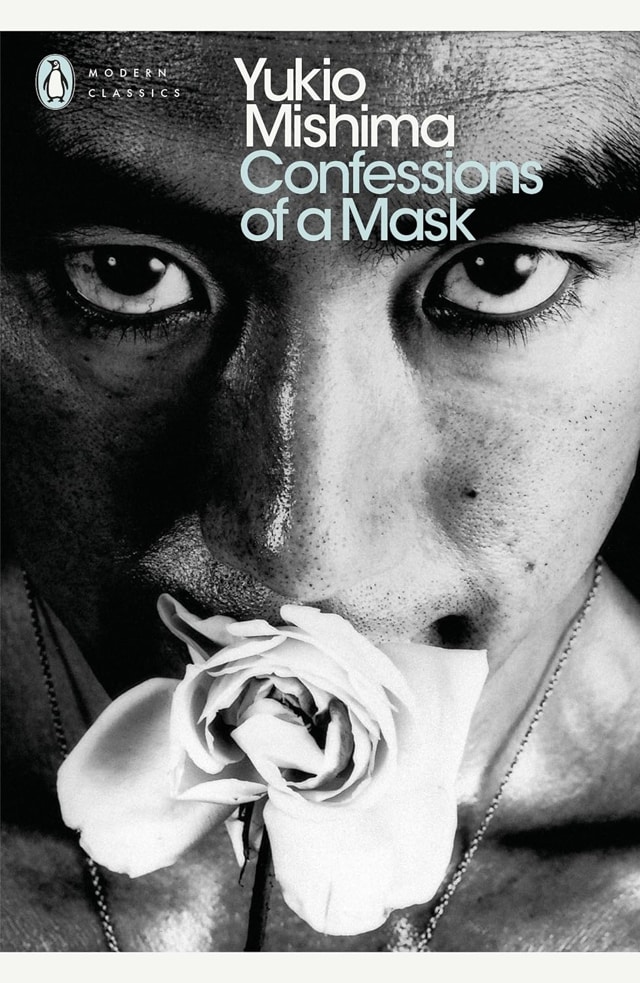
While we’re still on the subject of an I-novel and queer literature, one of Japan’s most important writers, Yukio Mishima must be cited. At 24, Mishima published Confessions of a Mask (1949), which tells the story of an adolescent boy discovering his homosexuality in a prudish Japanese society. His other novel, Forbidden Colors (1951), resembled the author’s own private life through its protagonist Yūichi, who sought both male and female company. His short story, Tobacco, which caught the eye of his mentor — Yasunari Kawabata, the first Japanese author to have won the Nobel Prize in Literature (1968) — also deals with a youthful realisation of homosexuality.
In The Life and Death of Yukio Mishima (2000), however, journalist Henry Scott Stokes, who knew Mishima personally, brings in multiple perspectives to debate on the question of Mishima’s sexuality. He writes how even though “young Mishima, it seems, remained passively homosexual”, the prudery in Japan was such that even the merest mention of his sexual preferences has been known to cause a stir, especially because it made people doubt the seriousness of his right-wing politics. To drive this point home, Mishima’s close friend from childhood, Takeshi Muramatsu, also wrote a monumental 500-page study titled The World of Yukio Mishima, whose central proposition was to portray Mishima as a heterosexual man.
To trace and understand Japan’s literary landscape from a queer lens is akin to diving into an ocean of infinite depth. It is a world of immense possibilities and revelatory discoveries. This piece, therefore, is merely an attempt to scratch the surface of the country’s expansive literary legacy.
Arunima Mazumdar is an independent writer. She is @sermoninstone on Twitter and @sermonsinstone on Instagram.


