
 E-Paper



Report: Delhi Contemporary Art Week
Delhi Contemporary Art Week showcases six women-led galleries exploring identity, memory, and belonging through diverse artistic practices until September 5.

 Prefer HTon Google


There is a useful sense of restlessness to the ninth edition of Delhi Contemporary Art Week, that’s on until September 5. Across three venues at Bikaner House, six women-led Delhi galleries (Blueprint12, Exhibit 320, Gallery Espace, Latitude 28, Shrine Empire and Vadehra Art Gallery) are showcasing a wide gamut of artistic practices: paintings, sculpture, textiles, photographs, drawings and installations. The subjects keep circling back to questions that have acquired a renewed urgency: What do we carry when we leave home? How much of ourselves remains tied to a particular landscape, a family, a house, a piece of cloth, a photograph or even a remembered image? Where do we belong? What do we remember? What happens to land? How does climate change affect ordinary life?
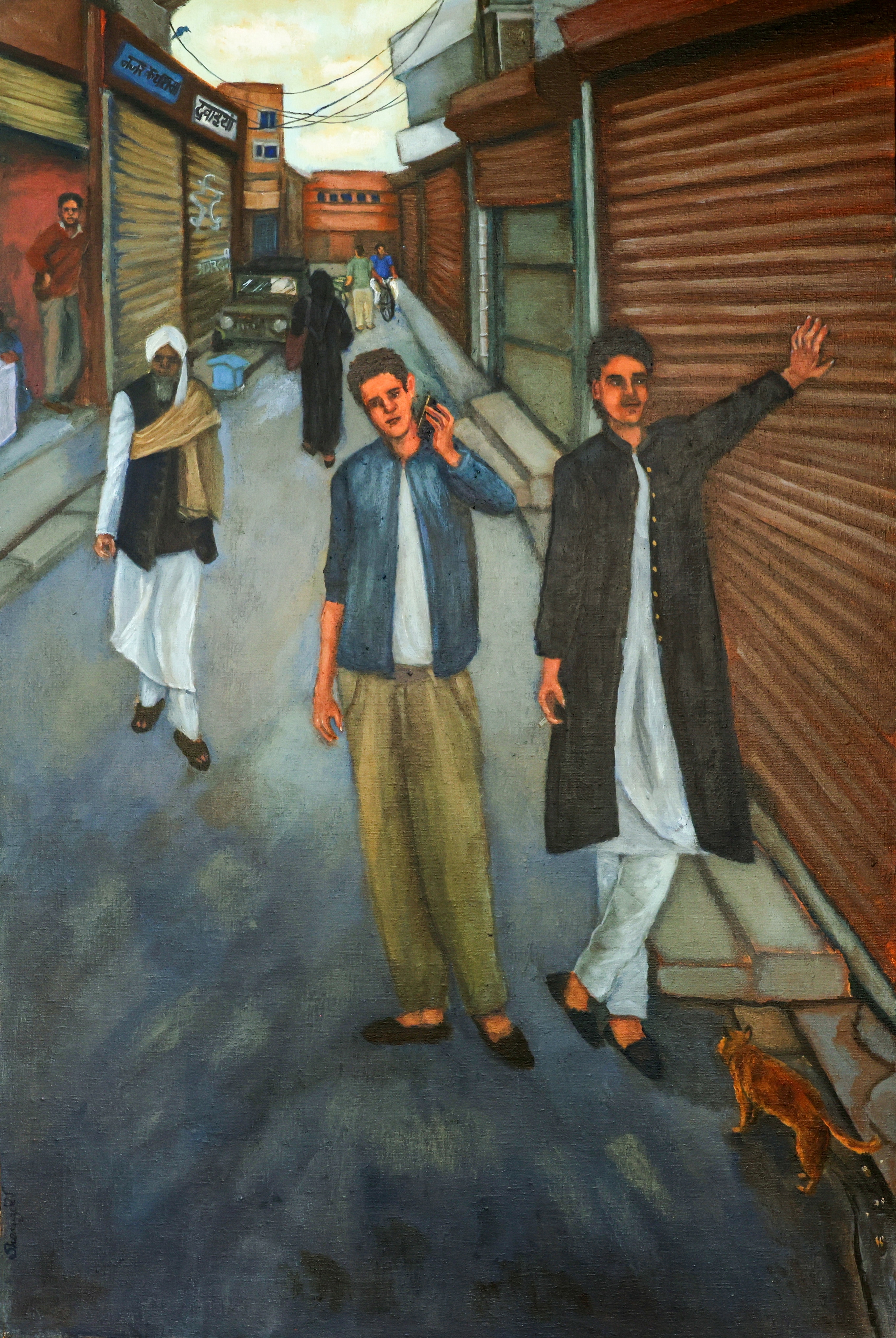
The six galleries occupy the Centre for Contemporary Arts (CCA), while Adwait Singh’s Bye-Bye Monsoon and Annalisa Mansukhani’s This Animate Earth are being held at the LTC and the Ballroom in the Main Building, respectively. At Blueprint12, Ways of Being Seen puts the human figure at the centre, but not in the conventional sense of portraiture. Some of the young artists who stand out (Shoneize Akhtar, Shreeya Dwivedi, JK, Nameera Irshad and Dhiraj Rabha) use the body to talk about memory, intimacy, displacement, grief and identity. In her paintings (acrylic on linen and canvas board), Mumbai-based self-taught artist Akhtar brings domestic and emotional spaces into focus; the subtle emotional currents of ordinary life have an unsettled, introspective quality. Dwivedi’s The Dream brings another kind of interiority, while the larger presentation asks what it means to be seen and what remains deliberately unseen.
Exhibit 320 takes a more materially varied route. Its presentation brings younger practitioners into conversation with established artists to examine home, labour, ecology, migration and belonging. Barkha Gupta looks at architecture and memory; Jaimini Jariwala’s textile practice finds meaning in unravelling and what has disappeared; Maitreyi Desai turns tree rings into a meditation on rootedness. There is a different pleasure in Gallery Espace’s Presenting Abundance. The gallery draws on the inheritance of miniature painting — its patience and appetite for detail — while allowing those traditions to segue into abstraction, colour and material experimentation.
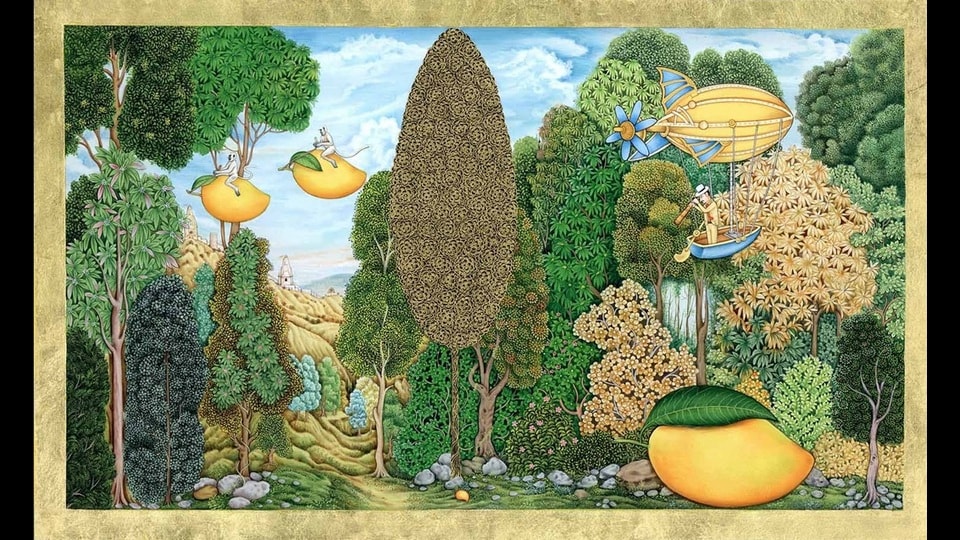
Waswo X Waswo’s A Dream of Abundance, made with stone pigment, gouache and gold on wasli paper, creates a fantastical landscape of lakes, mountains, palaces and temples, reflecting on abundance not as material excess but as the beauty, possibility and richness already around us. Manjunath Kamath’s small acrylic-and-gouache works, meanwhile, feel like fragments of half-remembered histories, bringing together figures, architecture and visual references from different traditions with wit and mystery. Where Waswo builds an immersive dreamscape, Kamath leaves gaps and strange juxtapositions, inviting us to imagine the stories behind the fragments.
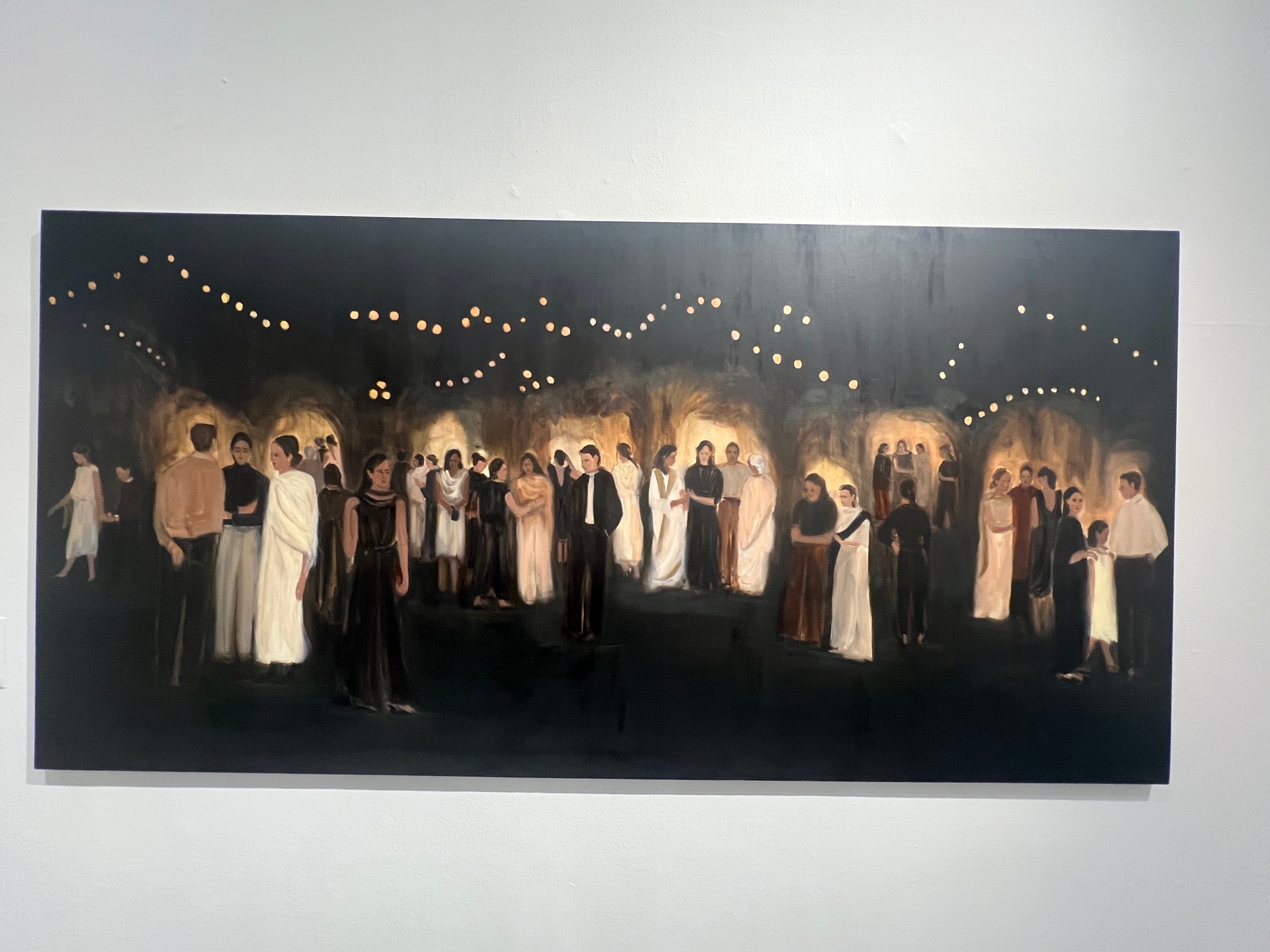
At Latitude 28, MERIDIAN brings 14 artists together; they foreground questions of inheritance, land, the body, the archive and the domestic. Sudipta Das’s Soma Talav, made with watercolour, coffee, clay and paper, is especially striking: its makeshift dwellings, bicycles, roofs and scraps of domestic life suggest communities assembled wherever circumstances allow them to settle. Raj Jariwala’s dense, fractured structures similarly evoke cities that retain the scars of people who have left them. Juhikadevi Bhanjdeo’s Skin of Home, meanwhile, uses dyed cotton and safety pins to turn the idea of the house into something almost bodily, protective, remembered and repeatedly repaired.
Shrine Empire brings a distinctly South Asian breadth to the week, with artists including Shanthamani Muddaiah, Paribartana Mohanty, Sangita Maity, Hema Shironi, Jagath Weerasinghe, and others. The gallery’s emphasis on research, process and materiality allows the works to retain their individual concerns while opening into larger questions about landscape, history, politics and displacement. At Vadehra Art Gallery, A Geography of Tender Things treats place as something we carry inside us. Anju Dodiya, Atul Dodiya, Sudhir Patwardhan, Shilpa Gupta, Zaam Arif, Ashfika Rahman and Hylozoic/Desires are among the artists represented.
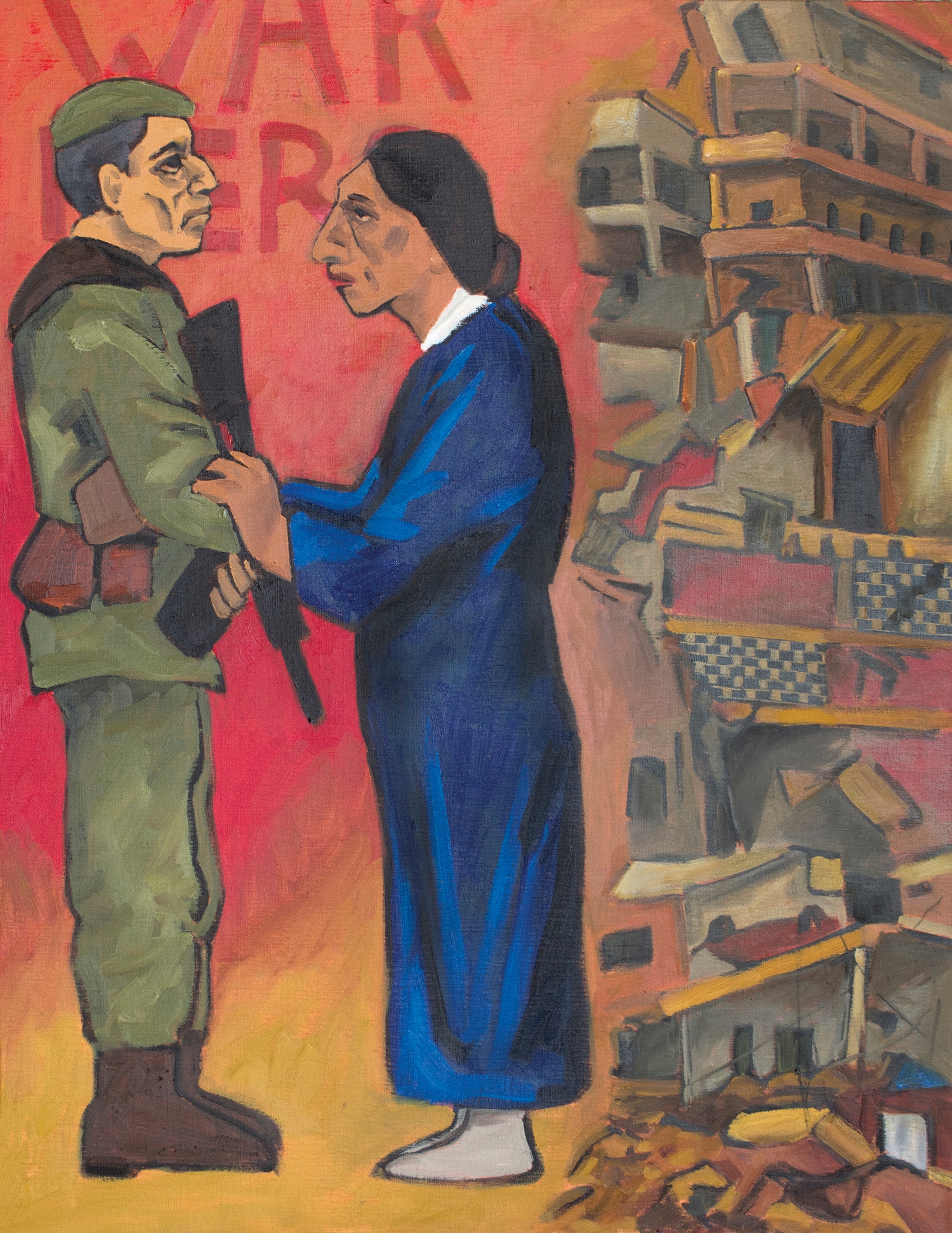
Joya Mukerjee Logue’s After Dark (VII) is particularly striking: her mixed familial heritage (born to Indian parents in the US) and life between cultures inform paintings concerned with memory, belonging and the persistence of ancestral landscapes. Atul Dodiya’s Raj and His Mother turns a still from Awaara into a meditation on cinema, motherhood and time. Sudhir Patwardhan’s War Hero, Woman Under a Tree and Woman Under a Tree 2 return to the human figure and the emotional pressures that surround it. Zaam Arif, meanwhile, brings an existential, cinematic sensibility to his paintings, drawing on literature, philosophy and South Asian visual culture.
Among the two curatorial exhibitions, Adwait Singh’s Bye-Bye Monsoon starts with changing weather but refuses to leave climate change as an abstract environmental concern. Drawing partly on Amitav Ghosh’s The Great Derangement and the history of extreme weather, it brings together artists responding to storms, erosion, altered rainfall and ecological disruption. I was struck by Chandan Bez Baruah’s Monsoon Collage, which brings the monsoon into our cultural memory; inspired by Kalidasa’s Meghadutam and its famous cloud messenger, the woodcut prints and installation looks at rain as something woven into landscape, memory and human life. The work carries both the romance of the monsoon and a sense of unease about how that relationship is changing. Annalisa Mansukhani’s This Animate Earth, meanwhile, looks to plants as repositories of knowledge, memory and relationship, connecting botanical life to land, caste, labour, empire and extraction.
DCAW’s appeal, as the gallerists see it, lies in its sense of intimacy and shared purpose. Renu Modi of Gallery Espace points to the advantage of its more intimate scale. “Unlike large showcases such as the India Art Fair, where a lot of work can get lost in the sheer scale and bustle, DCAW allows artists and galleries to be seen more closely, with the added upside of better sales,” she says. Riddhi Bhalla and Mandira Lamba of Blueprint12 have described it as a space for artists whose work engages with identity, memory and lived experience while Rasika Kajaria of Exhibit 320 values the collaboration and the conversations it creates around materiality and belonging.
Bhavna Kakar of Latitude 28 sees it as a genuine meeting point for contemporary art. Shefali Somani and Anahita Taneja of Shrine Empire emphasise the dialogue between artists working across South Asia and their varied social and political contexts. Roshini and Parul Vadehra of Vadehra Art Gallery see the week as an important moment for Delhi’s art community, bringing galleries, artists, collectors and audiences together.
Much of the pleasure to be gained at DCAW comes from moving between rooms and discovering how one work unexpectedly, and sometimes unwittingly, answers another. For six days, Bikaner House becomes a place where artists ask difficult questions without necessarily pretending to have the answers. And perhaps that is the most useful form of abundance an art week can offer: not more things to look at, but more ways of seeing.
Nawaid Anjum is an independent journalist, translator and poet. He lives in New Delhi.


