
 E-Paper



Report: Frankfurt Book Fair 2025
This year’s event put the spotlight on Philippines and on Ukrainian literature as a form of resistance against Russian colonialism

 Prefer HTon Google


It’s fall in Frankfurt and the leaves on trees have turned into the colour of the evening sun. It is also warmer than I expected, and the view from my Airbnb, a one-bedroom apartment on Arndtstraße Street is exquisite; it makes me almost not want to step out. But autumn in this city is synonymous with the season of books and literature; it is the reason why I am here – to attend the grand affair that is the Frankfurter Buchmesse.
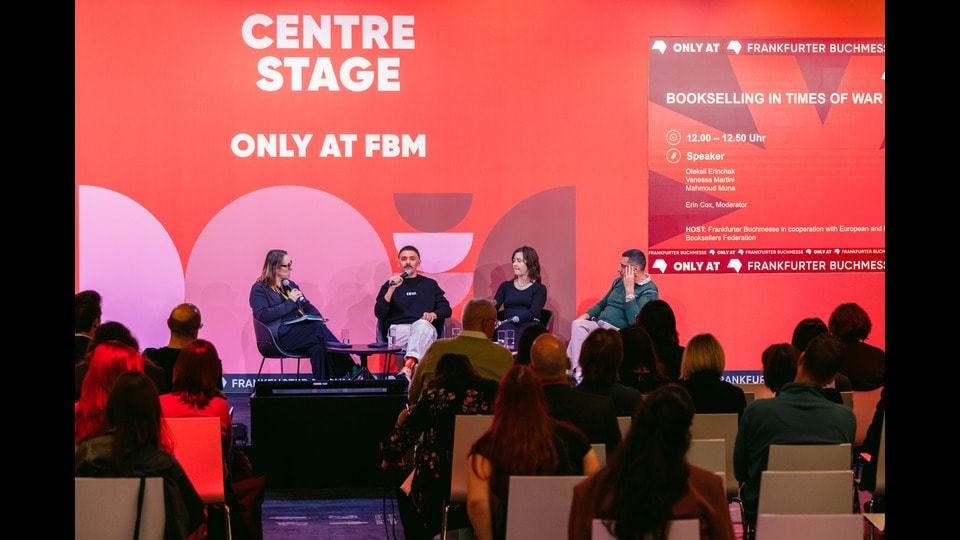
In its 76th edition now, the fair, which was held from October 15 to 19, is a global event with over 92 participating countries with their entourage of exhibitors, publishers, and booksellers. I take the last sip of my espresso, lock up, and switch on my trusted travel partner — Google Maps — for directions by foot to the fairgrounds, an easy eleven-minutes’ stroll from the Airbnb. It’s a sunny Saturday morning and Day 4 of the fair when it’s open for the general public and media.
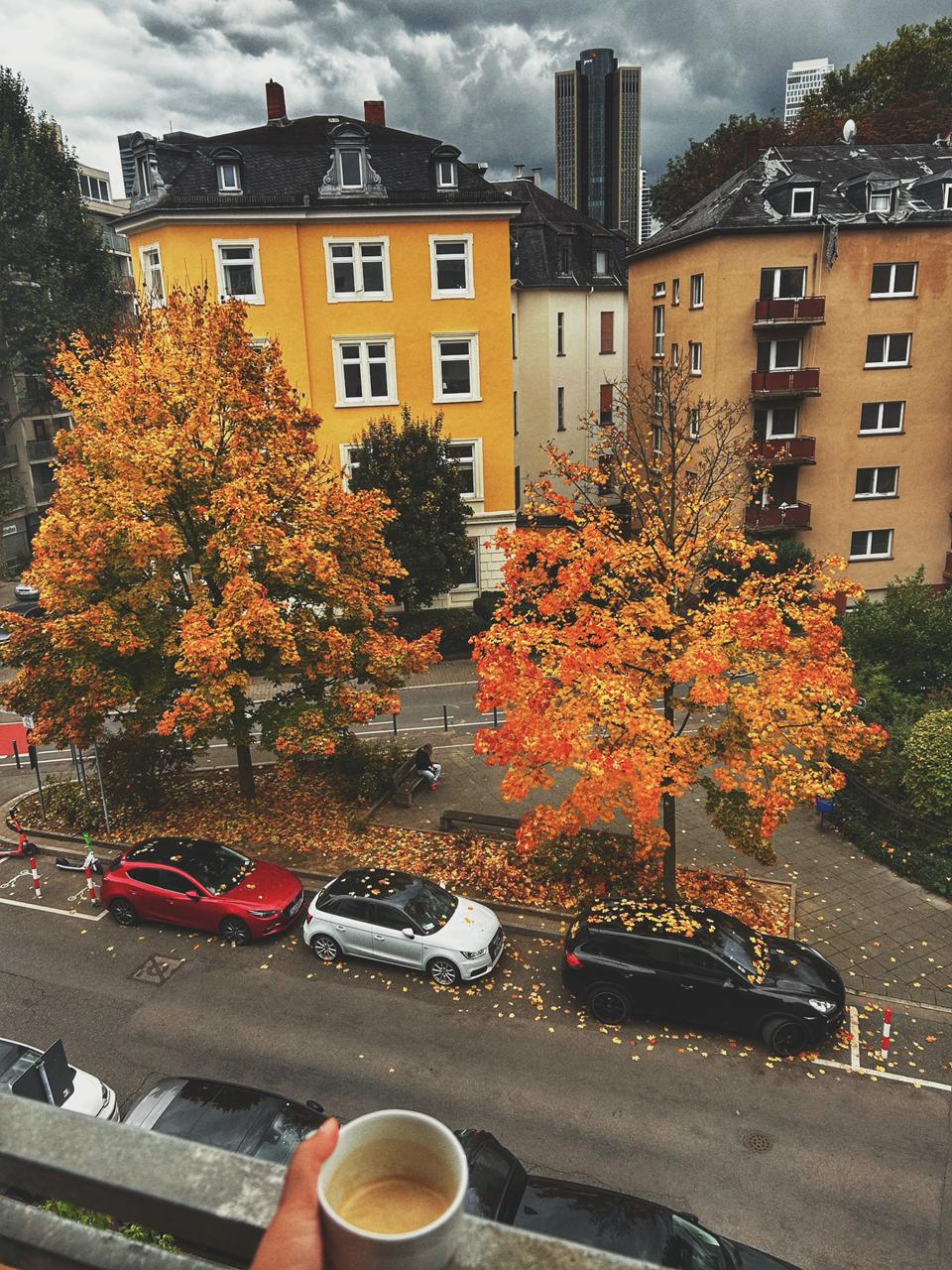
The entrance of the grand Messe Frankfurt, one of the world’s largest exhibition grounds, is crowded. Everyone’s here for the books. My first stop is the Centre Stage which is hosting the session, Bookselling in times of war. It features three personalities from three different parts of the world: Oleksii Erinchak (Owner of Sens bookstore in Kyiv, Ukraine), who talks about bookstores serving communities under bombardment, Vanessa Martini (lead buyer at Green Apple Books, San Francisco), who comments on facing the challenges of the book ban movement, and Mahmoud Muna (owner of the Educational Bookshop in East Jerusalem), who speaks about running a cultural space under intense political pressure.
During the session, Oleksii also throws light upon how the war against Russia has made Ukraine suffer not just in the war zone but also culturally. His idea of opening a bookstore in his neighbourhood was strategic – to bring Ukrainian books on stage because before the full-scale invasion, about 80% of books in Ukraine were in Russian. The bookstore served as a community centre and volunteer hub and ensured the army and civilians felt normal in a time of war.
“It was important for me to keep the store open for people who didn’t leave Kyiv. Two years later, we opened a huge bookstore on the Main Street in Khreshchatyk, which is now a centre for people who care about Ukrainian identity and language,” says Oleksii.
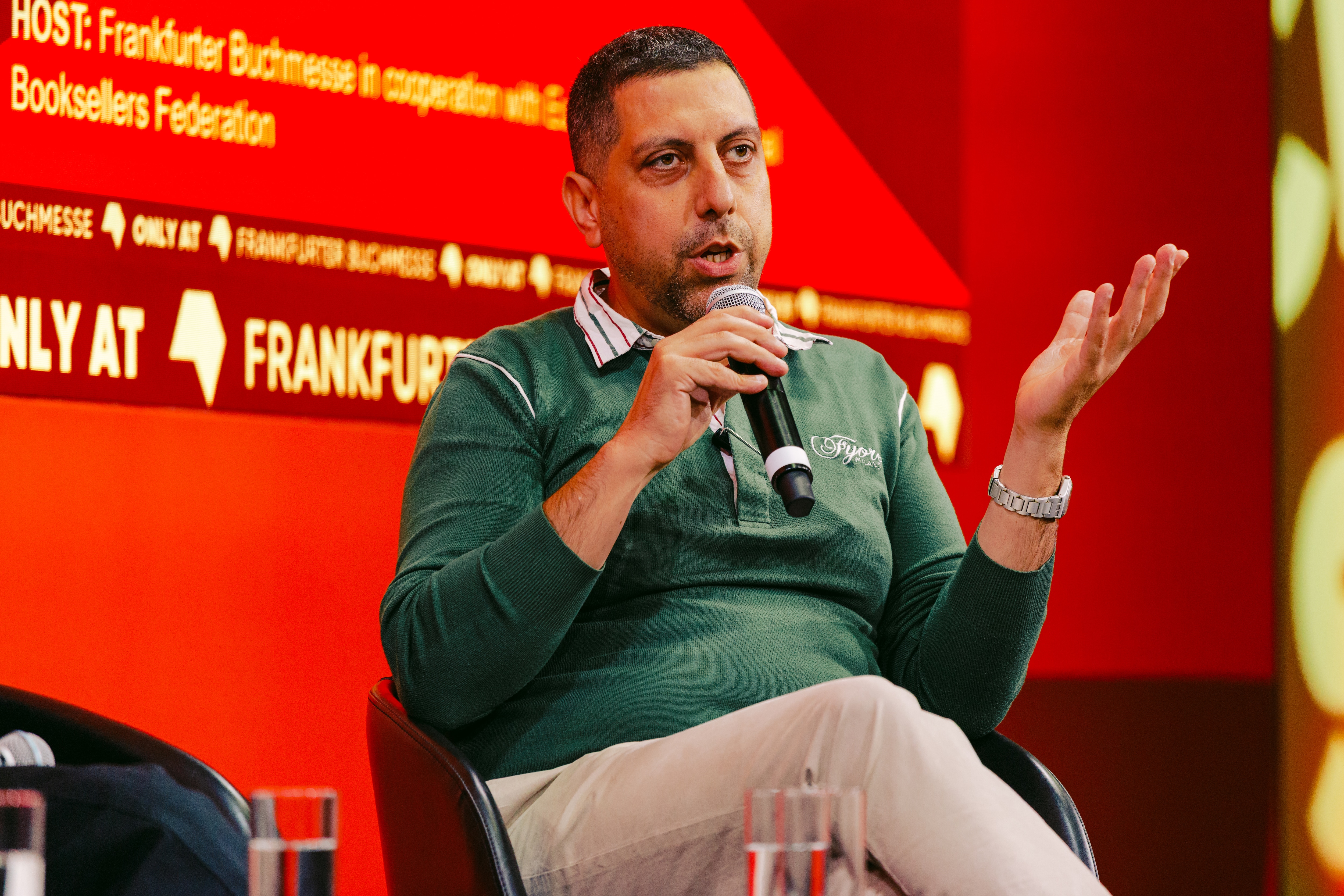
Adding to the sentiment of books and reading, Mahmoud, whose father founded the Educational Bookshop in Jerusalem in 1984. The store stocks books on Palestine and Israel and the Middle East. “My dad said that a room without books is like a body without a soul,” he says adding that the police doesn’t seem to agree. “They reverse that thought and tell you that the bookstore is a cause of violence. But, you know, people don’t turn to violence when they read books, they become educated!”
In another session titled Zero Point: Visible and Invisible Frontlines of Russia’s War, Ukrainian writers and soldiers Artem Chapeye and Oleksandr Mykhed, Polish writer Szczepan Twardoch, and German writer and translator Olaf Kühl discussed the ‘zero point’, the geographical border of the Russia-Ukraine war, which now seems to be disappearing as cities that were once located at the “zero point” have been destroyed. Moderated by Eastern European historian Franziska Davies, the session evoked conversations about geopolitical boundaries, the horrors of war, and how the individual can find solidarity in literature in times of disintegration.
This year’s guest of honour country was Phillippines and more than a hundred Filipino authors, illustrators and artists participated. Prominent Filipino writers including José Dalisay Jr., Patricia Evangelista, Candy Gourlay, and Miguel Syjuco shared stories of resistance, identity, and displacement. Nobel Peace Prize laureate Maria Ressa spoke as part of Frankfurt Calling, connecting literature to democracy and press freedom.
In 2023, the Frankfurt Book Fair faced widespread criticism protest when a German publisher cancelled the award-ceremony for Palestinian writer Adania Shibli’s novel Minor Detail, a work of fiction based on the 1949 rape and murder of a Palestinian Bedouin girl by Israeli soldiers. As if to make up for the blunder, this time, the festival hosted a session on Daybreak in Gaza: Stories of Palestinian Lives & Culture edited by writer-bookseller Mahmoud Muna and UK-based writer Matthew Teller. The anthology of essays “humanises the people dismissed as statistics” by chronicling first-person accounts of Palestinian writers who have described Gazan lives and stories from before and during Israel’s ongoing assault.
Supporting the inclusion of this session, the festival’s spokesperson Torsten Casimir said, “The greatest challenge I see today as an organiser of one of the world’s biggest book fairs is that in many countries, we are experiencing increasing division – politically, culturally and communicatively. Literature and culture, but also science and freedom of expression, can easily get caught up in these tensions. A book fair must therefore succeed in building bridges and opening up spaces for constructive dialogue – especially in times when “connecting people” has itself become a political task. We consciously accept this task.”
As the weekend (and the fair) concluded, I returned to my Airbnb exhausted. The days had been packed with literary impact so I wanted to curl up with a soothing book. My host Nell’s performative bookshelf includes Dolly Alderton’s Good Material, which I remembered had made it to one bookstagrammer’s list of “top romantic novels”. And so it was that I ended my brief Frankfurt trip with a classic romantic comedy.
Arunima Mazumdar is an independent writer. She is @sermoninstone on Twitter and @sermonsinstone on Instagram.


