
 E-Paper



Report: ITC Sangeet Sammelan
The event that featured a range of eminent vocalists and musicians showed that India’s classical music traditions can survive and thrive through institutional support and audience development

 Prefer HTon Google


When you go to a music festival, you typically expect to come back energized. The buzz lasts for a few days, and then you get on with your life. What makes the ITC Sangeet Sammelan in Kolkata stand out is its mission to catalyze an inner shift. The organizers want to encourage people to not simply consume and enjoy the music but embrace the discipline of a musical education by joining the ITC Sangeet Research Academy.
As an institution devoted to preserving and promoting Hindustani classical music heritage, ITC SRA, which was founded in 1978, follows the residential Gurukul model. Students with exceptional talent are given full scholarships to train with eminent gurus and also benefit from the academy’s archives containing books, recordings and manuscripts related to music history. The sammelan itself is a public-facing expression of this broader mission to give audiences a peek into the world of taaleem and sadhana that mostly unfolds away from the spotlight.

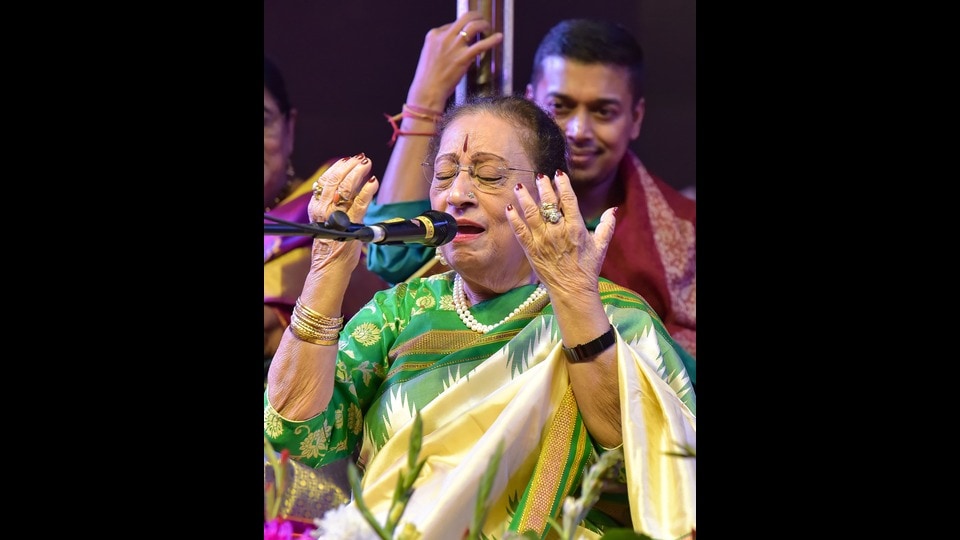
The 54th edition of the sammelan was held from December 5 to 7 at ITC SRA’s lawns in Tollygunge, with Hindustani classical singer Begum Parween Sultana from the Patiala gharana setting the tone for a magical weekend. She was felicitated with the ITC Sangeet Samman, recognizing a lifetime devoted to musical excellence. “I am honoured to be here. I sing for God and Maa Saraswati. I promise that I will never stop singing,” she said. The inaugural day also had ITC SRA scholar Pranjal Ghatak charming the audiences with his soothing flute recital.
As for the thought process guiding the curation and programming, Saradindu Datta, Executive Director and Trustee, ITC Sangeet Research Academy (ITC SRA) said, “We have a panoply of artistes, including instrumentalists as well as vocalists. We have representatives from various gharanas. We have senior artists and young talent performing on the same stage.” Music gurus at ITC SRA also found a place on the programme, showcasing the musical education on offer.
What made December 6 extra special was the all-nighter, packed with committed listeners staying up until daybreak and beating the cold with shawls, jackets and monkey caps. There is something quietly radical about an audience that refuses to leave, choosing music over sleep, and rushing to buy cups of tea between performances to keep themselves awake. It was refreshing to be at a festival where the music itself was the star, and not glitterati posing for the paparazzi.

The evening began with vocalist Subha Guha and flautist Kalyan Majumdar, and went on to feature the Carnatic sister duo Ranjani and Gayatri, singer Ajoy Chakrabarty, an instrumental trio with Mehtab Ali Niazi, Yadnesh Raikar and S Akash, and vocalist Deborshee Bhattacharjee.
Ranjani said, “The inclusion of a Carnatic performance in a Hindustani classical sammelan is a wonderful thing. In any case, the core elements of shruti, laya and raga are the same. Only the form of expression is different. It is important that we celebrate each other, not only ourselves.” She noted that it reminded her of how the December Margazhi season in Chennai also makes room for the occasional Hindustani classical performance in a predominantly Carnatic space.
Her trust in the audience’s ability to appreciate a different form of music was rewarded with some of the loudest applause at the sammelan. Gayatri added, “Performing in Kolkata is always special because the people of this city have so much love and respect for artists. We love shopping and eating out when we are here but on a concert day like this, we can’t have puchkas because we have to take care of our throats. We’ll have to come back for a street food tour.”
Hindustani classical vocalist Ajoy Chakrabarty from the Patiala-Kasur gharana reminisced about his journey from being a scholar in the first batch that graduated out of ITC SRA to being the senior most guru at the academy now. He said, “The learning process in the gurukul system is very deep and intimate. The shishya must be able to surrender, and the guru must be unconditionally giving, contributing to the shishya’s growth. There is rigour, and affection.”
ITC SRA guru Uday Bhawalkar, a dhrupad singer, and vocalist Ashwini Bhide Deshpande from the Jaipur-Atrauli gharana graced the stage a few hours later. Having them sing for you as dawn is about to approach is the kind of elixir that can only be tasted and never captured fully in words. The best thing is that you don’t need to come equipped with technical knowledge in order to appreciate it. You can simply close your eyes, open your heart, and listen.
Bhawalkar said, “Most of the audience members are in the 40-60 age group but it feels good to see that younger people are also drawn to classical music. The beauty of an all-night concert is that you can experience a variety of ragas, which are supposed to be sung at different times.” Entry to the sammelan was based on invitation cards that were made available free of charge so as to eliminate the gate keeping in cultural spaces that are often restricted to elite audiences.

The third day featured vocalists Meher Paralikar, Kasturi Joshi and ITC SRA music guru Omkar Dadarkar, apart from a tabla duet that had Nayan Ghosh and his son Ishaan Ghosh from Mumbai delivering an energetic performance with two generations of talent on simultaneous display. The father-son duo showed how improvisation and restraint make delightful companions on stage.
The ITC Sangeet Sammelan not only presented a compelling set of musical performances but also made a strong case for how India’s classical music traditions can survive: through institutional support, capacity building, audience development, a hunger to teach and learn, and the patience to prioritize a lifetime of dedicated practice over visibility and spectacle.
Chintan Girish Modi is a Mumbai-based journalist writing about literature, music, art and cinema. He can be reached @chintanwriting on Instagram and X.


