
 E-Paper



Report: Ubud Writers & Readers Festival
With an Upanishadic theme, Aham Brahmasmi, that collapses the distinction between the individual and the infinite, the literature festival held in Bali introduced the largely international audience to the richness of Indonesian stories

 Prefer HTon Google


I missed the start of the Ubud Writers & Readers Festival, held from 29 October to 2 November 2025, thanks to an impromptu plan with fellow speakers. While the crowds were walking into Taman Baca, I was at the top of Mount Batur watching the sunrise — shockingly, even shivering in Bali’s early-morning cold. And as Janet DeNeefe, Founder and Director of UWRF, opened the festival and David Van Reybrouck took the stage for his keynote, I was standing under the spouts of the Pura Tirta Empul, getting purified by mountain streams in a traditional Melukat ceremony. It wasn’t the start I had planned, but in hindsight, it was an unexpectedly fitting prelude. By the time it was midday and I arrived at the venue on my ojek — everyone was in their seats, already taking part in sessions that centered on identity, relationship, and revolution. It didn’t feel as if I arrived late; it felt as if I arrived prepared — with a clean slate.
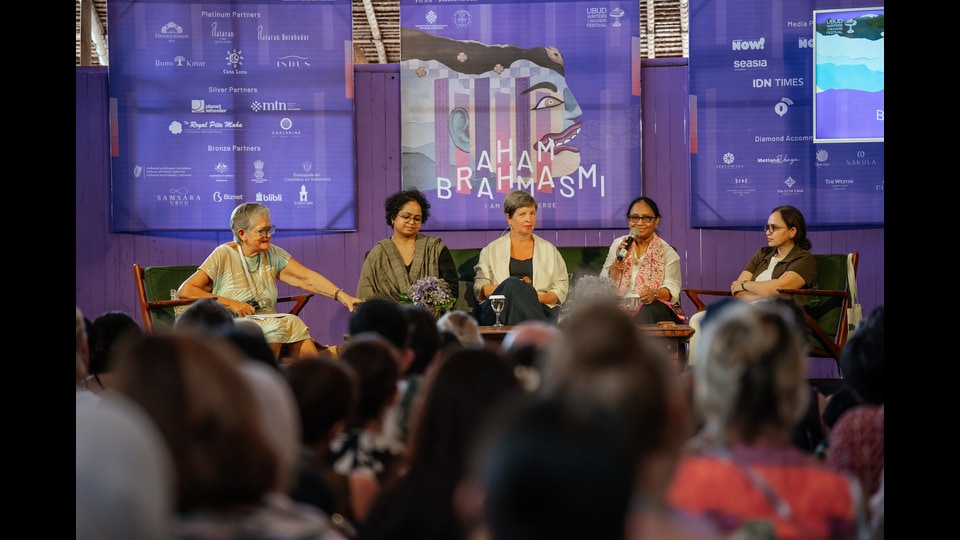
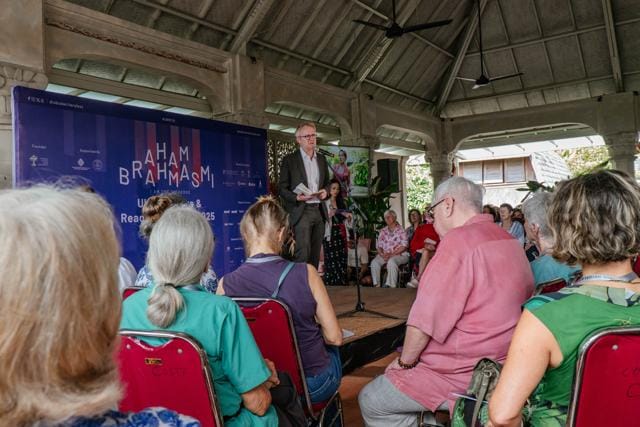
The festival’s theme for this year, Aham Brahmasmi, set an unexpectedly expansive frame for the week. Taken from the Brihadaranyaka Upanishad, the Sanskrit phrase meaning — “I am the Universe” — collapses the distinction between the individual and the infinite. It proposes that the creative force of the cosmos resides within each person, that every individual holds the same creative potential as the universe itself. The idea felt particularly illuminating against modern conversations around Homo Deus — the notion of humans evolving into ‘gods’ through technological advancement. The tools we build transform our lives, but they also carry the capacity to destroy us. And so Aham Brahmasmi works as a necessary counterweight, a reminder that no matter how advanced our intelligence becomes, we must remain grounded in consciousness and interconnectedness. This year, through its richly layered programme, UWRF returned again and again to those concerns — questioning identity, storytelling, and reinvention in a rapidly changing world.
One of the major craft conversations of the week came in a session titled World Building in a World Breaking, featuring Indonesian author Dee Lestari, Korean-American author Juhea Kim, and Australian author Bri Lee, where they explored how imagined futures are shaped by the fractures of the present. The discussion shifted between climate anxieties (which form the basis of Lee’s 2025 novel, Seed), speculative fiction, which makes up the setting for Kim’s latest short story collection A Love Story from the End of the World, and the ethical weight of creating alternative worlds when the real one feels increasingly unstable. In contrast, Lestari spoke of how mythology and a sense of universal connection quietly informed her romance-fantasy Aroma Karsa. She recalled revisiting a remote jungle temple after the book was published, where the temple-keeper expressed surprise at her reconstruction of myths almost unknown outside the region.
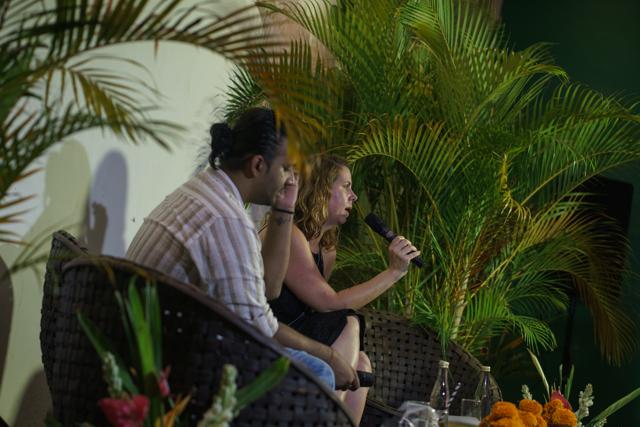
Beyond the craft-focused rooms, UWRF’s larger conversations often turned toward Indonesia itself. Seats were fully packed for Belgian-born author and political historian David Van Reybrouck’s session on Revolusi, his latest work of non-fiction, which centres on Indonesia’s fight for independence against Dutch imperial rule, a resistance that spanned decades. In a similar setting, sessions such as Writing in the Coloniser’s Tongue and Deconstructing Colonialism sparked interesting conversations on how the world is still navigating the after-effects of colonialism and the efforts we can take to step into our cultural identity.
Language — and who gets to read and tell our stories — played a significant role in this year’s programme. In Trials of Translation, Deepa Bhasthi, International Booker Prize-winning translator of Heart Lamp, joined Emirati writer Salha Obeid to discuss the challenges faced during the process of carrying the nuances of one language into another. Bhasthi noted that translating Kannada into English didn’t pose any real difficulty apart from dialectical differences. What took more care was translating the cultural texture of Banu Mushtaq’s stories — which were shaped by beliefs and practices that were completely different from her own.
In Language Today: Let’s Suss It Out, one of the most refreshing sessions in the line-up, authors Thammika Songkeao, Wawan Kurniawan, and Zech Soakai came together to explore the rapid evolution of contemporary language. A few of the questions drew laughs from the audience: “Should we be worried that words like ‘pookie’ are being recognized by the Oxford Dictionary, or are we just being ‘delulu’?”
As sessions unfolded under soft showers of the unpredictable Bali rain, attendees found quiet corners to retreat to and discuss the day’s ideas. The food stalls and drink stands provided much sustenance to a steady stream of customers looking to fuel themselves through the long hours of intense litfesting. I found myself taking refuge in the speakers’ lounge, where, surrounded by writers from across the world, candid and surprisingly weighty conversations unfolded. At one point, I ended up sharing a pizza with Jenny Erpenbeck, winner of the 2024 International Booker Prize for Kairos, as she told me about life after the prize and her next book. Being a part of the programme meant brushing against these unplanned moments of intimacy — small exchanges about bookstore hopping, travel fatigue, and souvenir shopping — which revealed the festival’s softer, human side.
During one such moment — an interview with Omar El Akkad — he remarked on something easy to miss amid the bustle: even though the audience was largely international, being in Bali seemed to make people unusually open to engaging with Indonesian stories. The country’s own storytellers were at the centre of the event with Leila S Chudori celebrating the 100th reprint of her novel Laut Bercerita (translated into English as The Sea Speaks His Name), alongside panels on rewriting national history and examining the role of independent media in contemporary Indonesia. Other sessions spotlighted the stories of Chinese-Indonesian women and explored the supernatural myths woven into everyday life. Taken together, these conversations revealed a clear intention behind the curation — a shared sense of memory, tension, and imagination that invited global audiences into stories firmly rooted in place.
One of the most anticipated sessions was Ladies of the Booker Prize: a gathering that readers seldom get to witness. As Jenny Erpenbeck settled on stage alongside Deepa Bhasthi and Banu Mushtaq, the author–translator duo behind the 2025 International Booker Prize winner, Heart Lamp, they were met with a large audience. Attendees spilled into the passageways around the venue, eager to hear three women whose work has carved out a lasting place in contemporary literature. And when Mushtaq read from her stories in Kannada — without live translation — the room shifted into a silence that is rare in a crowd of that size. It was quiet proof that the force of storytelling isn’t limited by language.
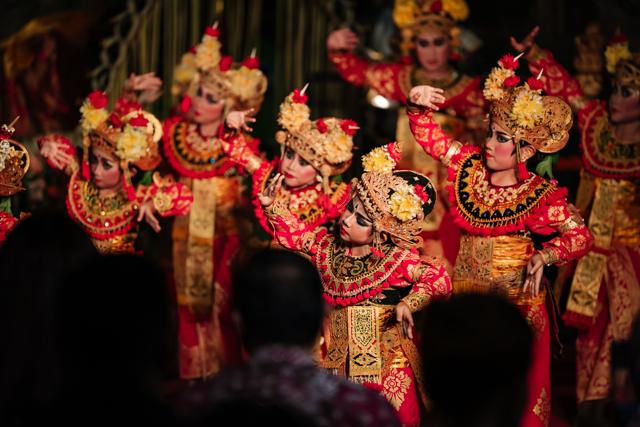
Now in its third decade, the Ubud Writers & Readers Festival has grown into a quiet cultural movement in Southeast Asia. First organised in response to the 2002 Bali bombings — as an effort to revive tourism and, with it, the island’s economy — it has since become a sought-after event in the international literary calendar. So much of its steadiness comes from the team behind it, whose work often reveals itself in the moments when they seem invisible: when sessions run smoothly through sudden rain, as crowds are directed with ease, last-minute adjustments that go unnoticed due to the efficiency with which they are handled. Their commitment has helped shape a festival that feels both grounded in Bali and open to the world.
When I landed in Bali, I had no real sense of what to expect from UWRF. Festivals often promise inspiration and connection, and just as often leave you with little more than a tote bag and a handful of photographs and signed copies. But this week felt different. Between ojek rides through sudden rain, an alarming number of cups of coffee, and evenings spent crawling back to my Airbnb, drained by the island’s humidity — I still found myself returning to the festival grounds with eagerness. Drawn back by conversations that felt intimate, surprising, and, at times, disarming. I came to Ubud with an overpacked suitcase — and left with new friends, a longer reading list, and horizons that felt altered, widened in ways I hadn’t anticipated.
Rutvik Bhandari is an independent writer. He lives in Pune. You can find him talking about books on Instagram and YouTube (@themindlessmess).


