
 E-Paper



Report: Vasant Gujarati Theatre Festival
Feminist monologues, productions that were a mélange of poetry, theatre and music, and a screenwriting workshop were among the offerings at the three-day event

 Prefer HTon Google


Vasant, the Gujarati theatre festival that was held at Mumbai’s National Centre for Performing Arts (NCPA) from April 25 to 27, served up some delicious fare for a boisterous audience hungry for entertainment as well as social critique. Named after the season of spring, it offered six productions of varying lengths and genres, and a screenwriting workshop.
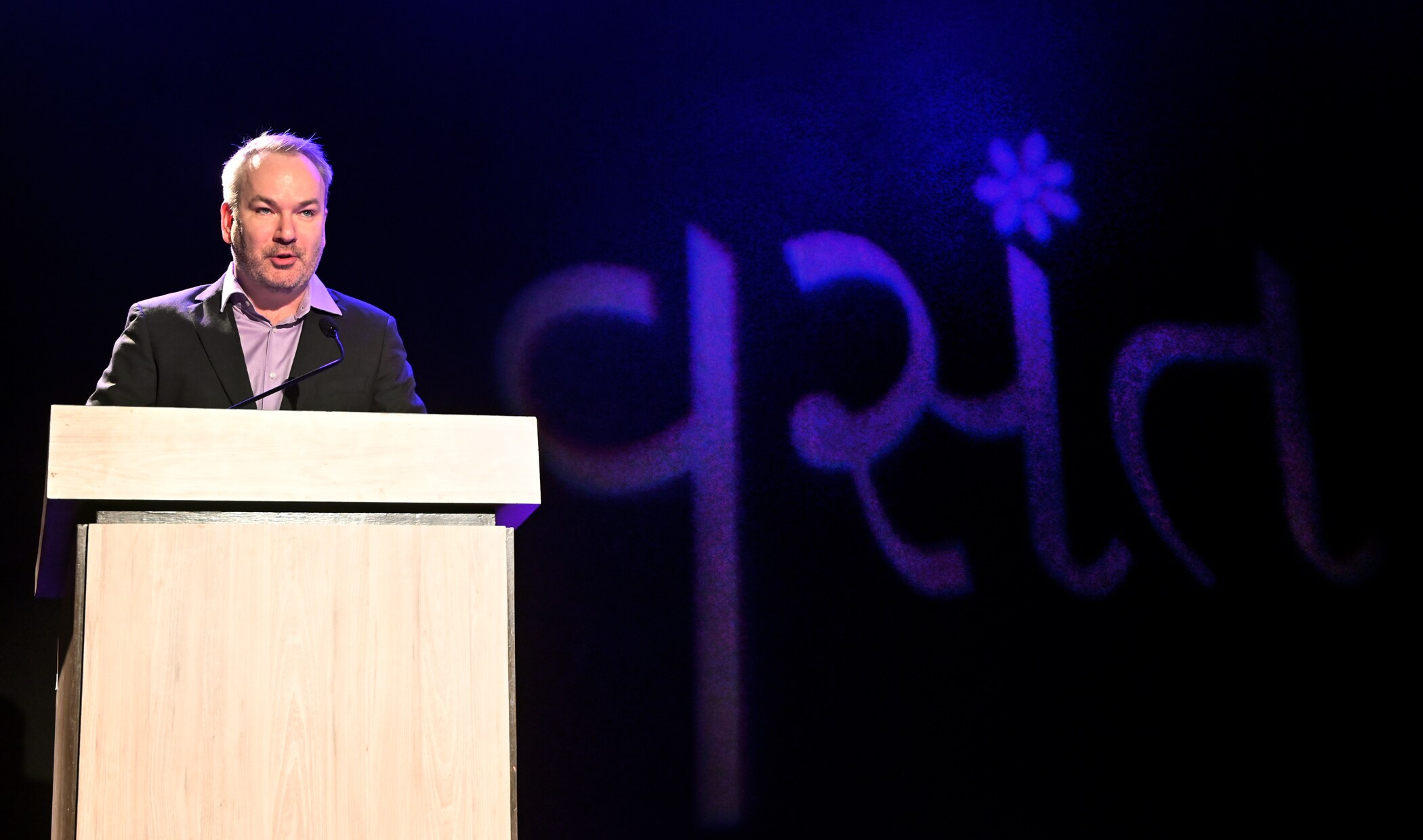
This year’s edition was particularly significant as it took place after a long hiatus. The first edition was in 2011, and the festival was part of the NCPA’s programming until 2017. Bruce Guthrie, Head of Theatre and Films at NCPA, said, “When we looked at reviving the festival, our focus was to provide audiences with the best possible experience, and honour the integrity of the rich tradition of Gujarati theatre.” They have been in dialogue with members of the Gujarati theatre community to shape the festival in a meaningful way.
Festival Head Rajeshri Shinde revealed that the selection process for this year’s productions had a clear mandate: to present critically acclaimed works and also showcase new material. To make this happen, it was important to reach out to local and outstation theatre groups.
“The love for language and the mother tongue is undeniably profound, yet there is a noticeable gap in engagement among the younger generation of Gujaratis when it comes to theatre,” said Shinde. “While the older demographic passionately supports and promotes Gujarati plays, youth seem to be missing out on this vibrant cultural experience.”
The feminist monologue Clean Bold, written by Khevana Desai and directed by Manoj Shah, was based on Valerie Solanas’s book SCUM Manifesto (1967), and Rokeya Sakhawat Hossain’s short story Sultana’s Dream (1905). Desai said, “Writing this play was a disturbing process because I had to deconstruct and unlearn my own self-imposed censorship. It was also empowering because Valerie and the protagonist Vijee felt like my alter egos.”
Babu Suthar, a former linguistics professor at the University of Pennsylvania, conceptualised this satire, exploring the idea that men have brought this world to ruin and women have to fix it. Disha Savla played Vijee and Valerie with great confidence, expressing rage at patriarchal institutions that perpetuate inequality, and dreaming up a feminist utopia.
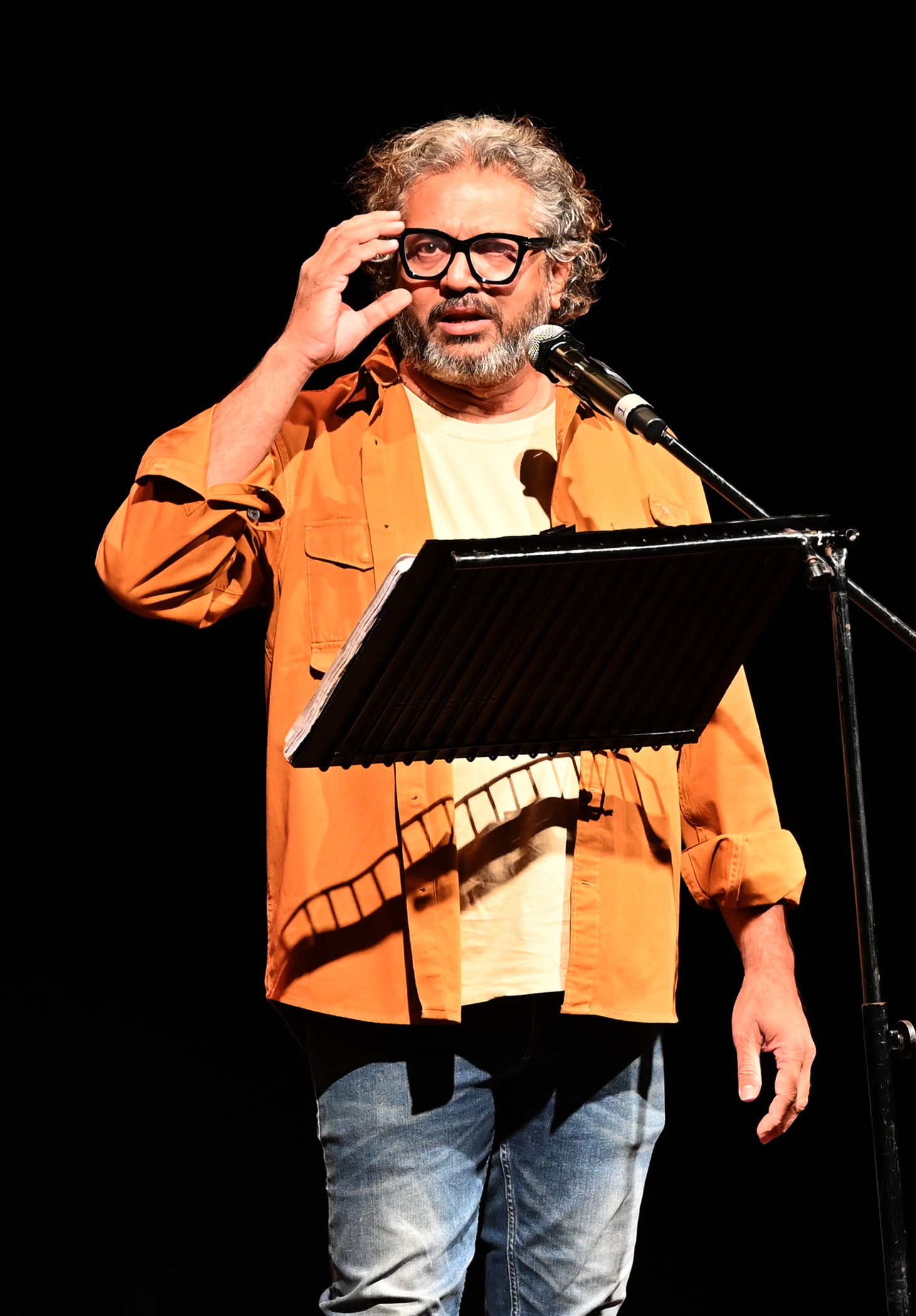
Playwright and director Saumya Joshi presented Thodi Kavita Thodu Natak Thoda Geeto, which was a mélange of poetry, theatre and music. Most of the poems were from his poetry collection titled Green Room Ma. One of the most heart wrenching poems that he performed, Maaru Naam Ganesh Venugopal, was narrated from the perspective of a nine-year boy from Sivakasi working in a factory that makes firecrackers. He is distraught because his friend and colleague has died in a fire. “It is obscene and vulgar that children are being robbed of their childhood to do this dangerous work. This makes me so angry, and I wanted to use the platform that I have to speak about it,” Joshi said. Singers Mousam and Malka Mehta and percussionist Jigar Shah enriched Joshi’s performance with their music.
The play Patra Mitro, directed by Naushil Mehta, was adapted from AR Gurney’s play Love Letters, which earlier inspired Tumhari Amrita (1992) featuring Shabana Azmi and Farooque Shaikh. Set in a newly independent India, Patra Mitro revolves around the friendship between Kalpana (played by Devaki Vora) and Jawahar (played by Chirag Vora), nurtured through an exchange of letters. The letters are read out loud for the audience. The couple goes through ups and downs but the core of their relationship remains intact. The play is embedded with references to prominent figures from Indian politics like Indira Gandhi and her sons Rajiv and Sanjay , and from Indian art like Bhupen Khakhar, Gulammohammed Sheikh and Vivan Sundaram. This was an engaging story effectively told by talented actors who did without lavish sets and costumes.
Three Men, written and directed by Ankit Gor, also focused on the evolving relationship between characters. On the surface, it was about two half-brothers squabbling with each other after their father’s death, and discovering how the same man related differently to each son. At a more profound level, it examined how patriarchy shackles men by depriving them of emotional intelligence and training them to numb their pain or express it in ways that are harmful, especially to the vulnerable.
Gor said, “This play comes from a personal space. During my school and college years, I often heard statements like ‘Boys don’t cry’. I always thought, ‘Why?’ Grief is an important emotion that humans need to cherish and understand. For me, this play is about the seven stages of grief.” The seven-stage framework, which includes shock, denial, anger, bargaining, depression, testing and acceptance, was developed by psychiatrist Elisabeth Kubler-Ross. Gor mentioned that the process of creating this play involved a lot of improvisation. Team members were invited to share childhood memories, which were incorporated into the script.
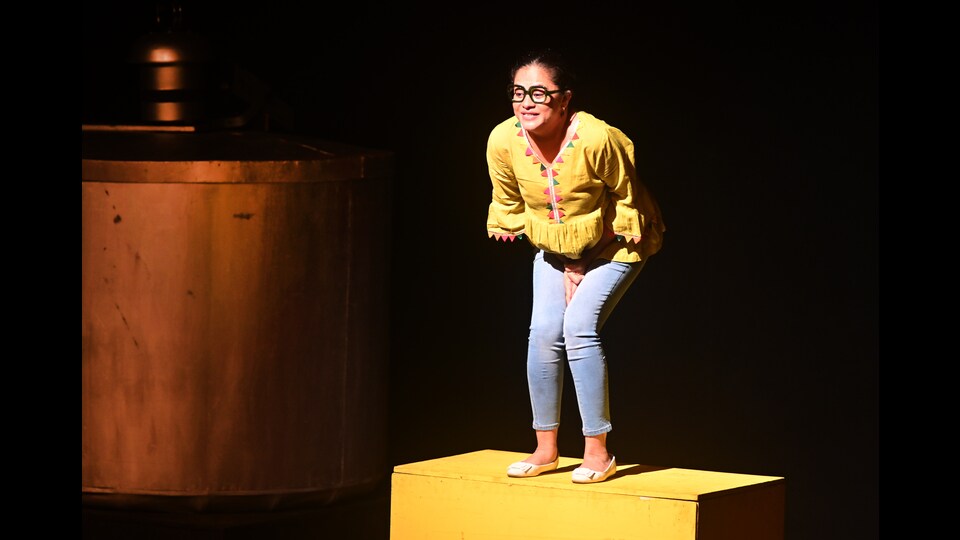
The smashing of patriarchy deepened further with Ohh Womaniya…!, written and directed by Saumya Joshi, and performed by Jigna Vyas, whose performance not only got a standing ovation but left many audience members in tears. The play starts off as a comedy about Sejal, a single woman travelling from Vijapur to Mumbai by train. Every woman that she meets on the train wants to know why she is not married, and she tries to find a way out of those unwelcome conversations either by shutting them up or making up stories about imaginary husbands until she meets Anandita, who boards the train later in the journey.
When Sejal tells Anandita how she is being troubled by those other women on the train, Anandita tells her, “Don’t hate them. Don’t fall into this trap. These women are victims.” The idea of a feminist sisterhood is explored subtly at this moment but it gathers intensity as the play ventures to talk about the rape and murder of a 31-year-old doctor in Kolkata in 2024.
Vyas, who played Sejal and Anandita, said, “This play always takes a lot out of me, so I have to prepare myself by regulating my sleep schedule and diet. After every show, I keep crying for about 10 minutes. I end up slipping into the character and struggle to step out.” She wants to take the play to schools and colleges to initiate conversations about sexual violence, and to encourage reflection on how “seemingly harmless jokes also perpetuate rape culture”.
Eklavya, scripted and directed by Vipul Mehta, looked at how talented youth from marginalized socio-economic backgrounds are exploited by the rich who pat themselves on the back for lifting the underprivileged out of poverty but actually care only about themselves. Originally written by Sudeep Modak, the play features a math prodigy from Dharavi in Mumbai who is hired by an Indian woman working for an Australian cybercrime cell. Her unwilling accomplice in this enterprise is a former lover who now practises as a psychiatrist.
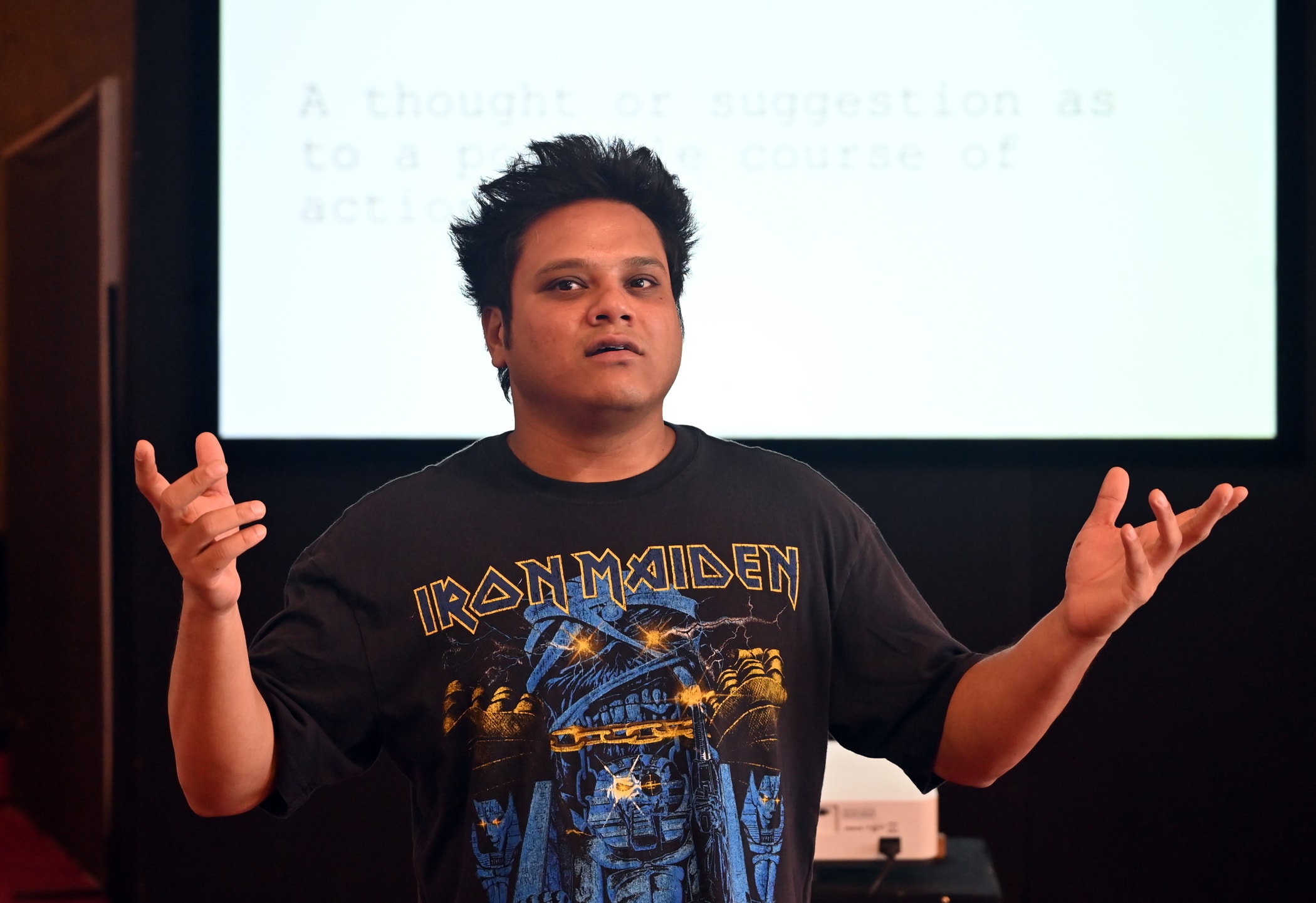
On the last day of the festival, screenwriter Amatya Goradia led a writing workshop. “Writing cannot be taught but I can teach you how to prepare to write,” he said. “The process of writing is a bit like going to a gym. First, your fat will burn out, then the muscles will start getting toned. And these things don’t happen overnight.” He made the participants work on exercises that helped them think about their premise, etch out their characters, create conflicts, lay out a structure, and develop plots. Using examples from various films, he demonstrated how screenwriters can tap into archetypes to conceptualise and flesh out their characters.
Festivities are incomplete without food, so the festival had mouthwatering Gujarati snacks on offer – amiri khaman, dhokla, vatana ghughra, dabeli, dahi wada, kand pattice and moong dal halwa. These could be washed down with refreshing beverages like aamras, saunf and sabza sharbat, lemon basil punch, aam panha, and mango passion fruit slush.
Guthrie also announced a play writing contest due to launch next year. “The winning play will be fully produced by the NCPA. It will premiere at the Vasant festival and then tour to other venues. We hope to contribute in a deeper, more sustained way to the Gujarati theatre landscape, supporting the creation of new work and giving it the platform it deserves,” he said.
Chintan Girish Modi is a journalist, educator and literary critic. He can be reached @chintanwriting on Instagram and X.


