
 E-Paper



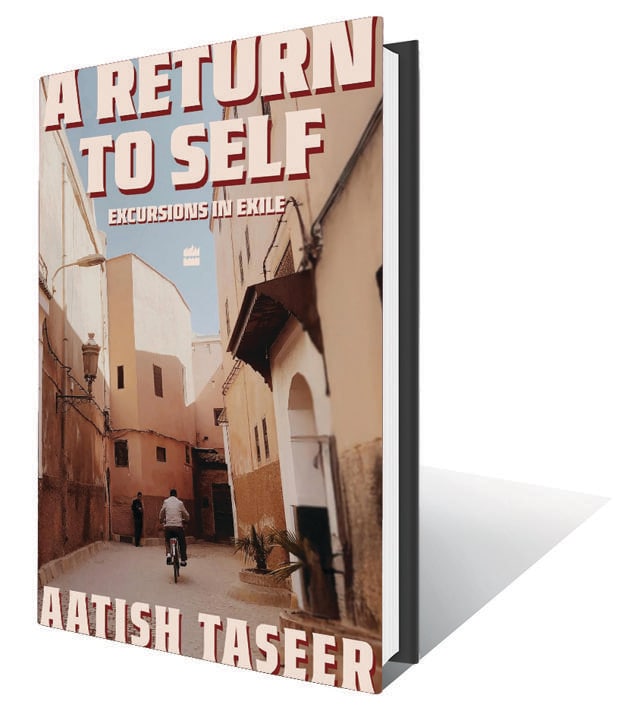
Review: A Return to Self; Excursions in Exile by Aatish Taseer
Meticulously researched and elegantly written, this collection of eight essays searches for traces of past civilizations and empires to make sense of the present

 Prefer HTon Google


In 2019, the Indian government revoked Aatish Taseer’s Overseas Citizen of India (OCI) card. After the initial shock and shame, Taseer felt, unexpectedly, relieved. “The burden of trying to fit into India, of forever apologizing for its shortcomings, apologizing for my own Westernization, was suddenly lifted from me. The West, in turn, was no longer some dirty secret that I could enjoy only at the detriment of the ‘real’ India. It was all I had. I was home,” he writes in the introduction to his new book, a small collection of travel essays, A Return to Self: Excursions in Exile.
After returning from university in America, he had spent his time in India “trying to make up for the cultural and linguistic gaps of a colonial childhood” — he “learnt Hindi and Urdu well enough to translate” Manto’s short stories, “devoted hours every day to learning Sanskrit,” wrote two memoirs and three novels including the excellent, very perceptive, The Way Things Were (2014). The insider-outsider perspective is a hallmark of his writing. All his work is focussed on untangling the ideas of belonging, unbelonging, identity and class, societies at the cusp of transformation, and the inheritance of history. India has been the source of most of his writing material. It is also where he grew up in a “westernized enclave” in Delhi in the 1980s, raised by his mother, the journalist Tavleen Singh, who is from one of the city’s prominent Sikh families. It’s never quite clear why the West was such a dirty little secret that Taseer, “a westernized product of a westernized elite could only enjoy it “at the detriment of the ‘real’ India.” But India is not really the point of this book, a collection of eight essays on his excursions between 2019 and 2024, although it comes up often.
Taseer travelled widely from the Mediterranean to the Andes for T: The New York Times Style Magazine. He explored on each of his trips, cities as cultural palimpsests, searching for traces and layers of past civilizations and empires to make sense of the present.
In Istanbul, he reflected on how much his life and Turkey had changed since he first visited as a young writer in 2005, a couple of years after Erdogan was elected prime minister embodying hope for economic growth and democratic reforms. In Uzbekistan, which became, over the centuries, a “land of many natures — Turkic and Persian, upon which Russian had been grafted,” Taseer travelled from Tashkent to Khiva, Bukhara and Samarkand, those once deeply cosmopolitan caravan cities along the old Silk Road. In Morocco, he looked for the ghosts of the past in the Draa valley where he had been told of “medieval Islamic libraries in small Saharan towns, of shrines to desert saints and of old Jewish houses” and traces of the indigenous Berbers who “served as a link to the ancient past of the land.” In Spain, he tried to understand how a place, where Jews, Muslims and Christians had coexisted for a thousand years, unravelled: “How does a place so steeped in diversity come unstuck? What makes a society succumb to that primal cry for a limpieza de sangre, a ‘purity of blood’?”
He followed the colonial history of rice in Mexico and the ubiquitous symbolism of the lotus in Sri Lanka. There’s a piece on the politics of fragrance.
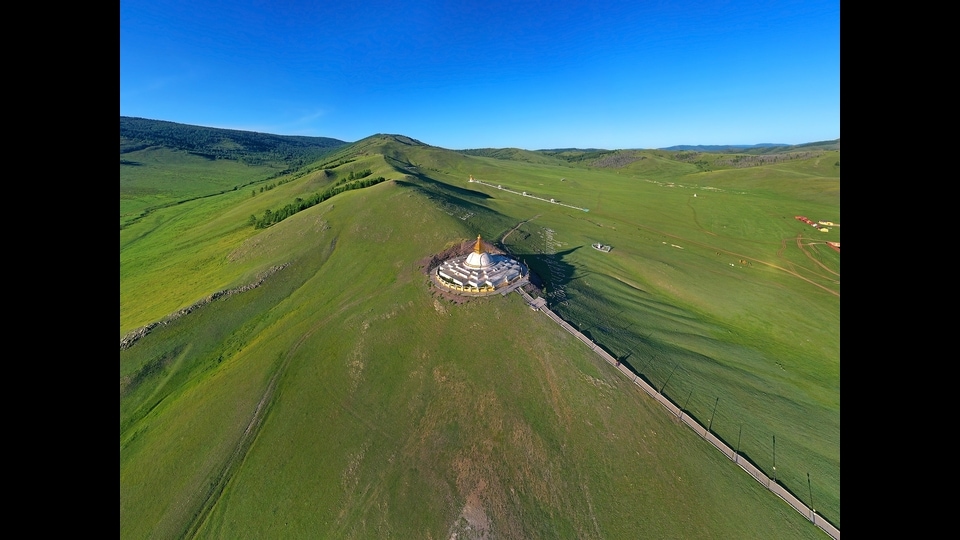
For the most ambitious essay, he embarked upon a journey following old pilgrim routes across histories and continents. Over the course of a year, he set out on three pilgrimages: from the indigenous Catholic festival of the Virgin of Copacabana in the Andes mountains in Bolivia to the steppes of Mongolia where Buddhism — banned when the country was a Soviet satellite state — has been experiencing a quiet reawakening, and finally to Iraq during Ashura, the Shia ritual of mourning. “Pilgrimage,” he found, “gave us the illusion of a forward movement across space, even as it allowed an inner journey toward communion with our past.”
The essays are a compelling blend of reportage, history and memoir. Fascinating characters appear. In Taroudant, he was invited by the last Persian empress in exile, Farah Pahlavi, “still radiant at 80, with black ribbons in her gold hair and corals on her neck,” who has a home there, for “a wonderful dinner, full of friends and family, where talk would turn inexorably to exile and revolution and elites pushed out of countries that were changing too fast.” At Erdene Zuu, Mongolia’s oldest surviving monastery, he met a herder from the Inner Mongolia region of China, who had come at political peril on pilgrimage not just for the Buddha but also for Genghis Khan. “I wanted to receive the particular energy of this man here, in what was the capital of the Mongol Empire and of Buddhism,” she told him. In Spain, he met Medina Tenour Whiteman, a 40-year-old British-American woman whose parents had moved to Granada before she was born because “there was this whole dream of reviving Islam in Europe.” Granada was where the last Moriscos, Muslims forcibly converted to Christianity in medieval Spain, had fled, and where “the memory of an autonomous European Islam still ran in the marrow.” Some of these, riveting as they may be, are a bit hazy – I had to look up the internet to clarify that her parents were white converts to Sufism.
Taseer quotes heavily from the works of writers and scholars. His book is meticulously researched, descriptions are vivid and the writing elegant. Except when it becomes convoluted. He gets carried away, for instance, while describing pollination in the lotus:
“Watching Asoka leaning down, measuring the calyx of one flower against the length of his forearm, showing me how to pluck its fibrous rough-napped stalk (never pull; it’s a swift back-and-forth motion, like breaking a chicken’s neck), I was reminded that this gentle matinal scene had been the site of sexual revelry the night before. The lotus flower, a great seductress who lives but three days, uses her subtle aquatic scent — which grows heavier by the hour through a process known as volatilization — to draw insects into her boudoir. As night falls, the petals close, trapping the hexapods within. ‘Encouraged by the warmth,’ writes the British horticulturist Mark Griffiths in The Lotus Quest: In Search of the Sacred Flower (2009), ‘the hostages feed and frolic on a litter of pollen shed by the golden anthers. The oubliette becomes the scene of an orgy.’ In the morning, the petals reopen, releasing the pollen-covered insects into the chill air. The shock of being so suddenly exposed makes them unable to tell morning from evening. So all around me now, drowsy six-legged sexual prisoners, in what Griffiths calls ‘a false dusk,’ were in search of comfort in newly opened lotus pads, different from those in which they had spent the night, thereby acting as unsuspecting agents of dissemination.”
This kind of travel writing may have been acceptable, even expected, until the early 2000s but it makes a contemporary reader cringe. Taseer himself occasionally comes across as, well, unlikeable. Marrakesh, he writes wistfully, “once attracted the Tuareg, the West African tribe who had plied the caravan route through the Sahara since at least the fifth century BC and were known as ‘the blue people’ of the desert because of their indigo-dyed robes,” was now, he adds contemptuously, “awash with the tourist trash of Europe — the EasyJet set.” It is also a city where, he mentions kind of loftily that glamorous European families owned houses. Bukhara, he jokes, “the town of hundreds of madrassas and caravansaries, and 100 or so mosques, had been subjected to the only fate worse than Genghis Khan’s, that fifth horseman of the apocalypse: tourism.” All this while staying at the Swissôtel in Istanbul where he “paid $45 extra per night for a view of the Bosporus, gazing out at the sunlit splendour of the most beautiful body of water in the world.”
It’s the grandness of the self that will gnaw at Indian readers. The country comes up often and it feels sometimes like Taseer responds to the cruelty meted out to him by the Indian state with what seems like spite towards India itself. “If these essays feel like a return to self,” he writes, “it is because they represent the return of my natural curiosities and, dare I say it, cosmopolitanism, after the long night of cutting away parts of myself in order to better belong in India. They are a response to the illusion of the idea of home.”
Saudamini Jain is an independent journalist. She lives in New Delhi.


