
 E-Paper



Review: A Stranger in Three Worlds by Aubrey Menen
Two decades separate the two memoirs in this omnibus edition, which shows Aubrey Menen’s gaze varying from simply clever to more reflective even as he remains steadfast against imperialism

 Prefer HTon Google


Two decades separate the two memoirs collected in A Stranger in Three Worlds, which shows Aubrey Menen’s gaze varying from simply clever to more reflective even as he remains steadfast against imperialism
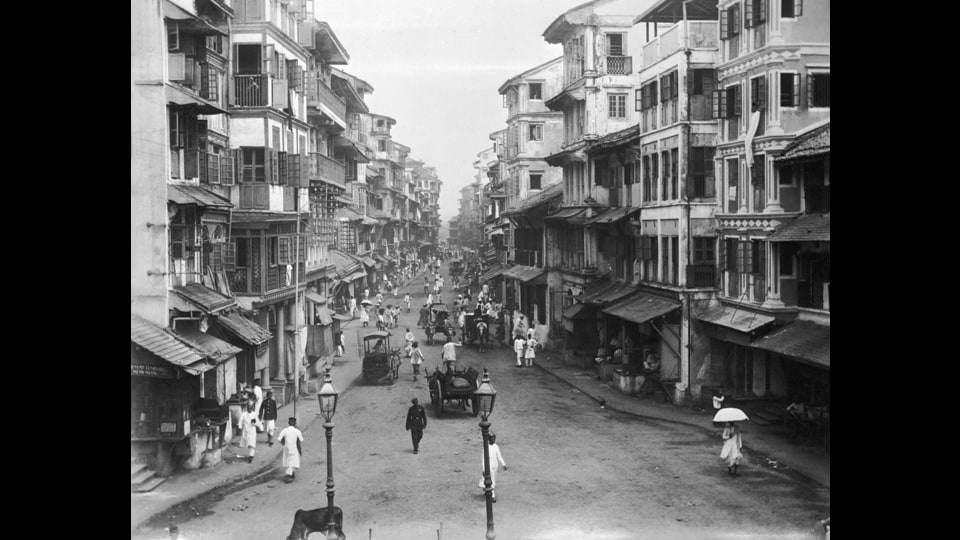
The confluences and clashes the British Empire engendered in India have received extensive literary scrutiny. While writers such as EM Forster and Rudyard Kipling continue to find readers, others who were once popular or controversial have drifted to the fringes of public attention. JR Ackerley, Nirad C Chaudhuri, and Aubrey Menen are in the latter category.
While their backgrounds, styles, and viewpoints differ, their writings are so rooted in their eras and milieus that their concerns and characterisations may seem wayward to contemporary readers. The gaze with which they describe India and its people can occasionally be Orientalist. And yet, their being relics of bygone times also makes them fascinating. They bring into sharp relief the world they lived in and how things have changed since then.
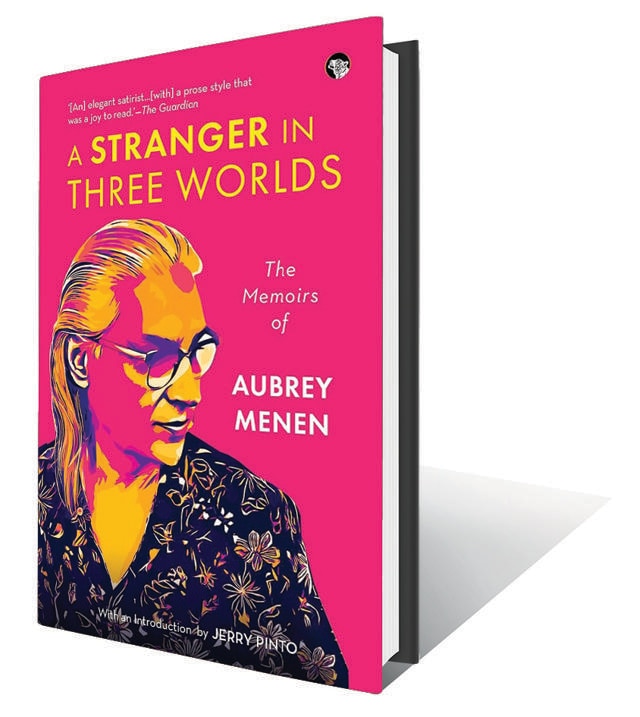
With his unique background and experiences, Aubrey Menen was well positioned to bring forth a range of perspectives. Born in London in 1912 to an Indian father and Irish mother, he went to college in the UK, worked in India, and subsequently moved to Italy, where he became a full-time writer. He describes himself as homosexual, which, he claims, puts him in the company of Shakespeare, Michelangelo, and da Vinci. While living in Rome, he converted to Catholicism and later, was inspired by the Upanishads to discover his “true self”.
Speaking Tiger Books has now compiled two of Aubrey Menen’s memoirs, Dead Man in the Silver Market (1953) and The Space Within the Heart (1970), in an omnibus edition titled A Stranger in Three Worlds. The former, subtitled Autobiographical Essays on National Prides, pokes holes in patriotism and its pretensions, whether those of the English, the Indian, or others. Menen infuses the weightiest of issues with cheekiness and irony, resulting in several laugh-out-loud moments.
He mocks ideas of propriety by highlighting how they differ across regions. Consider this example from Malabar: “She [his paternal grandmother] rarely spoke to anyone who was not of her own social station and she received them formally: that is to say, with her breasts completely bare… in her view, a wife who dressed herself above her waist could only be aiming at adultery.”
However, when divergent worldviews interact, they could equally well result in consensus rather than conflict, as Menen demonstrates in a fascinating anecdote. In an essay on the last nabob in India, he writes about a swimming pool that was reserved for Europeans. Even as the English defended closing it off to Indians, the latter were sympathetic to the decision. They would not have entered the pool anyway, fearing caste pollution or potential contact with menstruating women. In this case, the synergy of racism, casteism, and misogyny kept everyone satisfied. Menen describes the situation thus: “All told, the pool performed its function — which was to inflame the Englishman’s racial pride while cooling his skin — without causing much bad blood.”
Menen is at his best in airy, satirical reflections. But when it comes to matters more grave, his writing can falter. Consider the essay The Dead Man in the Silver Market, where he recounts witnessing a British soldier killing an Indian civilian in broad daylight and later meeting him at a party. One might expect such an incident to provoke biting censure. While Menen tries to critique the violence and racism, he offers mostly sketchy, banal commentary that lacks force or depth. At under three pages, it is one of the briefest essays in the book.
Dead Man in the Silver Market was published when he was in his early forties and A Stranger in Three Worlds when he was almost 60. Reading the two works one after the other shows how Menen’s style evolved. Where the earlier memoir seems focused on appearing clever, Menen allows space for reflection in the latter.
Since the writings span decades, Menen’s gaze varies, even as he remains steadfast against imperialism. At times, he dons the mantle of the native informant. He explains how the “Western reader” can approach the Upanishads, since the treatises “can be as hard and strange as their names”. An essay on gurus and yogis ticks off the quintessential exotic India checklist. In his thirties, Menen, possessed by an “overwhelming desire to do good”, set up a school for “semi-naked savages” in Dang. There, life taught him what stereotypes did not, so he arrived at the trope of the noble savage.
While reflecting on morality, he cites what we might now consider a truism — that most people make judgements from the standpoint of the group they belong to rather than from objective principles. To illustrate this moral relativism, he shares a hypothetical example: “We cannot tell if a Masai tribesman is a good fellow or not. If he cuts off the hands of a rival tribe and piles them in a triumphal heap, we can say it is not a thing we would do ourselves, but we are quite open to the suspicion that if we were Masai, we might.”
Ascribing this barbarity to the Masai community, even if in a thought experiment, is unwarranted, more so when he could have resorted to a real-world example. For at the turn of the 19th century, Belgian colonialists in what they called the Congo Free State severed the hands of workers who did not meet rubber collection quotas and even killed them and their family members. Such was the extent of the atrocities that the Congolese population declined during this period.
This is, of course, not to castigate Menen. It is easy to invoke contemporary ideals and pontificate in retrospect, but much harder to accurately trace the contours of the world one lives in. In fact, as I read the book, I felt a growing fondness and empathy for him. Given how others defined him according to their preconceptions — the Pope once told him he was Indian rather than English — his preoccupation with finding one’s true self is understandable. This could not have been easy for someone at the intersection of many identities in a world that prefers neat categories and labels. It would have been more admirable, however, if he had extended this sympathy to others, as he had to himself.
Syed Saad Ahmed is a Boston Congress of Public Health Thought Leadership Fellow 2024. He speaks five languages and has taught English in France.


