
 E-Paper



Review: Dark Blossom by Neel Mullick
The writing is sharp in Dark Blossom, which features a female protagonist slowly coming to terms with an abusive past relationship


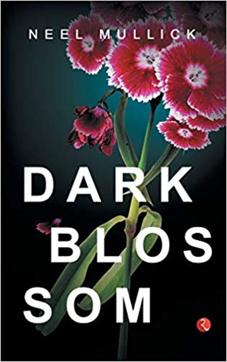
Neel Mullick’s debut has all the staples needed for a slick thriller loosely on the lines of a Gillian Flynn bestseller - a female protagonist slowly coming to terms with an abusive past relationship, a troubled mother-daughter dynamic and a freak accident shrouded in mystery that works to bring the two lead characters together. What it lacks, though, is just what makes Flynn unputdownable: psychological intrigue.
The story begins at a therapist office where Cynthia practises and meets her new patient Sam who, having lost his wife and son in a car crash, has come to seek her help in dealing with the loss. What starts as a doctor-patient relationship blossoms into a tricky and problematic friendship with both connecting on a deeper level given their respective complicated pasts fraught with trauma. While the writing is sharp and the chapters are kept short in this 212 page book, there is very little by way of character development. The story is told through Cynthia’s point of view, yet it is her motivations and attempts to reconnect with her daughter Lily that form the weakest portions of the book. In one instance, at the dean’s office in front of her mother, Lily shows signs of the emotional and physical abuse that she suffered at the hands of her father. Cynthia’s narrative voice says: “Her demeanour and the mascara running down her cheeks were in stark contrast to the ruggedness of her punk getup. It would have been comical, had it not been so sad.”

For a narrative dealing with mental health and domestic abuse, Mullick seems a bit out of his depth while dealing with the complexity of emotions involved. The novel takes on more than it can deal with. As a result, the dialogues and Cynthia’s inner musings, full of verbiage, are forced and unrealistic. The book is also sprinkled with a lot of unnecessary Gaudi references that seem to be used more for effect than to add a nuanced layer to the narrative, Mullick’s story ends up feeling formulaic. His superficially drawn universe fails to draw the reader in or make her connect with the characters at any emotional level. Moments such as when Lily bursts out about the horrors she underwent as a child or when Sam describes his relationship with his deceased son Will offer the potential for a more direct involvement but are undercut by the very performative aspect of these instances. The marginal characters are hardly endowed with any life apart from being plot devices. James, who is shown to be Cynthia’s mentor and father figure, who she looks to for advice while dealing with professional and personal issues, specifically with Lily, spouts platitudes such as, “Don’t you get it -- you both were in the same place and now you just need to find the same language”. Lily’s alleged best friend, Joanna, is done away with and almost forgotten towards the end.
Read more: Exclusive: Interview with Dark Blossom author, Neel Mullick
By the time we reach the convoluted climax, Dark Blossom begins to feel more like an unfinished screenplay in-the-making pandering to a binge-watching generation rather than a full fledged piece of prose fiction.
Simar Bhasin is an independent journalist.


