
 E-Paper



Review: Hijab by Guruprasad Kaginele
Hijab explores the twin themes of immigration and integration, in the process uncovering many truths about its motley cast and their respective realities



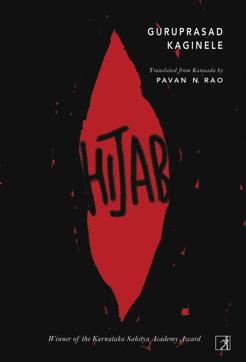
For the many who believe that America is the land of milk and honey, there is the other side. It is the country that “starts internal strife and civil war in Sanghaala, gets the survivors here on a visa and puts them on menial jobs like slaves for its own benefits.” Impassioned words from a man who left his fictitious country of birth, Sanghaala in Africa, at the age of 12, and served his adopted country in times of war. But Guruprasad Kaginele’s Hijab, originally written in Kannada and translated by Pavan N Rao is not the story of this man. The chapter on Kuki is the story of an embittered refugee, and it is one among many.
Hijab is about migration and choices. Its intent is to explore the twin themes of immigration and integration, in the process uncovering many truths and untruths about its motley cast and their respective realities. In Kaginele’s words, through the story of Hijab, he attempts to “explore an organic relationship about a human being and the land to which he migrates. When a person moves to a new land, he or she will make an honest attempt to become a part of the new land.” A prominent name in contemporary Kannada literature, Kaginele, who won the Karnataka Sahitya Academy Award for Hijab, confesses to being most comfortable writing in Kannada.
The tiny nondescript town of Amoka in Minnesota is the epicentre of the drama that unfolds in the book, when a young Sanghaali woman, who is pregnant, refuses a critically-needed caesarean operation on grounds of religion and its lopsided counterpart, superstition. The prologue states that Sanghaala could be “any country in Africa - like Sudan, Ethiopia, Kenya or Uganda. It should not matter much when all the immigrants from these countries look the same, eat alike and speak alike” in the voice of the narrator, an immigrant himself but not from the African continent. You know then that there is unconscious bias at play here. Amoka is a fictional derivative of Anoka, a real town in Minnesota and apparently considered the ‘Halloween Capital’ of the world. Although the “single two-lane road” town is geographically situated in Minnesota, “the land of ten thousand lakes” and luscious green beauty, the mise-en-scène is largely composed of a sterile hospital populated by an oddball mix of people. Guru is the eponymous raconteur, an Indian doctor like Kaginele, who lives in Minnesota. The voice of Hijab is Guru’s. Along with Radhika and Shrikant, the other Indian colleagues, fellow doctors and immigrants, Guru awaits the culmination of the immigrant dream - the arrival of a green card. The South Asian representation is complete with a Pakistani Muslim colleague whose role gets aborted mid-plot when things heat up.
“Sanghaala refugees started migrating to America in the 1920s. It began as a trickle at first and then went up substantially in the 1920s owing to the internal strife in the country and conflicts with neighbouring countries. Most of them live in Minnesota, almost to the tune of at least one hundred thousand.” For the many thousand Sanghaalis who have migrated to the new land of opportunity, existence is a tightrope walk, a clash between culturally-held mores and the scientific rationale of a developed nation. Thus, while an incision on the abdomen is hard for Fadhuma and her husband to stomach, female genital mutilation is par for the course. Prolific child-bearing is life’s mission for most of these women. A couple of inexplicable, shocking incidents shatter the somnolence of the town, and nobody seems to have any answers. As the plot thickens, the inevitable media frenzy follows.

A large part of Hijab’s plot feels like a disjointed puzzle, and none of the players seem to hold the missing pieces to complete it. Barriers of language and belief widen chasms. A sassy self-appointed spokesperson for the Sanghaalis makes a confrontational appearance before things go south. That is the controversial Mohammed Mohammed’s only physical appearance in the plot. But his presence pulsates erratically on social media. There are a bunch of forgettable American characters: colleagues at the hospital. There is also the obtrusive presence of the higher-ups on the echelons of power, who are unnamed and unseen, while Guru tries to make his way through the maze, with skeletal support from his colleagues. Humour noir meets poignancy in the shape of an offshoot of the plot in which a character named Martin Luther King is a victim of mistaken identity, not for his name but for his appearance.
Kaginele’s characters run the entire gamut of the voyeuristic times we live in: there is trial by media, the insidiousness and intrusiveness of social media, and finally, the gimmicky exhibitionism of reality television. For the voyeuristic times that we live in, all this isn’t wildly shocking. As Rick Jackson, the bombastic president of the hospital board puts it:”F*** the media. Let’s make the news that we want.”
Kaginele stirs up a murky broth of ingredients: mystery meets machinations, racial biases, a terror angle and its habitual construct, the corollary that must damn certain religions or ethnicities. There is also a sprinkling of activism and feminism, and assimilation and adaptation as personified by the new age Sanghaali girls, with their painted faces, American idiom, and hijabs.
The story of Hijab is an unusual one. While the narration is a staid recounting of events, it manages to keep the reader adequately engaged. The prose is on an even keel at all times, and there are no embellishments. The tonality is clinical as is the connect with Guru or any of the other characters. None of them leaves any lasting impression nor do they evoke any empathy. Hijab is intriguing and powerful but it remains a dispassionate read.
Sonali Mujumdar is an independent journalist. She lives in Mumbai.


