
 E-Paper



Review: India and the Rebalancing of Asia byC Raja Mohan
A volume that offers a complex analysis of the shifting political, economic, military, and technological balance in Asia and a sophisticated understanding of US-China and India-China relations

 Prefer HTon Google


India needs a multipolar Asia with a multipolar world. The challenge is how to secure this vital goal.
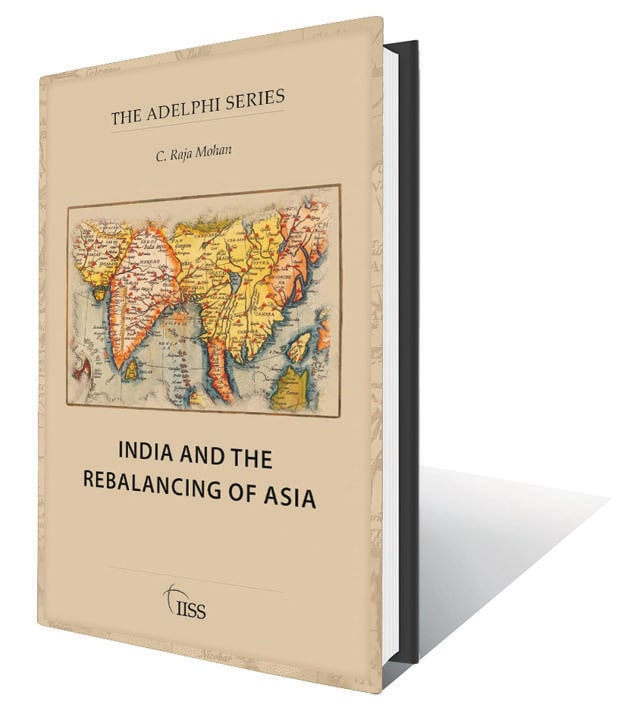
India and the Rebalancing of Asia by C Raja Mohan, a leading scholar of Asian geopolitics and India’s foreign policy, offers a complex analysis of the shifting political, economic, military, and technological balance in Asia. Well-researched yet written in simple language, it avoids technical jargon. But the reader must pay close attention to the narrative to absorb the layered explanation of how evolving great-power relations affect India, the latter’s response to these changes, and its future options.
The author’s central endeavour is to present a sophisticated understanding of US-China and India-China relations. It must have been a challenging task as the text was probably finalized in early 2025. Soon thereafter, the Trump administration 2.0 began introducing substantive changes to its approach to the world and to the two Asian powers. A year later, the direction and effects of these changes are somewhat clearer, but not to the extent that one can be confident about what to expect in the next three years! In crafting this volume, Raja Mohan has thus aimed at a constantly moving target.
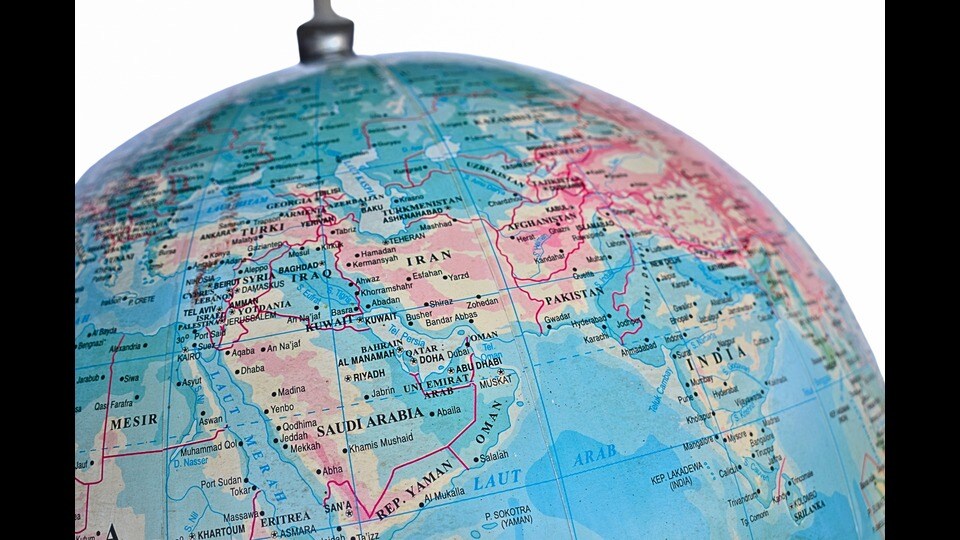
In five tightly-written chapters, the author presents his thesis logically. The introduction defines the region of his attention – Asia and the Indo-Pacific, used interchangeably. He finds a clever middle ground between the Indian and US definitions of the Indo-Pacific by identifying it as a region that includes India and East Asia, as well as the waters off this landmass in the Pacific and Indian Oceans. Still, he excludes Central Asia, the Middle East, and Africa. Most Indo-Pacific scholars can live with this realistic definition.
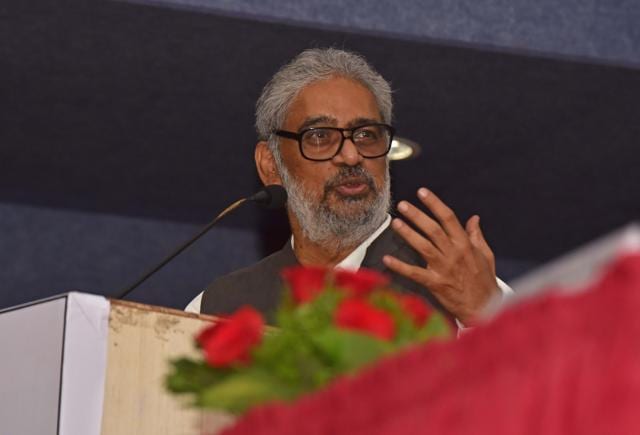
The first chapter unpacks the major transitions since the British Raj. As Great Britain called the shots from Suez to Singapore, colonial India served as a strong centre in Asia, promoting British imperial interests as well as those of the undivided Indian subcontinent. Following independence and Partition, this changed dramatically. Surprisingly, the author sees little rationale behind independent India’s foreign policy and Asia policy, anchored as they were in the Bandung Principles and the dynamics of the Non-Aligned Movement. Nehru’s ‘political romanticism’ towards China comes under critical scrutiny, without reference to India’s multiple vulnerabilities at the time. This argument triggered a passionate articulation of serious dissent by a former Foreign Secretary at the book’s launch in New Delhi.
The second and third chapters examine the China challenge and the US partnership, respectively, tracing the trajectories of India-China and India-US relations. The two Asian nations were at parity in development at one juncture, but China’s decisive win in the race altered the power dynamics between them. Their differences in four areas – border dispute, South Asia, the Indian Ocean, and the multilateral arena – deepened the divide, ensuring “Delhi’s active engagement in a rivalry with Beijing on all these fronts.” As for the US, the focus has been on the remarkable progress in strengthening strategic ties with India, beginning with President George W Bush’s second term. Bipartisan support in both nations drove this consistent trend in the next two decades, despite occasional setbacks.
A fascinating feature is the clinical examination of the second Trump administration’s attempts to review the US relations with China and India, and how this might influence the dynamics between the US, India, and China. Critical strategic and economic factors that draw the US and India closer together are well known. So are the underlying reasons behind the persistence of the US-China and India-China rivalry. The author refers to confusion and anxiety created by Trump 2.0 not only in India but also in Asia. But he reiterates his view that, despite concerns that Trump might make up with China, “there is a recognition that the answer must be (India) doing more with Washington.”
The last two chapters explore regional dynamics and India’s role as a balancer in Asia. On the India-Russia equation, his judgment seems rather harsh: that relations between India and Russia have become “less significant” as India has strengthened ties with the US. Other scholars and former diplomats hold that fluctuations in the US approach towards India will ensure that a strong strategic relationship with Russia endures. Those with experience in China might also argue that India would continue to ‘manage China’, without being locked into permanent hostility or an overly trusting friendship.
The book’s last section is insightful. It envisages India’s return to the centre of Asia, a throwback to colonial times, but with fundamental differences. In the great triangle of the US, China, and India, the two powers’ bilateral relations with China are “now structural and not amenable to early resolution.” His advice for India is to develop “a dynamic policy of triangular engagement with Washington and Beijing,” which should not be too difficult to achieve. However, in the backdrop of severely strained India-US relations over tariffs, Russian oil, trade deals, the Pakistan and China policies of the US, Gaza, and the US-Israeli war against Iran, South Block finds the going quite challenging.
Finally, India’s five Asian challenges result from a deep reflection. The last-mentioned challenge is that India needs to rein in “hyper-nationalism and xenophobia” to play a pivotal role in a diversity-laden Asia. India’s journey from being more than a middle power to an emerging great power will require greater hard power, diplomatic creativity, economic vitality, and national consensus at home.
In sum, the reader, like this reviewer, may be inclined to disagree with the author on some issues and yet ready to appreciate this work of sterling scholarship. It should be recommended reading for those desirous of exploring the deeper waters of Asia’s geopolitics.
Rajiv Bhatia, a Distinguished Fellow at Gateway House, is a former ambassador to five nations, a columnist, and an author of three books on India’s foreign policy.


