
 E-Paper



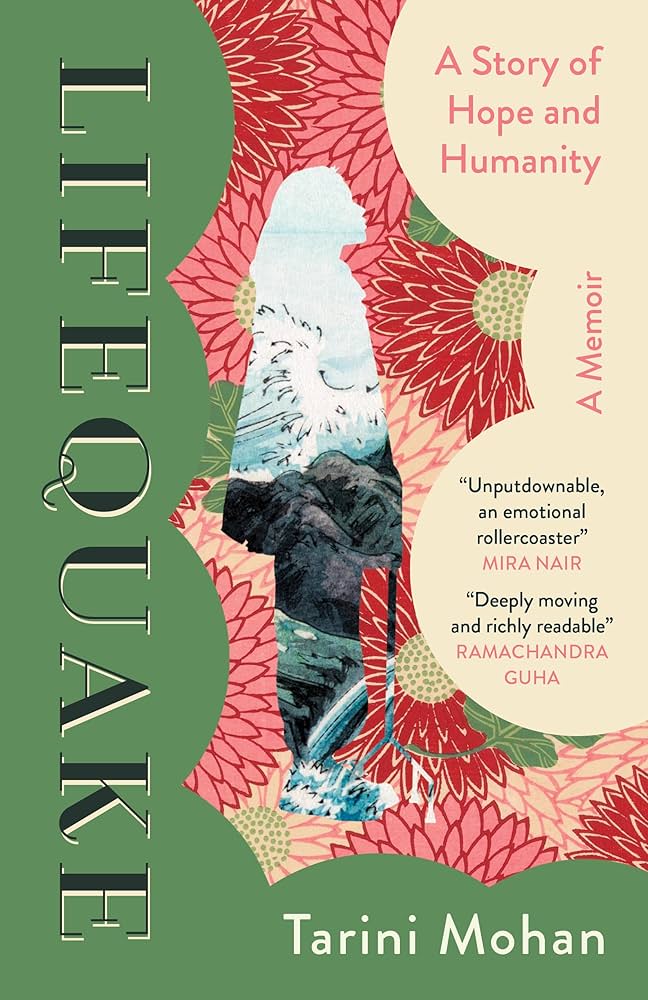
Review: Lifequake by Tarini Mohan
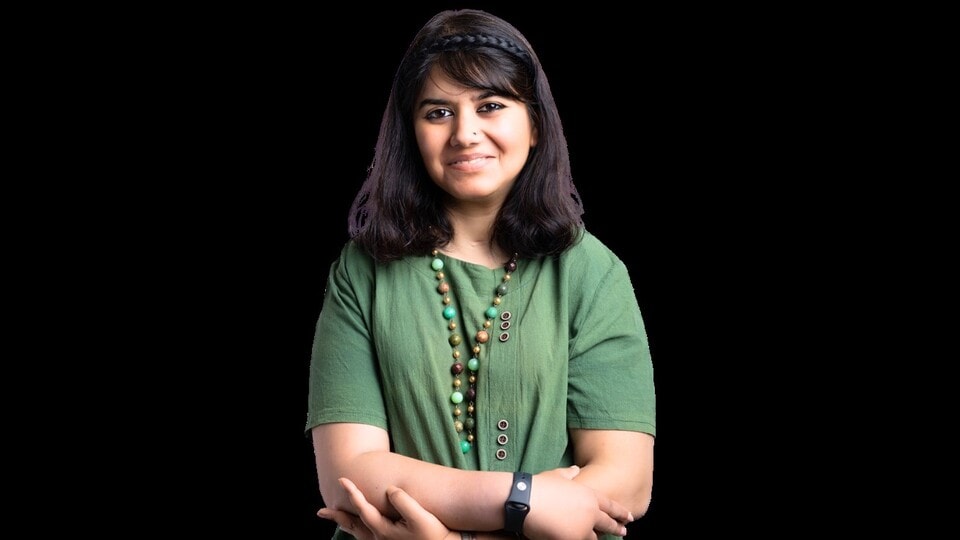
At 23, Tarini Mohan has it all. An Ivy League education, a Wall Street career, a long-term partner and a promising future.

 Prefer HTon Google


At 23, Tarini Mohan has it all. An Ivy League education, a Wall Street career, a long-term partner and a promising future. Thus, begins Lifequake, her memoir about her struggle with a traumatic brain injury following an unfortunate accident in the prime of her youth. Mohan’s journey creates a surreal intersection, one of privilege and misfortune; her story chronicles equal parts pain, struggle and grief and equal parts resources, networks and social capital.
The beginning of the book reads a bit like a well-polished admissions SOP. But what follows is a messy, non-linear, and stubborn arc of recovery. The slow reassemblage of a life that can no longer be assumed whole nor compared to what it was before. Mohan’s deconstruction of this recovery period is carried out in cold, clinical, and granular detail. In honest prose, she captures the radiating effect of the accident as it ripples out from herself and her psyche, and is distributed across parents, partners, friends and the sometimes-infuriating institutions of care.
At the heart of this memoir is the injury itself and how it becomes a lens through which Mohan’s life is now refracted forevermore. This includes her career, the burden of everyday care, sex, philanthropic impulses and plans for business school, among other things. There is extreme attention to detail once Mohan awakens in Delhi, imagining her life in Manhattan as a fever dream. The wakefulness is captured with candour sans sentimentality. This is not to say that Mohan’s prose is devoid of emotional intimacy. There are several moments, such as the struggle to remember names, the daily arithmetic of fatigue and muscular pain, the gibberish speech, a memory that refuses to work as commanded, that carry the moral heart of the author’s journey.
The author shows how the body’s damage rewrites social obligations, how work becomes optional in ways that are not liberating, how dependence becomes a new focal point for identity, and how the supposedly private journey of recovery leaks into a very public economy of dependent care. The book asks, bluntly, what it means to survive when survival itself is mediated by a change in who you are and whom you know. A milieu defined by airlifts, private hospitals, the extraordinary logistics that come to be through friends, bureaucrats, colleagues and universities that marshal forces on the author’s behalf is extraordinary. These are resources that few have access to. Still, mentioning them orients the reader to the physicality of the injury’s horror, and the politics and capital required for recovery.
Privilege and misfortune make for strange bedfellows. Top medical teams both in India and abroad, universities that will hold a place on flexible terms, family members and friends who can pivot their circumstances to provide support and presence these are the realities that Mohan does not shy away from acknowledging. However, there are sections where the author’s frequent name-dropping wears the reader down. While this does occasionally blunt the raw and honest narrative of the author’s recovery, it is in the everyday moments of getting coffee, waiting for a cab, the humiliation of asking for help and the tiny domestic rituals that become scaffolding that the book is at its most humane. Mohan’s prose is unadorned and exacting, reflective and honest. The sections where she talks about the awkward politics of familial help, the dry humour of bureaucratic absurdities and the odd comforts that arrive from unexpected quarters do shine through.
READ MORE: The checklist I made for surviving my darkest days
Mohan has astutely captured that negotiation of the self that recovery warrants. There is no return to the former self but rather an ongoing and continued compromise with others on what they must do on the author’s behalf. There is a loss of freedom, autonomy and will, that must be balanced with survival, recovery and needs. There is a geography of access that is uneven which must be made peace with, often at the cost of recalibrating one’s ambition; the retooling of purpose to fit a life different from the one that was imagined by the author.
Lifequake is an uncommon and memorable memoir that is a sobering look at the realities of an individual recovering from a traumatic brain injury. It looks at the ripple effects of her recovery on those the author depends upon and moral questions, such as what do we owe each other when the body or the mind fails? Mohan’s work does not present tidy answers. Nor does it do the disservice of assuming that luck and privilege are interchangeable. Instead, the author offers a close look at the work that goes into stitching a life back together. This is a moving read for those who might want to look at the social structures that sustain us when all else fails.
Percy Bharucha is a freelance writer and illustrator. Instagram: @percybharucha


