
 E-Paper



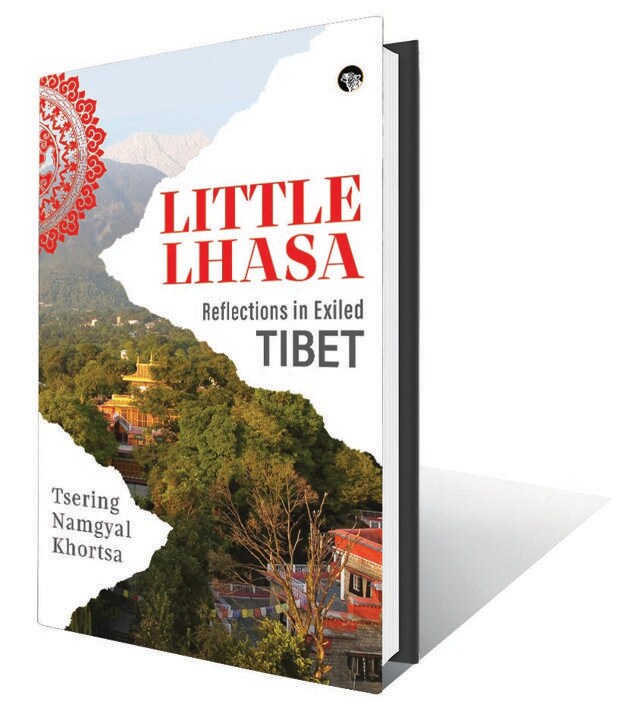
Review: Little Lhasa by Tsering Namgyal Khortsa
In Little Lhasa, a collection of essays and interviews, author Tsering Namgyal Khortsa takes us deep into the cultural and political world of the Tibetan-in-exile

 Prefer HTon Google


My introduction to Tibet came via two cities, Delhi and Dehradun. I grew up in Allahabad, which didn’t have a Tibetan presence. In the summer vacations, I’d come to Dehradun to visit my grandmother. Here, there were two Tibetan settlements – in Clement Town and in Rajpur. Like most mainland Indians, my first acquaintance with the community came via food and clothes. The Tibetan Market, which still exists, running along the city’s green lung, the Parade Ground, was a smaller version of Bombay’s Fashion Street.
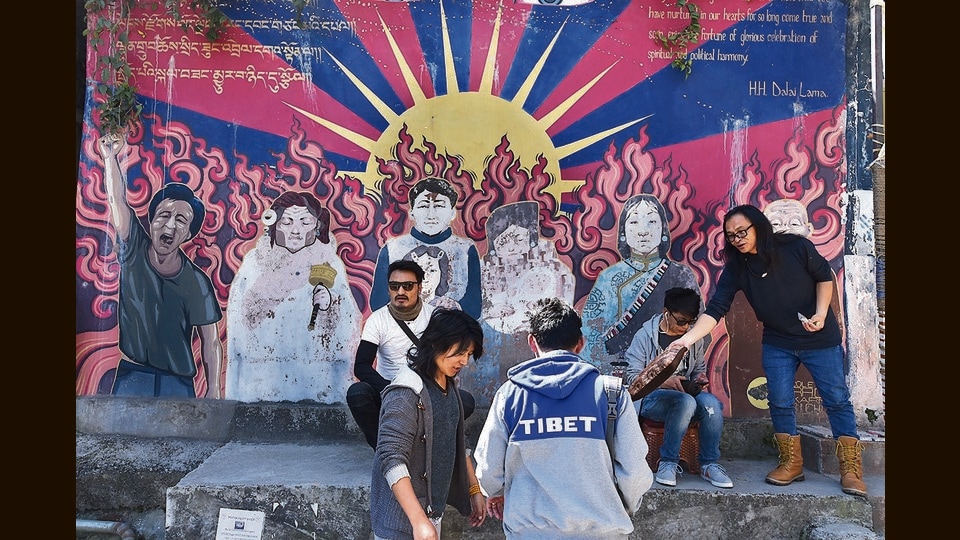
My second brush came when I went to Delhi University in the 1990s. ‘Free Tibet’ t-shirts were all over Janpath. In those days, if you wanted to be cool, it was necessary to have a Free Tibet and a Jim Morrison t-shirt in your hostel wardrobe. We wore the tee without knowing much about Tibet. There were also eating joints in nearby Majnu Ka Tila, run by Tibetans, where one could take one’s own Rosy Pelican beers and Dylan cassettes, order a plate of buff shapta (dry), and hang out for hours.
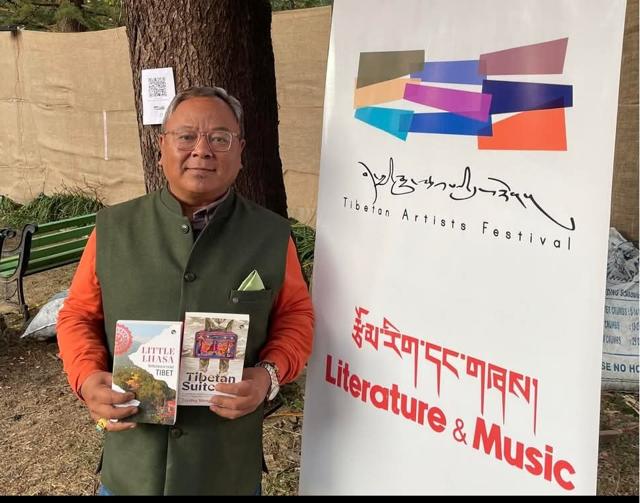
In Little Lhasa, a collection of engaging essays and interviews, novelist and journalist Tsering Namgyal Khortsa takes us deep into the cultural and political world of the Tibetan-in-exile – “the Hindustani of Tibti jati” (Jamyang Norbu’s phrase) – a world beyond dumplings and woollen jackets. Through the lens of Dharamsala, Khortsa introduces the reader to the past and present of the lived Tibetan experience in India, as well as to seekers from around the world who people the town, looking for solace and wisdom in the teachings of the Buddha.
In contrast to the anti-immigrant sentiment that colours most parts of the Western world today, Dharamsala is a poster boy for “happy co-existence”. Tibetans converse in fluent Hindi, while the children of the author’s Indian landlord, Mr Singh, are “so familiar with Tibetan, they use it as freely as their mother tongue.”
The local FM station broadcasts the Dalai Lama’s talks in English, Italian, French and Russian translations. Speaking of multilingualism, Khortsa quotes from a Tenzin Tsundue (arguably the most prominent Dharamsala resident after the Dalai Lama himself) poem: “The Tibetan in Mumbai/ abuses in Bambaiya Hindi,/ with a slight Tibetan accent/,/ and during vocabulary emergencies/ he naturally runs into Tibetan.”
Khortsa calls the town “the capital of Tibetan dislocation”: “This is where they have seen their imaginary and real homes merge subconsciously to give birth to an entirely unique identity called ‘Exiled Tibet’” – an act of “creative non-fiction”, which, like the literary genre, lies at the intersection where “vivid imagination” meets “hard facts”.
The story begins in 1959, when the Sixteenth Karmapa, Rangjung Rigpe Dorje, flees China-occupied Tibet for India. Khortsa’s father follows in his footsteps, crossing first into Bhutan, then Sikkim. As a child, writes Khortsa, “the Sixteenth Karmapa was such a crucial part of our family that I had internalised his greatness even before I learnt to bathe on my own!” As a little boy, the first book Khortsa reads about Tibet is Tintin in Tibet – a wonderfully disarming confession.
The impulse to write the book comes from two sources: in 2001, the author’s father is elected as a member of the Tibetan parliament-in-exile, prompting a move to Dharamsala. In 2003, he loses his mother: “Her premature death left a gaping hole in my life and a deep chasm with my own past as a Tibetan born in India. He feels the urgent need to “explore my own heritage and its complex layers of displacement and resilience.” (A version of this book was first published in 2006.) He finds a kindred spirit in Sir Vidia: “Just as Naipaul was born into an Indian community of the West Indies -- thousands of kilometres away from home, but with all the trappings of Indian culture and language -- many of us were born and brought up in India, a vast distance away from the Tibet of our ancestors.”
LISTEN: Author Tsering Namgyal Khortsa on The Books & Authors podcastThere is tremendous range and depth in this collection, from self-immolation to self-knowledge. In Nation of Stories, Khortsa provides us with an invaluable potted history of Tibetan Writing in English; in Movies and Meditation, he does the same for Tibetan cinema, both documentaries and feature films. In Memories of Protests, he follows a protest march in Dharamsala, sparked by the execution of two prisoners-of-conscience in Tibet. We learn how the Kangra Valley, where Dharamsala is situated, has Buddhist roots dating back 1700 years.
In The Monk in Manali, Khortsa travels to Naggar in Himachal Pradesh. Job opportunities in road construction attracted many Tibetans during the early 1960s. Even before this migration, “Manali and its surroundings had a fair share of early settlers from Tibet who came to India in the 1900s on pilgrimage tours or to trade but chose to settle down... many of them married Indians.”
The centrepiece of the essay is scholar, artist and polymath Amdo Gendun Chophel (1903-1951), the “enfant terrible of Tibetan Buddhism”, who died “following a two-year imprisonment in Lhasa on trumped up charges of treason.” Chophel stayed at Naggar for three of his 13-year exile in India in the 1930s. He translated prolifically from Sanskrit to Tibetan and from Sanskrit to English, aside from writing “a famed guidebook to Indian pilgrimage sites, and the Tibetan answer to the Kamasutra.”
Toward the end of the book we meet Ngawang Woeber, a former political prisoner (the Chinese prefer the terms “social destabilizers” or “social malcontents”) in occupied Tibet. Through his eyes we learn what life is like in a Lhasa prison. Many have died in Drabchi prison from torture and denial of medical treatment. Some, unable to “bear the punishments”, committed suicide; “there were others who became handicapped as a result.”
In the end Khortsa succeeds in exploring his own heritage and in presenting it to the rest of the world too.
Palash Krishna Mehrotra is the editor of House Spirit: Drinking in India


