
 E-Paper



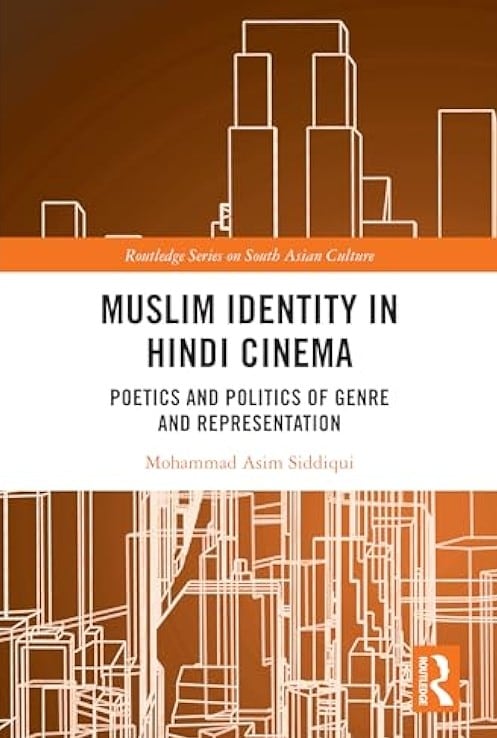
Review: Muslim Identity in Hindi Cinema by Mohammad Asim Siddiqui
A panoramic view of the representation of Muslims that discusses the changing perception of Muslim identity from the historical films of the 1940s down to recent movies that perpetuate stereotypes

 Prefer HTon Google


The pervasive influence of new information and communication technology has transformed culture, literature, the fine arts, and other forms of entertainment into powerful transnational productions. Now, cinema serves as a reflective mirror to our rapidly evolving social landscape, illuminating and informing us about significant societal shifts.
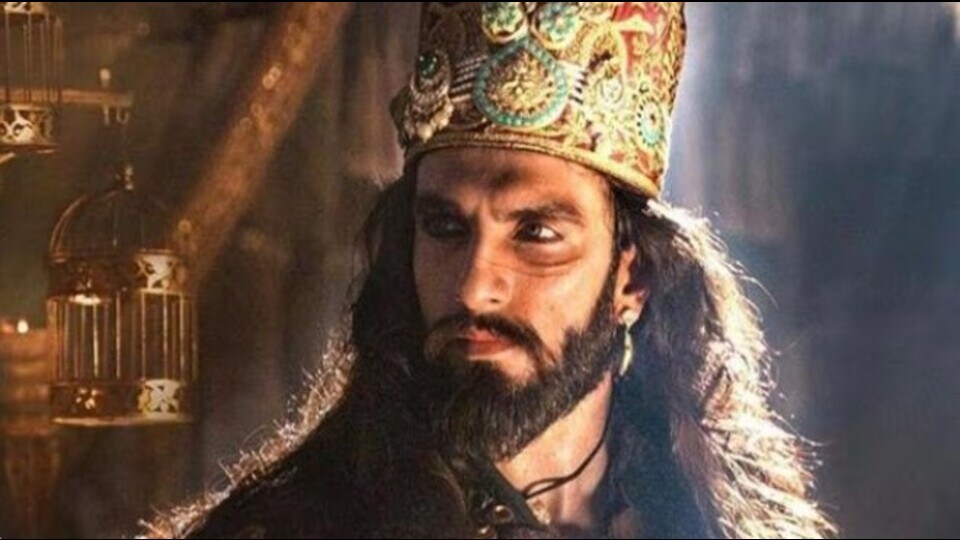
Films with their vivid characterisation, intriguing visuals, and gripping storylines transcend fantasies of desire and reveal what lies beneath the vicissitudes of life. Cinema appears to be the site of every twist in collective life, upending our settled understanding of lived experience. The postmodern era has given rise to transformational cinema, queer cinema, and politically charged films that lend a voice to subcultures, fostering a sense of empathy and inclusivity.
The widely admired portrayal of fervent nationalism has given rise to a new notion, ‘cine patriotism,’ which is essentially a stagnant concept. It resonates with Bollywood, which often constructs identity within a particular national and religious context. Identity is a slippery and multilayered concept, and when it pertains to those people who, in Franz Fanon’s vivid phrase, are without any anchor, without horizon, and colourless, it becomes more complex. For Indian cinema, national identity can only be constructed if it is contrasted with a less-than-desirable, if not loathsome, other. It is the other’s ghostly presence that goes well with the gullible audience.
In cinematographic projection, the other is the Muslim, who is fictionalised and plays the assumed role. The narrative and visuals fix him in violence, hostility, and aggression. His story is constructed through fantasy, myth and falsification, which leaves him experiencing himself as the other. The portrayal is done through two vectors – cultural difference and social rupture. Negotiation of identity among Muslims remains a shifting motif, serving as a potential tool for othering by contemporary Hindi cinema. Right now, this is how our film industry treats the second-largest Muslim population in the world.
How does the expropriation of cultural and religious identity hinder the understanding of a community? Indian cinema addresses this by focusing on a simplified and often distorted representation that fails to capture the complexity of identity.
An unprecedented surge in structuring films on themes related to Muslim rulers reveals a sense of naivety on the part of the directors, who believe that retelling the past or the imagined past settles the question of cultural identity.
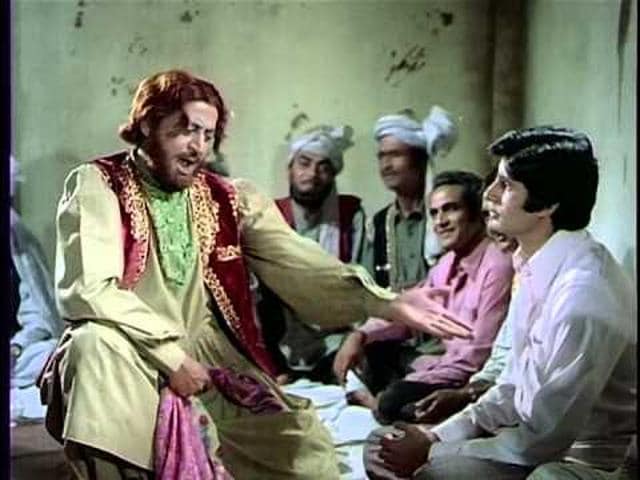
The diacritics of cinematic aporia call for an objective delineation and insightful analysis, and it is what Asim Siddiqui’s recently published book, Muslim Identity in Hindi Cinema does with academic rigour. The author rightly considers cinema a site of hybridity, diversity, and splitting, where relations, assimilations, and syncretizations are negotiated and renegotiated. Hindi films also did this in the portrayal of Muslim identity over the last eight decades. Now, however, the situation has changed. This book attempts to analyse “how the inclusive vision presented in films like Mughal-e Azam (1960) has been replaced by a Hindutva vision in many films using history as a backdrop where Muslims appear in the image of the other.”
Comprising six terse and incisive chapters, the book provides a panoramic yet invigorating view of the representation of Muslims in new social settings and idioms. Siddiqui discovers, excavates and discusses the changing perception of Muslim identity from the historical films of the 1940s down to the recent movies that perpetuate stereotypical notions of Muslim identity. With critical acuity and social and cultural sensitivity, he unravels the representation of global Muslim identity in a post–9/11 world and emphasises the need for a more nuanced understanding.
The first chapter, From History to Circus: Politics of Genre and Muslims’ Representation in Hindi Films enumerates historical, political, social and cultural aspects of Muslim identity, and discusses issues relating to Partition, to Muslims into a secular nation, interreligious marriages, ever growing communalism, militancy in Kashmir, and the subjugation of Muslim women.
The second chapter goes well beyond the paraphrasing of themes and cursory interpretation of visuals, costumes, lyrics, music, and sound effects. The author sensitively reads the films of Raja Kumar Hirani and Zoya Akhtar, where the predictable markers of identity hardly work.
A dispassionate analysis is presented in the third chapter, which examines the portrayal of Hindu-Muslim hostility and violence in films.

The issue of the Muslim gangster is explored in the fourth chapter, which provides a close reading of Zanjeer (1973), Angaar (1992), and numerous other films. The figure of the gangster has now been replaced with that of a terrorist and has produced the terrorist genre of Hindi films. The author takes pains in chewing over the globalisation of terror and the setting of terrorist films in Afghanistan, Turkey and London. The last chapter provides a panoramic view of the representation of Muslim women characters in Hindi cinema. “Muslim women also appear in many interreligious romances where the man usually happens to be a Hindu and the girl a Muslim,” Siddiqui correctly points out, adding that the pattern “guided by the demands of political correctness and market forces, reveals deep-rooted sexual anxiety about protecting and preserving women from defilement.”
In sum, the book presents an insightful and multilayered analysis of the representational aspects of Hindi cinema.
Shafey Kidwai, a bilingual critic, is the director of Sir Syed Academy, Aligarh Muslim University.


