
 E-Paper



Review: Rivers Remember by Krupa Ge and Flood and Fury by Viju B
Two recent books acquire a fresh significance at a time when different parts of the country are battling serious floods

 Prefer HTon Google


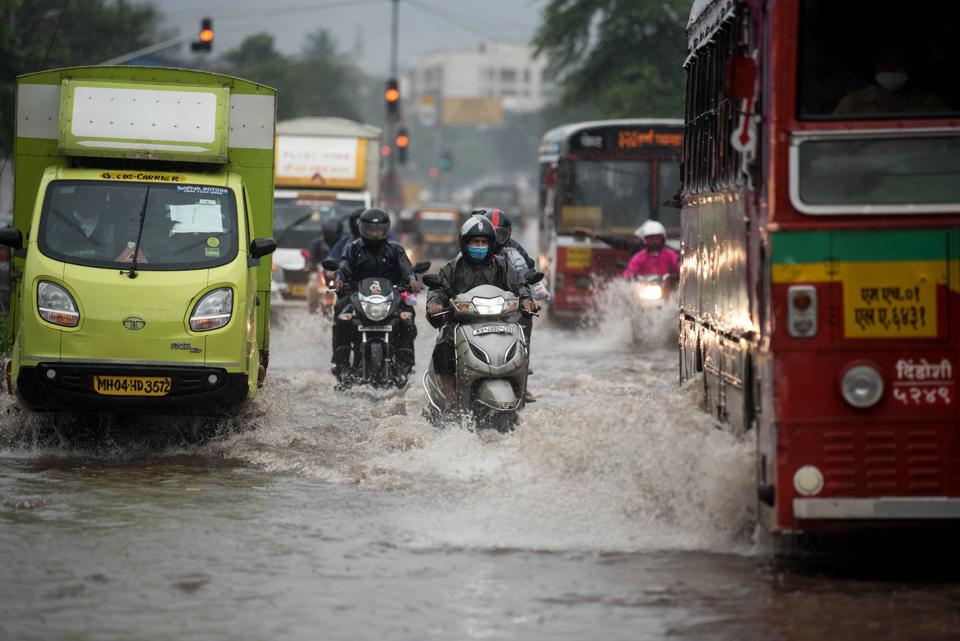
Flooding has always threatened human habitation; but it is now happening too often with disastrous consequences in unexpected places. These disasters are also occurring on a much larger scale than in the past with urban floods, especially, having become a serious phenomenon. If floods took water-stressed Chennai by surprise in 2015, they shell shocked the planned city of Chandigarh in 2017, and had Mumbai reeling in 2019. The repeat occurrence of the devastating Kerala floods of 2018 has exposed the ‘once-in-a-100-years’ flood theory to serious questioning.
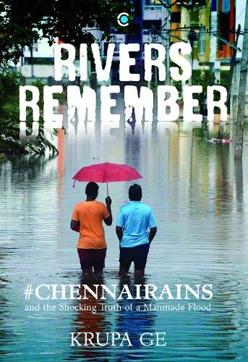
The havoc that floods wreaked this year in several parts of the country clearly indicate that there is more to come, perhaps even worse. That floods don’t just happen but are caused adds another twist to the long tale. Piecing together the collective failure of the authorities to protect its inhabitants from an avoidable tragedy in Chennai, Krupa Ge brings to life the agony of the trapped in a touching account of those unforgiving waters of the city rivers, relentless in reclaiming their rights over their course in Rivers Remember.
In what reads like a virtual charge sheet on those responsible for water (mis)management, including storage, distribution and disposal, Ge is clear in her indictment on how provisions for effective urban planning were compromised for the worst to occur. Such is the nature of polity and governance that no one gets penalized for making thousands suffer. Armed with responses to several RTI applications, the narrative provides an authoritative reading on how not to manage water whatever may be the situation.
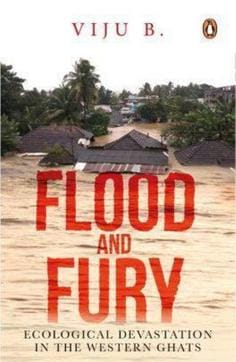
Rarely have lessons been learnt though, as callousness coupled with absolute arrogance remains prime in the abuse of nature. In his travels through the ecologically rich landscape of the Western Ghats, journalist Viju B found striking evidence of just such an attitude in the devastation unleashed through mining, quarrying, and deforestation in Flood and Fury. Combining travel writing and reportage with readings of history and literature, the author elaborates the way floods have been shaped into the region by blocking natural channels through structural changes in land use.
Written with an investigative flair, these timely books on the experience of being flooded are a forewarning as the planet warms and the waters rise. With several places being submerged under 12 to 15 feet of water in recent times, it has become a challenge to manage disaster. In their no-holds barred works, Ge and Viju proclaim that public institutions are caught in a time warp and are nowhere close to matching the speed, enormity, and ferocity of water-induced disasters.
The reality behind the statistics and headlines of such manmade disasters are grim.
As relentless rains over a shorter window become a recurring phenomenon, it has never been more compellingly urgent to enhance the capacity of storm drains and improve dam outflow management to buffer the sudden spike in monsoon outbursts. Ironically, the political-economy of investment in the water sector only encourages the obfuscation of investigations on the causes of floods, and any directives on promoting conservation over development are glossed over.
The Chennai and Kerala disasters bear testimony to the business-as-usual approach, which not too long ago consumed 280 and 483 human lives respectively. Both books remind us that these were not isolated, freak incidents to be lost to history. Instead, they signal something graver as human interference and alterations to the natural landscape is forcing nature to become bitterly hostile. Humans may have short memories but rivers remember to follow their course whatever the situation and dislodge any obstruction that comes in their way.
Krupa Ge digs into the history and culture of the Cooum, Adyar and Kasasthalaiyar rivers to construct the why and how of what befell Chennai. She is not optimistic as as things have begun to regress. Viju B points out that the gross indifference to the report of the Western Ghats Ecology Expert Panel (WGEEP) has led to the undoing of Kerala in particular, and the Western Ghats in general. Rivers Remember and Flood and Fury are a wake-up call for planners and politicians to see beyond short-term vested interests. Both are a welcome addition to the limited number of books on the subject. While basin-level planning, eco-restoration of catchments, and improving drainage systems are all known, the use of remote sensing in predicting the weather and forecasting floods alongside effective inter-agency coordination can help minimize the impact of manmade floods. Without a doubt, there is a need to make some robust plans to manage swirling waters in the 21st century.
Sudhirendar Sharma is an independent writer, researcher and academic.


