
 E-Paper



Review: Selected Poems by Kiriti Sengupta
A collection that reflects quietly on preoccupations that are as personal and subjective as they are objective and concerned with wider issues

 Prefer HTon Google


Kiriti Sengupta’s Selected Poems offers a journey through the inner world of the poet-publisher. The work also occasionally forays into social spheres and politics. A common feature is the delicate, almost fragile language, that teases out complex meanings from apparently simple constructions.

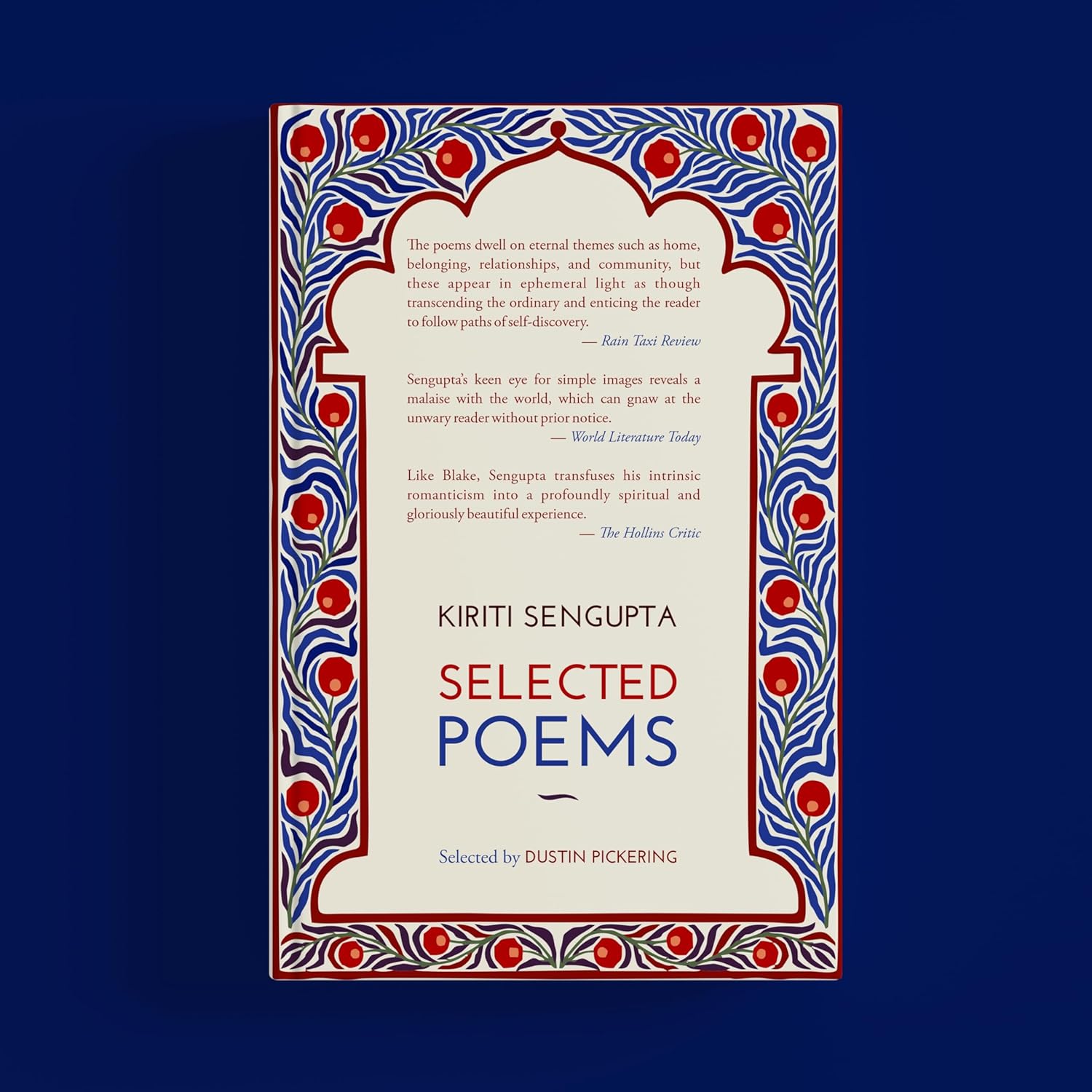
The poems are mainly short and in free verse, but the poet who is also a dentist throws haiku and senryu into the mix. What drew this reviewer’s attention were the several prose poems, which blend in beautifully with the free verse and experimental pieces in this collection that includes works published from 2013 to 2024 as well as new poems written in 2025. Selected Poems reflects quietly on a variety of preoccupations such as women, religion, places and objects; preoccupations that are as personal and subjective as they are objective and concerned with wider issues. It begins with a short poem entitled The Source from My Glass of Wine (2013), which is simple, yet profound and wonders whether the flavours exuded by birth and death are the same. It ends with simple profoundness: “They are as fragrant / and fresh /as the ancient fruit.”
In Clarity, which lingers on the fragrance of boiling, thickening milk, it’s interesting to note how the poet links domestic images such as a mother churning ghee to religious feeling, which draws the individual up to higher spheres — “lifted us to heaven / Ah! Pious Ghee…”
The poet’s Bengali literary heritage is evident in the intertextuality exhibited in Moon — The Other Side, which brings in Modern Bengali poet Sukanta Bhattacharya’s line, “A world affected by hunger is too prosaic; the full moon resembles a toasted bread” from Hey Mohajibon. Drawing upon this metaphor Sengupta asks, “Can you remember the bread / Sukanta left behind? / It was baked under the full-moon light.” The sensibility here is practical, even cynically modernist and rejects traditional romanticism.
In such a world, prayers become a refuge through which we seek a “Gateway to God” as we pray with tightly shut eyes. But, at the end of the poem, or perhaps of our existence itself, despite the prayers, ultimately an “enormous God steps in” and claims our souls as inevitably as the devil had claimed Faustus’ soul. This theme of modernist doubts vis-a-vis religion is carried forward especially in the prose poem, Salvation, in which Sengupta writes with as much angst as cynicism about how “We live as long as we breathe, and it is only the breathing that occurs of its own will. No gods, but the breath that creates a home for our life and death.”
Bengali heritage and Durga worship are apparent in When God is a Woman. Here, Sengupta writes of Durga, whose images for worship are incomplete without “a hint of soil / from the yard of courtesans”, thereby merging the physical world with the spiritual one.
The Bengali in Sengupta erupts again in a light-hearted poem entitled Masala Muri, in which he writes in a nostalgic vein of this snack, beloved of anyone who has grown up eating it at home or at roadside stalls in Kolkata. Here, the beloved snack with its puffed rice, ginger slices, chopped onions and pungent mustard oil, is linked to power cuts and resultant treats — “On every stormy Sunday / we invariably had power cuts, / and Baba cooked dinner for us all: / a moderate serving of Muri mixed with / onion, ginger and blobs of oil.” This family closeness as they all sat together chomping on the snack, around a lantern, is now lost in an age when the generators kick in once the power goes; instead of Baba making Muri, delivery boys from Mobile Apps now bring home other snacks.

A wider political sensibility appears in several poems, notably The Bottle from Water Has Many Colours. The poet muses about how the poignancy of the anniversary of the Jallianwala Bagh massacre, when hundreds of unarmed Indians were gunned down by the colonial regime, is today perhaps reduced by visitors who view the killing ground once spattered with “blood and clots” as they relish “a drink / while reflecting on mass annihilation”.
The 2024 collection, Oneness, houses several piquant haiku poems. Particularly noteworthy are two which recall Sengupta’s dual experience as poet and dentist. The poet in him dwells on “plagiarism / the author examines / the reader’s memory”, while the dentist’s expertise and experience is ‘examined’ by the difficult-to-reach third molar, “wisdom / the third molar adds / to the surgeon’s expertise”.
Sengupta’s second duality as poet-publisher is evident in The Publisher and the Poet. The poet in him is happy to receive admiration: “When you admire my piece, / I flash a twinkle”. At the same time, he is wary of “Unpredicted plaudit [that] alerts me/ to explore spam emails.” The publisher is cautious about those who want “free books” but appreciates the “skill / to navigate my air.”
Selected Poems ends with some new pieces published in 2024-25. They are a mixed bag comprising topical verses such as a poem on Rushdie’s book, Knife, on the attack on the writer, and one on the Indian tourists in Pahalgam, who were shot down because they were Hindus. In Fellowship, the poet cynically asks if the terrorists in Pahalgam had “a foreskin fetish”, as they had reportedly asked male Hindus to exhibit their genitals. In Violence, the attack on Rushdie naturally is scary, especially to all authors but Rushdie survived it, so “Not all daggers kill”. The poem’s concluding lines link this knife to the Bengali idiomatic “Micchrir Chhuri”, which sweetens, even as it cuts flesh.
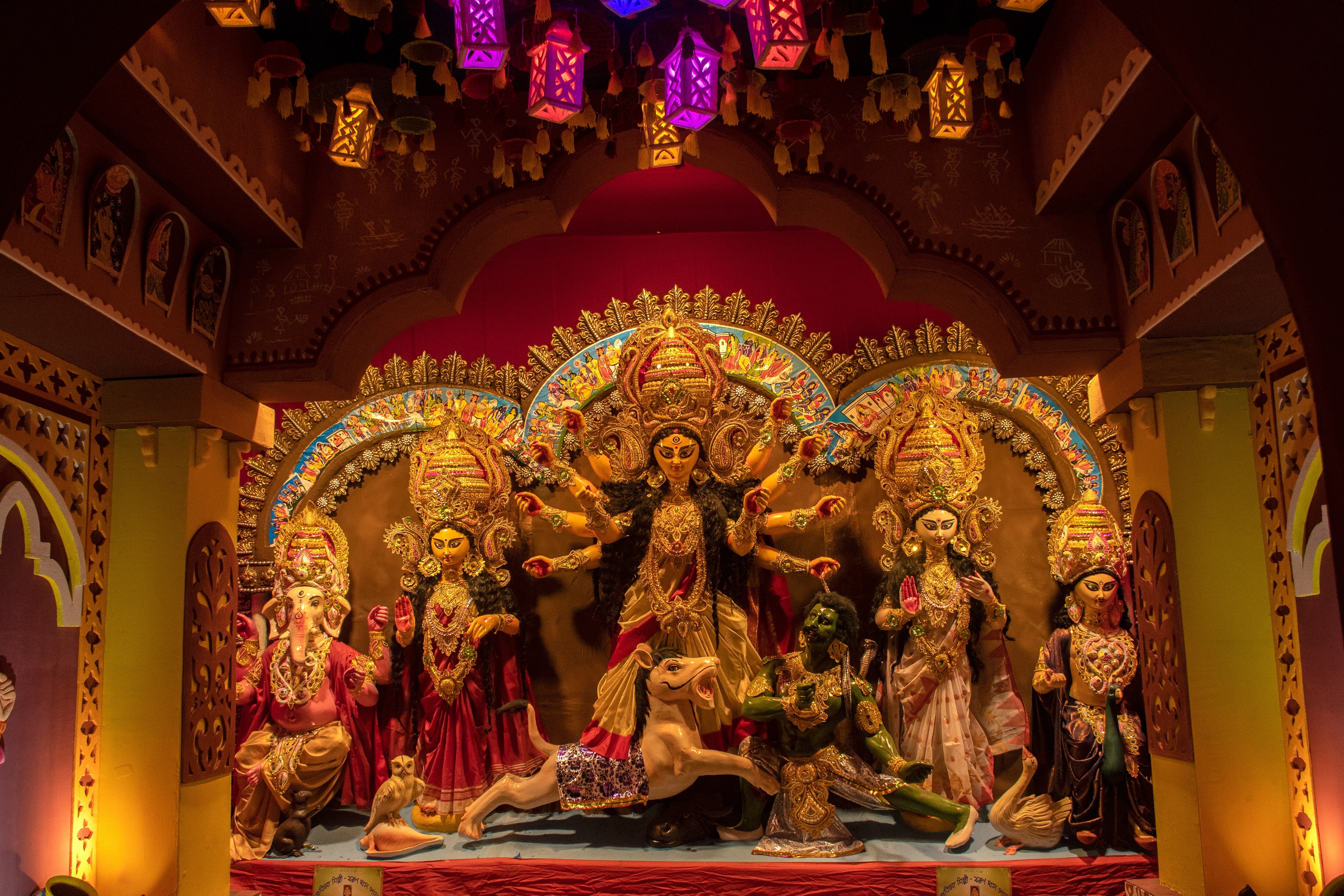
There are also reflective poems on Goddess Durga, as a daughter and on the durva grass that is central to so many Hindu rituals. Selected Poems draws to a close with the delicately layered and fragile language of Her Sacred Mist, wherein Goddess Durga with her children visits her father’s house every autumn, before returning to her husband Lord Shiva and his home on Mount Kailash: “The daughter gleaned joy / for the past few days / amidst her parents and children… Did the Mother weep as / she left for Kailash?” The lines leave the reader almost as bereft, perhaps, as the mother of the goddess herself.
A subtle and layered collection concerned with a wide range of issues, Selected Poems, makes you eager for many more offerings from Kiriti Sengupta.
Professor Nilufer E. Bharucha is a member of the English Advisory Board, Sahitya Akademi, New Delhi, and a member of the Advisory Board, EU-sponsored Co-Fund project on Migration, Diaspora and Citizenship, University of Muenster, Germany. She is Faculty Associate Emeritus, South Asian Studies Institute, University of the Fraser Valley, Canada. She was former Head and Senior Professor, Department of English, University of Mumbai. Her current research interests are focused on literature and cinema of the Indian Diaspora, Law and Literature, and Writing of the Parsees.


