
 E-Paper



Review: Tales of Hazaribagh: An Intimate Exploration of Chhotanagpur Plateau byMihir Vatsa
A mix of personal essays, travelogue, geography and history that cannot be pinned down to a single genre, Mihir Vatsa’s book goes beyond conveying the allure of Hazaribagh to underscore the redemptive potential of travel

 Prefer HTon Google


Most travel bloggers are eager to leave footprints all over the globe, but some stay in a place for months or years and chronicle its myriad facets. Among the latter, I’ve enjoyed Himanshu Khagta’s Life in Spiti and Life in Shimla, Dave Prager’s Our Delhi Struggle and Mihir Vatsa’s Tales of Hazaribagh. They eventually turned their blogs into books, with Tales of Hazaribagh: An Intimate Exploration of Chhotanagpur Plateau being the latest.
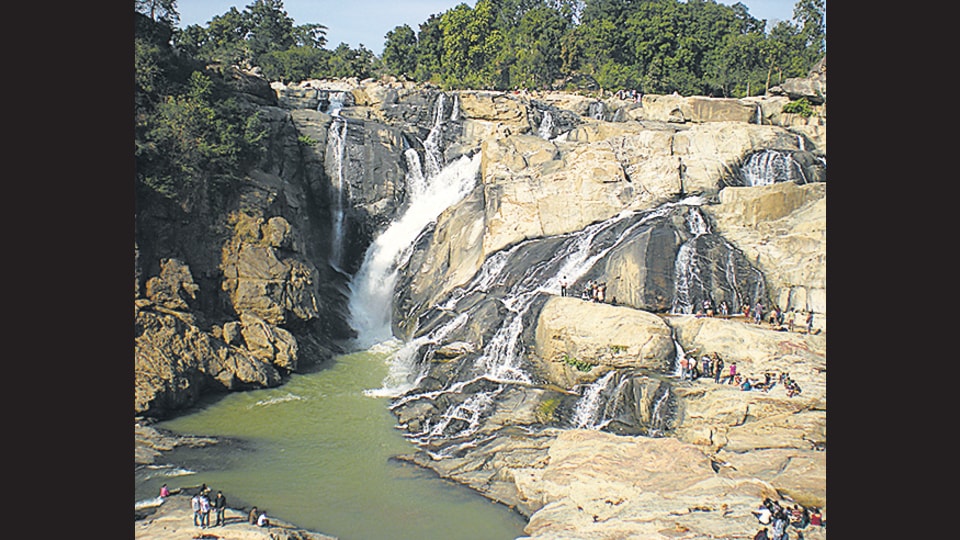
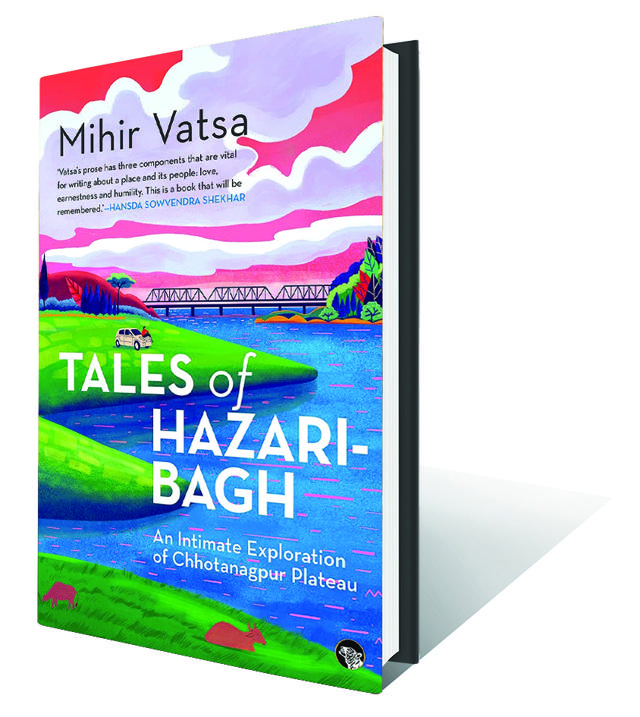
The book is unique on many fronts. It features a place absent in most tourist guides and itineraries — Hazaribagh, a town in Jharkhand. Located at a modest elevation atop the Chhotanagpur Plateau, Hazaribagh offered the British a respite from the heat of the surrounding plains and came to be known as a ‘hill station’ and ‘heath resort’.
Vatsa not only grew up there, but returned after working and studying in Delhi. This results in a meld of perspectives: that of a long-time resident as well as a tourist. We learn not only about its landscapes and attractions, but also urban legends, folk tales and ghost stories.
The book is not just about the Chhotanagpur Plateau. It begins with the author’s homesickness in Delhi; his struggle with depression frames the narrative. This mix of personal essays, travelogue, geography and history cannot be pinned down to a single genre — even the book jacket lists it as ‘Non-fiction/Travel/Memoir’. With chapters like ‘Lake’, ‘North’, ‘South’ and ‘Territorial Trespassing’, the book seems to be arranged along geographical lines.
However, the attempt to bring together sundry reflections from a blog into a book occasionally comes across as contrived. The whimsicality and free-flowing writings that make Vatsa’s blog delightful fumble in the straitjacket of a book. The only exceptions are the introductory chapter and epilogue, which tie up the otherwise muddled narrative.
Once I got beyond the disjointedness, I found the book engrossing. Vatsa’s compassion for the land and its people is evident, though he largely focuses on the former. When noisy teenagers interrupt his solitary photography session atop a hill, it seems as if he were about to rant in the vein of VS Naipaul and Pankaj Mishra’s travelogues. But what follows is a heartening interaction.
There is enthusiasm and curiosity, which drive the author to decipher topographical clues on Google Earth, venture to little-known and hard-to-reach places and persist in the face of unnavigable roads and overgrown trails. He even sought out the great-grandson of a colonial officer with connections to Hazaribagh and met him in Scotland. The joy these encounters and Hazaribagh’s attractions inspire shine through his writing.
Other endearing aspects are Vatsa’s humility and vulnerability. Despite extensively dwelling on himself, his friends and family and his depression, he is never self-indulgent or self-aggrandizing. He acknowledges how the “pleasure of exploration brings with it the arrogance of discovery” and the challenge of detaching the two. Vatsa talks about his mental health struggles with such candour that the reader cannot help but empathize. Still, the memoir does not overwhelm the travelogue —the author knows when to recede from the narrative and foreground the places he’s writing about.
Vatsa seems self-conscious at times. Perhaps that’s why his usually crisp prose abruptly veers into the silly or overwrought. Take, for example, how amid a straightforward description of Hazaribagh Lake, he drops the line: “No less than the Khan Market of Delhi, I quip, to myself.” It’s not much of a quip and he doesn’t keep it to himself.
When talking about Salparni, his “first” waterfall, Vatsa, also a poet, suddenly expounds on how poets in love become inarticulate and unfortunately, ends up exemplifying it. He talks about showing his waterfalls (without innuendo, he assures the reader). And lest one has still not got the memo, he follows it with, “I will show you mine if you show me yours.”
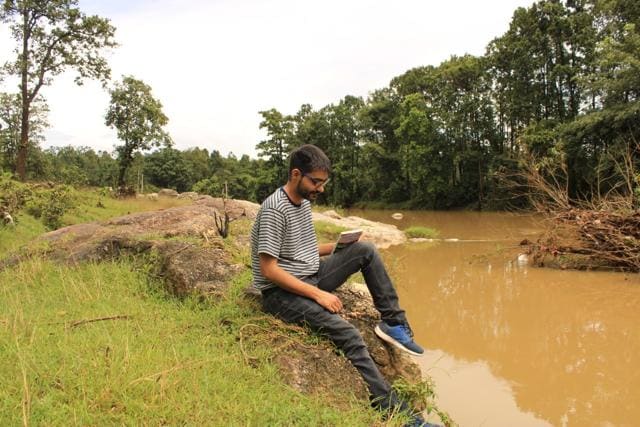
But thankfully, he more than compensates for these unexpected interludes. His descriptions of landscapes are so compelling that I wanted to put the book down and follow in his footsteps around the plateau. His rapturous account of Nisanlagwa Waterfall conjures its majesty and mystery. Even the descriptions of coal mining’s depredations along the Bokaro River, trash in natural landscapes and the deforestation of Canary Hill to build a road are wrapped in eloquence. We also learn about places that could have been or were once beautiful.
Vatsa’s achievements go beyond conveying the allure of Hazaribagh. The book shifts the lens of travel writing from the ‘exotic’ to the familiar. It makes one wonder about the factors that go into the making of a tourist attraction and the sights across India that have not yet become objects of wanderlust. While he wrote the first draft in April 2019, it is remarkably relevant to the post-pandemic world. As travel restrictions limit us to exploring our surroundings rather than faraway lands, I hope there will be more such books that highlight the beauty in our backyard and how industrialisation is changing or has changed them.
Vatsa also underscores how our physical environment impacts our mental health and the redemptive potential of travel, or more precisely, exploration. As he puts it, “I loved myself through the plateau.”
Syed Saad Ahmed is a writer and communications professional.


