
 E-Paper



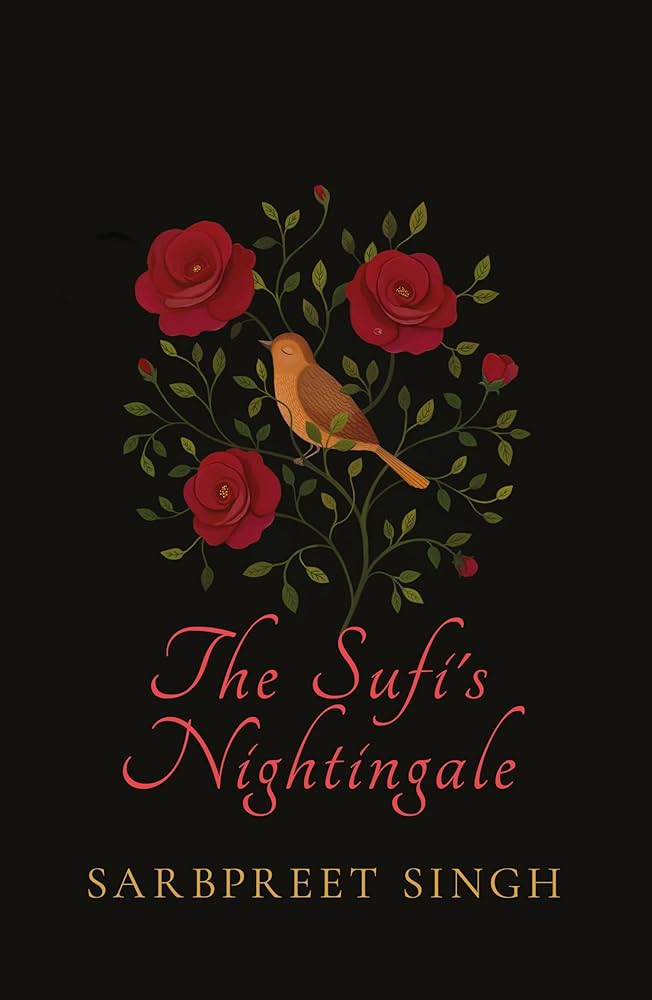
Review: The Sufi’s Nightingale by Sarbpreet Singh
A fictionalised account of the life of a 16th-century Punjabi mystic and poet, Madho Lal Hussain, this novel unravels the tale of transcendental love and faith

 Prefer HTon Google


The Sufi’s Nightingale is a fictionalised account of the unusual life of Madho Lal Hussain, a sixteenth-century Punjabi mystic and poet, and his unique relationship with his murshid (mentor) and mureeds (followers).
Hussain Daddha (Madho Lal Hussain) was born into a family of weavers in an impoverished mohalla of Lahore. His father enrolled him at a nearby madarsa when he was old enough to memorise the Quran. As he tried to memorise the seventh Surah of the Quran, the words turned into tiny black ants, and hundreds of them began to emerge from his mouth. When Hussain Daddha failed to recite the verses, he was banished from the madarsa. Broken and helpless, the young lad was sitting outside crying when he met Sheikh Bahlol Daryai, his murshid. He granted him a wish that Hussain Daddha would not only successfully memorise the seventh Surah, but the entire Quran and lead the Ramzan prayers in the same madarsa within days.
Hussain Daddha went on to become an aalim (Islamic scholar) under the able guidance of Maulana Sayyidullah, who ran a small seminary. The Maulana treated him like his own son and groomed him to take over the seminary after him.
After spending nearly three decades studying and teaching Islam, especially the tafsir (exegesis) of the Quran, Hussain Daddha faced an existentialist crisis triggered by the chance reading of books which the Maulana had forbidden him to touch.
His world turned upside down; he lost interest in his readings, and his lectures lacked lustre. He attended a lecture by the Maulana and asked questions that should not have crossed the mind of an erudite scholar of his standing. The questions bordered on the blasphemous, and he was expelled from the class. The next morning he was discovered in an allegedly intoxicated state on the madarsa premises. The seminary students beat him up, shaved off his beard and the hair on his head and threw his mangled body in front of a wine store.
Hussain Daddha hadn’t said a word in his defence to the students, or to the Maulana. Disowned by the clergy, he became Lal Hussain and makes the notorious Bazaar-e-Husn lane – which is lined with pleasure houses and a maikhana (tavern) – his hangout. His own house is beneath a mosque in the same lane.
He adopts the lifestyle of a Malamati – a Sufi who actively debases himself – choosing a lifestyle that would earn him rejection and abuse, as a means of conquering his ego.
It is in this lane that he meets Maqboola, a little girl with the voice of a nightingale. Lal Hussain composes kafis (ballads) and Maqboola sings them in melodious ragas. The story unfolds in the voices of Hussain and Maqboola.
Maqboola belongs to the oppressed Marassi community, and at one time her mother and grandmother had led a busy life in a pleasure house in the same lane. Lal Hussain’s exquisite poetry and Maqboola’s voice win the hearts of ordinary Lahoris, and his band of followers grows – all of them are clean-shaven and dressed in ragged red robes.
Their evenings are spent at the maikhana, and it is here that Lal Hussain sets eyes on Madho, a handsome Brahmin boy of Shahdara from across the river Ravi. Madho had come to seek the favours of Amba, the most famous courtesan of Lahore.
While Lal Hussain’s eyes are transfixed on the boy’s face and he seemed to be in a trance-like state with, “an occasional mashallah escaping his lips almost of its own accord”, a look of “utter disgust” flitted across Madho’s face as he tossed a copper coin towards Lal Hussain. That’s the beginning of Lal Hussain’s descent into madness.
“My murshid. My wise, calm murshid. My joy-filled murshid, who lived to sing and dance and revel. That very murshid knelt in the dust, desperately scrambling to find the coin. When he found it, he looked at it tenderly. Rubbed the dust off. Kissed it. And held it up to his forehead. He did this three times,” recalls Maqboola.
She curses the moment when her master set eyes on Madho, and tries to save Lal Hussain from the “humiliating pattern” he had fallen into: “Each day, our vigil would start at the maikhana in the evening. There would be no singing. My master would not speak one word. He would just sit with his eyes fixed on the studded doorway of Amba’s mansion. On the days that Madho didn’t appear, he would seem dazed and disconsolate.”
He would compose beautiful kafis for Madho, and Maqboola would sing them despite herself:
“My Love has turned away from me
I am the one at fault.
Though I am his and he is mine
We are apart; I’m lost!
Oh, take me to my lover…”
And, on the days, Madho does appear: “…my master, to my shame, would cross the street… smiling wildly like an imbecile as he tried to catch Madho’s eye. The boy would haughtily ignore him… no matter how he responded, my master would look at him like a puppy that has been kicked when it expected to be patted but does not yelp or run away, and waits to be kicked or patted again, and again.”
Lal Hussain’s love for Madho sets in motion a saga of passionate love, heartbreak, scandal, mystical experience and, ultimately, spiritual triumph, as Lal Hussain becomes Shah Hussain, the king of faqirs.
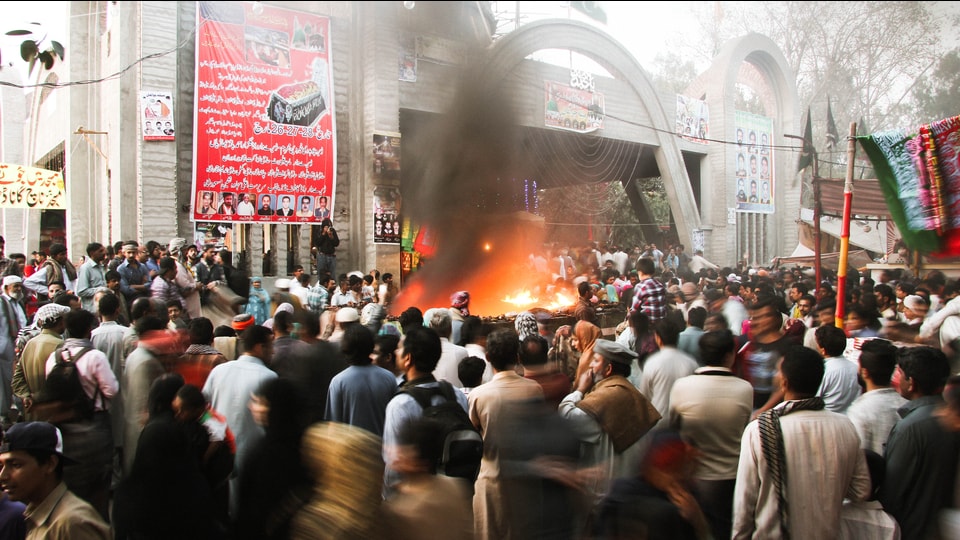
Over time, the very identities of Hussain and Madho have merged, and today the great Sufi is known as Madho Lal Hussain. Hussain and Madho lie in the same mausoleum outside Lahore, which is the site of the annual Mela Chiraghan, during which thousands gather to revel in song, dance and worship.

In a gentle, but mindful way, author Sarbpreet Singh unravels the mysterious beauty of transcendental love and faith. Without being theatrical, he brings to life the ways of the 16th century Sufi, and weaves this legend around prose and poetry. Singh’s fascination for detail adds to the charm of the story, making it instructional and addictive.
Singh has done a fine job of translating Lal Hussain’s poetry into English, which perhaps was a trigger for embarking on this journey. He writes, “The magnificent kafis of Shah Hussain are the soul of ‘The Sufi’s Nightingale’ and were truly the inspiration for the novel.”
Boston-based Singh has earlier written Kultar’s Mime, The Camel Merchant of Philadelphia, The Night of the Restless Spirits and The Story of the Sikhs: 1469-1708. The Sufi’s Nightingale is a recommended read for those trying to understand the mystical journey of Sufis, and the enigma of Sufism.
Lamat R Hasan is an independent journalist. She lives in New Delhi.


