
 E-Paper



Review: Undertow by Jahnavi Barua
Undertow is about regret and reconciliation and about how conflict casts its shadow over generations


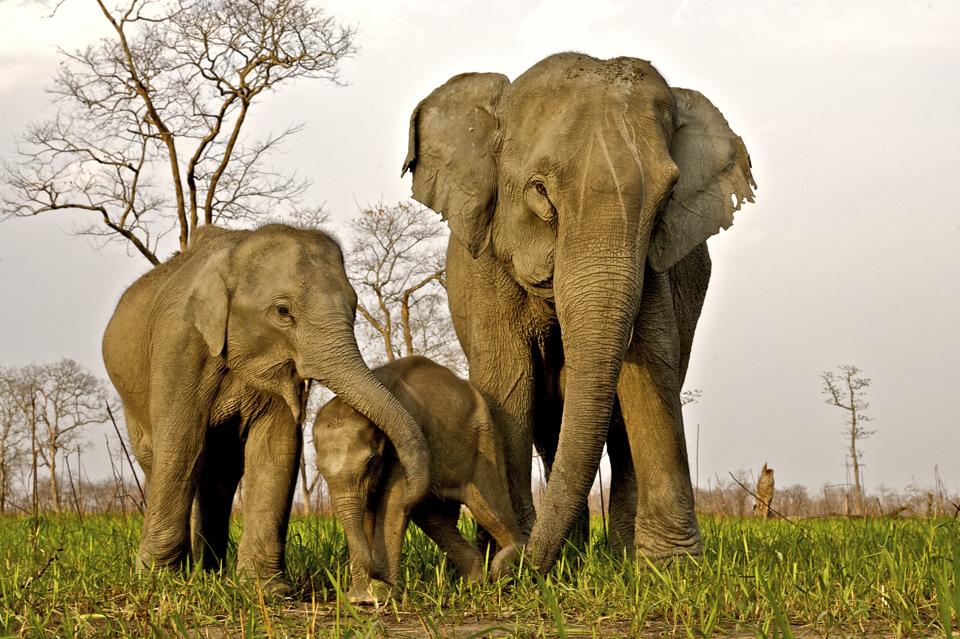
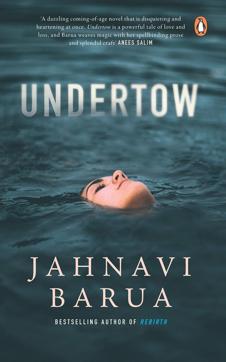
Jahnavi Barua’s Undertow is framed by minimalist — almost melancholic — stillness. This makes this novel, which was published in February this year before the world was silenced by the novel corona virus, unexpectedly prescient.
Loya, a young elephant conservationist, comes to visit her grandfather in Guwahati for the first time. She has never met Torun before — because her mother Rukmini was cast out of their family home for marrying her Malayali classmate. Rukmini’s mother had forbidden the match, but Torun had found middle ground: he helped his beloved daughter elope and then never spoke to her again to appease his formidable wife.
Now, 25 years later, Loya has come to Assam from Bengaluru for the first time. She’s on her way to study the Elephas Maximus in Kaziranga — but first, she wants to discover her roots.
Undertow is about regret and reconciliation. Reading it is like sifting through a box full of old photographs and learning about the wordless people and places in them. Loya, still resentful, is a sulking guest — she wants answers but doesn’t want to ask Torun the questions. So on quiet afternoons, like a curious child she goes through things in her grandfather’s house: bookshelves with old government gazettes and books on folklore, old furniture, the pantry — to piece together her mother’s past, and making sense of her emotional inheritance.
Undertow envelopes with its quiet beauty — especially in its descriptions of Guwahati and the Brahmaputra river. The Saraighat Bridge “looked deceptively fragile, a wisp of spun sugar against the grey sky.” On uncharacteristically hot September early mornings, “At that secret hour, dew softened the ground while the air still held, possessively, memories of the river at night.” Underneath all this softness is the dark undertow of anger — hard feelings are left unspoken but keenly felt. On her wedding day, Rukmini, angry at her mother, stood under the hot shower “Perversely… daring it to scald her, but all the heat did was stain her fair skin pink and draw out her anger until she was empty of it.”
Torun and Loya circle around each other’s hurts in silence until a mild confrontation. But this is not revelatory novel. It’s about how conflict casts its shadow over generations. Conflict is also at the heart of the story of Assam where most of the novel is set.
The politics of migration enters this novel subtly. Loya learns about Assamese identity through conversations around the Assam Agitation, the movement in the late 1970s and early 80s against undocumented Bangladeshi immigrants, “to expel illegal aliens, instead of arming them with citizenship and voting rights.” Last year, these protests were rekindled against the 2019 Citizenship Amendment Act, which allowed undocumented non-Muslims immigrants to get citizenship. For protestors elsewhere in the country, the Act was Islamophobic and discriminatory. But in several north-eastern states and especially Assam, the protests were against the acceptance of any immigrants — in this case Bangladeshi Hindus — who they felt would threaten Assamese identity.
Torun tells Loya about the powerful Ahom dynasty from old Burma which ruled Assam for six centuries. They were not outsiders, he insists; they were migrants only in the way that everyone is in the beginning. But, “they settled down. Assimilated. Converted to Hinduism from Buddhism and married our local girls… the world was a different place in those days. Borders were more fluid and constantly refashioned by war.” Loya, the daughter of an exile straddling her multiple identities, is the counter argument for our evolving sense of identity.
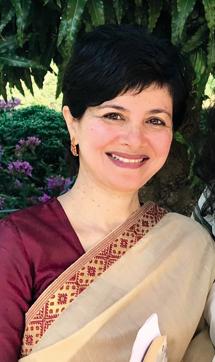
Barua, a doctor by training, has previously written a collection of short stories, Next Door (2008) and a novel, Rebirth (2011), about motherhood which was shortlisted for the Man Asian Literary Prize and the Commonwealth Book Prize. Undertow becomes a part of an almost burgeoning literary movement which holds up a mirror and traces the political brewing in modern India. Annie Zaidi’s critically acclaimed novel Prelude to a Riot (2019) spelt out the sinking feeling of rising anxieties due to communalism and anti-immigrant biases. Madhuri Vijay delineates the Kashmir conflict in her multiple award-winning 2019 novel The Far Field, in which — like in Undertow — the protagonist is also a young 20-something woman from Bangalore who goes to Kashmir to look for answers to understand her mother.
During the Assam agitation, Barua writes, “bandhs were just that. Bandh. Everything closed, came to a grinding halt.” I read Undertow when the COVID-19 lockdown had just begun. I realized then that I had never experienced the sounds of silence before. As I read about Rukmini who had “lived through many of these suspended days when the city was inert with a silence broken only by the softest of sounds: the rustling of leaves in a mango tree as the wind passed through, the cawing of a crow from the top of a water tank, the muted chatter of a television.”
I could hear all of them.
Saudamini Jain is an independent journalist. She lives in New Delhi.


